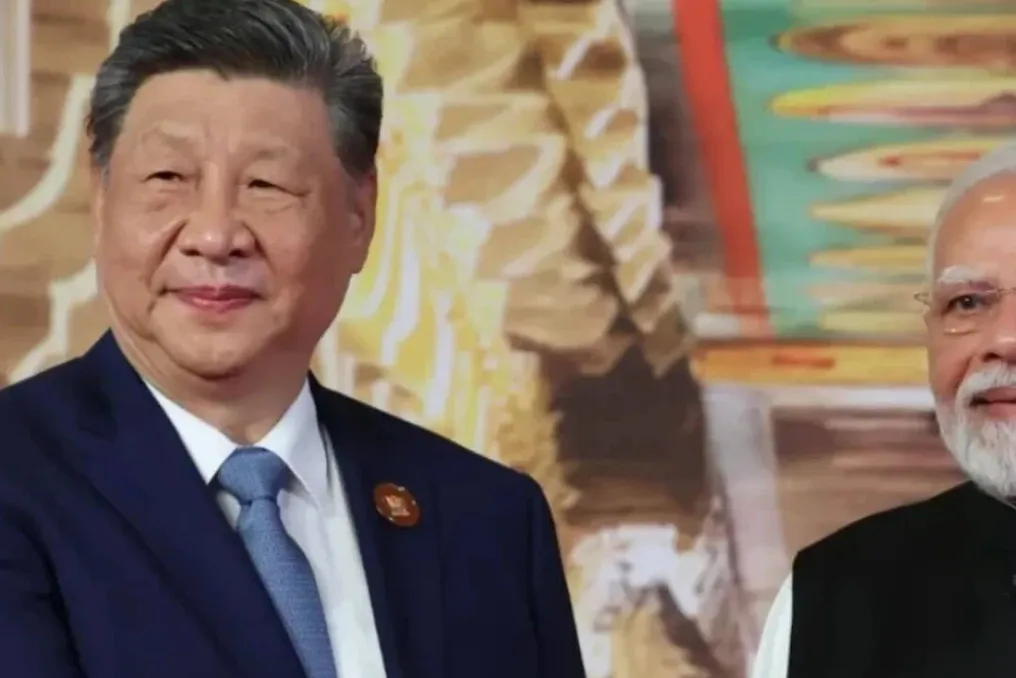
Chinese President Xi Jinping's statement on the necessity of market integration and the creation of an open-source artificial intelligence platform, alongside other proposed initiatives, is unlikely to generate enthusiasm in Indian political circles, given the wariness towards similar proposals from the neighboring country.
Before China takes the presidency of BRICS, Xi's remarks at the final summit session are seen as a signal of intent to push for the inclusion of these aspects in next year's conference agenda.
For a long time, BRICS has avoided becoming a trade bloc, and market integration through tariff reductions and investment protection regimes carries the risk of opening markets to Chinese goods and companies with insufficient guarantees, which threatens the development of domestic technologies and players.
India maintains strict control over Chinese investments, approving them individually, and refuses to lower its vigilance despite active lobbying from industry circles.
The fear of market cannibalization by China is not limited to India but is recognized worldwide—from Japan to Europe and America, where countries are trying to reduce dependence and diversify supply sources. In fact, India's pursuit of free trade agreements is partly driven by the strategy of import diversification and government efforts to attract demand for Indian products through tariff and entry barrier reductions.
Since India's exit from RCEP in November 2019, trade deals have become a crucial policy tool for India due to fears that it would have to open its doors to Chinese imports. It was ultimately China's dominance in RCEP that prompted India to withdraw from the agreement, as it already had trade agreements with countries such as Japan, South Korea, and ASEAN members. Since then, India's portfolio has expanded to include free trade agreements with Australia, New Zealand, the UAE, the UK, the EU, and EAEU countries.
The President's promotion of AI in his five-point action plan, presented on Sunday, is one of the main sources of concern due to fears regarding Chinese players and their development model. The push for Chinese Large Language Models (LLMs), part of the proposals, is perceived as a clear warning sign and will be viewed as an attempt to penetrate countries amid global scrutiny of Chinese applications and technologies. India itself has blocked several applications and remains vigilant regarding technology permissions in cameras and other devices manufactured in China.
Similarly, policymakers will be skeptical of China's promotion of the Special Economic Zone (SEZ) initiative and the proposal for factory modernization, especially considering that the 'Belt and Road' initiative has transformed into a plan to seize key projects and use financing to pressure governments into relinquishing control over assets.