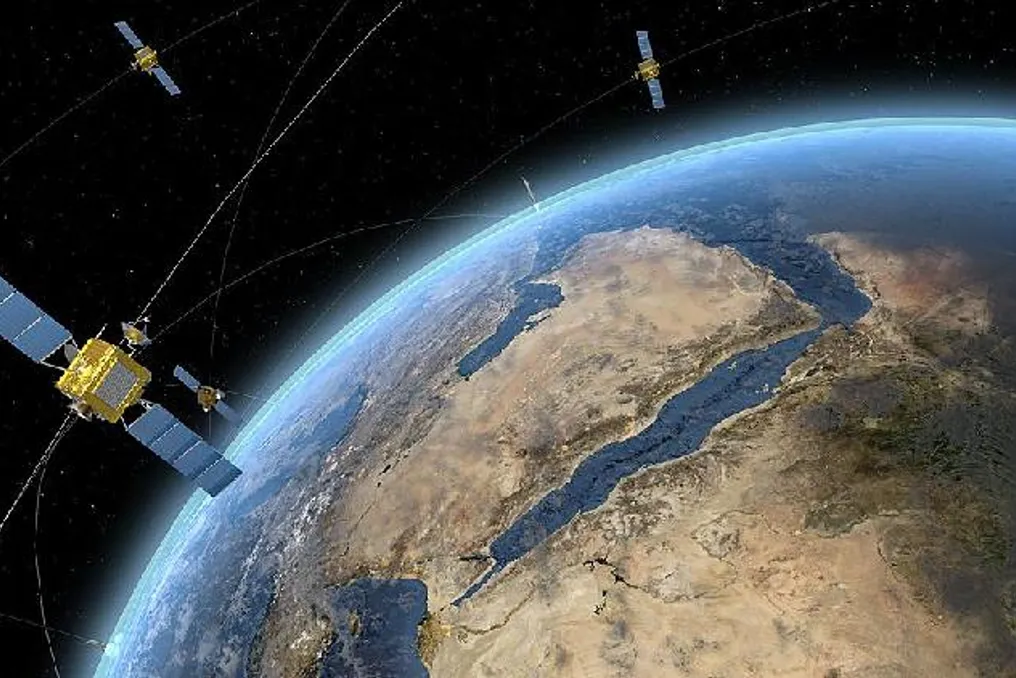
India and France strengthen space cooperation with three agreements between companies
Read more
The times of India
timesofindia.indiatimes.com

India and France strengthen space cooperation with three agreements between companies

India and France have intensified their space interaction by signing three key agreements between companies from both countries during the recent International Space Summit in Paris. These agreements concern satellite launch technologies, space observation, and microsatellite systems.

Under the first agreement, the French company Safran Space concluded contracts worth over 5 million euros with the Indian space company Dhruva Space. These contracts involve the supply of ground stations, optical payloads, inertial navigation units, and communication systems for the SBS-III space observation constellation planned by India. This constellation is planned to consist of 52 satellites that will be launched between 2027 and 2030.

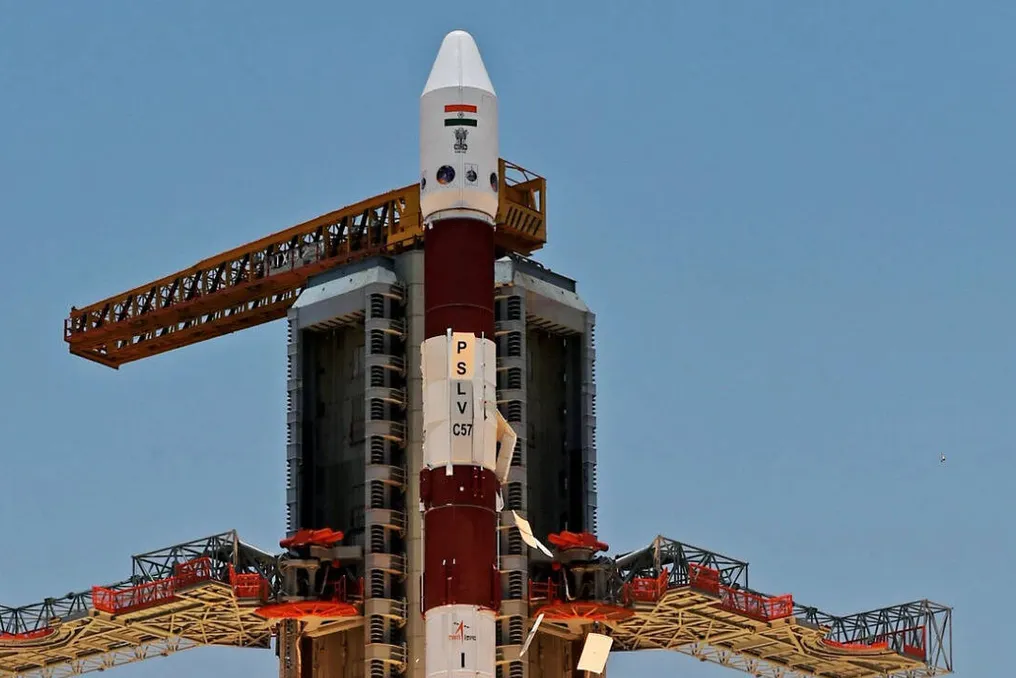
In the second agreement, the French launch service provider RIDE! signed a contract to launch two satellites for TakeMeToSpace, which is the country's first company designing orbital data processing centers. This partnership develops a long-standing cooperation between RIDE! and Indian space firms, including the recent integration, launch, and return of a European atmospheric entry capsule aboard an Indian PSLV rocket.

The third agreement was concluded between the French space company U-Space and the Indian company AXISCADES. They signed a commercial cooperation agreement to study the Indian microsatellite market and meet growing institutional and commercial demand.

These new partnerships come against the backdrop of over fifty years of space cooperation between India and France. The cooperation will be implemented in phases under India's 'Make in India' policy, combining French space technologies with India's industrial integration capabilities.

Similar stories

India's Space Sector as a Foundation for Global Partnership
Read more
uzdaily.uz

India's Space Sector as a Foundation for Global Partnership

The growing competition in outer space provides India with a unique opportunity to shape a narrative based on cooperation rather than confrontation in the field of space exploration. As a recognized reliable and cost-effective space power, India is ready to transform its technological achievements into long-term international partnerships that promote scientific progress, economic growth, and sustainable development.

The history of India's space program differs from many programs that arose from Cold War rivalries; its concept was originally conceived as a tool for national development. Under the leadership of Dr. Vikram Sarabhai, India's space vision was based on the practical application of technology to improve the lives of ordinary citizens. Within this philosophy, satellites were developed for strengthening communication, weather forecasting, disaster management, healthcare, agriculture, and education.

Today, India's successes extend beyond purely developmental applications. The Chandrayaan missions, the Mars orbital mission, the Aditya-L1 solar observatory, and the upcoming Gaganyaan manned flight program have established India as a country capable of executing complex and reliable space missions. The successful soft landing of Chandrayaan-3 near the Moon's south pole placed India among an exclusive group of space powers, demonstrating that global innovations can be achieved at relatively modest costs.

India's rising stature comes against the backdrop of the rapid expansion of the global space economy. Valued at over $600 billion today, this sector is projected to reach $1.8 trillion by 2035. Its growth is increasingly driven by commercial activities in satellite communications, Earth observation, navigation, climate services, broadband access, and new frontiers such as in-orbit servicing and lunar exploration. Many countries seek to participate but lack indigenous capabilities, leading them to look for reliable long-term partners, not just launch providers.

India possesses the potential to meet these needs. The liberalization of the space sector in 2020 changed the ecosystem, opening it up to private participation. The establishment of the Indian National Space Promotion and Authorisation Centre (IN-SPACe), the growing commercial role of NewSpace India Limited, and the development of private enterprises have formed one of the most dynamic space ecosystems globally. Indian startups are creating launch vehicles, satellite platforms, geospatial applications, and propulsion systems, attracting global investment and clients. Companies like Skyroot Aerospace, Pixxel, and Agnikul Cosmos have shown that Indian private entrepreneurship can compete internationally in advanced space technologies.

The next step is the internationalization of this ecosystem. Instead of positioning itself solely as a low-cost launch destination, India will offer comprehensive partnerships that include satellite design, launch services, mission operations, ground stations, astronaut training, capacity building, and subsequent application in agriculture, disaster management, and maritime security. Such integrated partnerships will be valuable to Global South and Indo-Pacific nations seeking access to affordable, customized, and reliable technologies to achieve their development priorities.

India has demonstrated the diplomatic value of such cooperation. Through the South Asia Satellite, it has provided communication and developmental advantages to neighboring countries. Indian launch vehicles have successfully placed hundreds of foreign satellites into orbit for governments, universities, and commercial operators worldwide. India's decision to join the Artemis Accords reflects its willingness to participate in peaceful lunar exploration through international collaboration. Cooperation with NASA, the European Space Agency, and JAXA has strengthened India's scientific and technological capabilities.

These partnerships reinforce India's position as a leading voice of the Global South. India offers development partnerships based on accessibility, reliability, and mutual respect, rather than creating technological dependency. Thus, space cooperation has become an increasingly important instrument of Indian diplomacy, strengthening bilateral relations and ensuring tangible benefits for development.

To fully realize its potential, India intends to maintain the pace of reforms. Accelerating regulatory procedures, greater access to venture capital, strengthening intellectual property protection, and closer interaction between research institutions, industry, and academia will be crucial. Public procurement policies will continue to support Indian startups, allowing them to scale, innovate, and integrate into global supply chains.

India is ready to play a more significant role in shaping space governance. Orbital congestion, space debris, responsible resource use, and equitable access to new space opportunities are becoming pressing international issues. As space activities expand, the need for countries capable of reaching consensus on responsible norms and practices will grow. India's long-standing commitment to the peaceful use of outer space, combined with growing technological capabilities, allows it to make a significant contribution to developing rules that promote transparency, sustainability, and fair access.

The coming decade will determine not only which countries lead in space but also how space will be governed. With its scientific capabilities, entrepreneurial ecosystem, and international standing, India is uniquely positioned to bridge the gap between established and developing space powers. By forging partnerships based on inclusivity, mutual benefit, and innovation, India can transform its space program into a vital pillar of its global engagement.

BRICS Countries Deepen Cooperation in Space for Solving Global Problems
Read more
cgtn.com

BRICS Countries Deepen Cooperation in Space for Solving Global Problems

BRICS countries have intensified joint work in the field of space technologies, expanding the scope of interaction from general satellite projects to broader data exchange, disaster monitoring, and climate change response.

A significant step was the first meeting of the BRICS Joint Committee on Space Cooperation, held on May 25, 2022. Representatives from the space agencies of the five original BRICS members—Brazil, Russia, India, China, and South Africa—participated, officially establishing the cooperation mechanism.

The goal of this committee is to strengthen interaction between the space agencies of BRICS countries and promote the use of Earth remote sensing data in areas such as environmental protection, disaster prevention and mitigation, and climate change response. Through improved data exchange and application, this mechanism is expected to provide a new impetus to sustainable economic and social development in all BRICS countries.

This cooperation is based on an initiative put forward by China in 2015 to create a BRICS remote sensing satellite constellation. In August 2021, the five space agencies of BRICS countries signed an agreement defining the 'six satellites, five ground stations' cooperation model.

This constellation includes six existing satellites from member countries, including the Gaofen-6 and Ziyuan-3 02 satellites from China, the China-Brazil Earth Resources Satellite 04 (CBERS-04), the Kanopus-V type satellite from Russia, and the Resourcesat-2 and Resourcesat-2A satellites from India. Each country has its own ground receiving station.

According to the China National Space Administration (CNSA), this constellation was developed to better support the socio-economic development of BRICS countries, ensure wider access to common satellite imagery data for the five nations, and enhance data processing capabilities. Furthermore, the constellation will help build high-quality partnerships among BRICS countries.

CNSA noted that Earth remote sensing technology, due to its wide coverage, high resolution, and global observation capabilities, is becoming an increasingly important tool for solving global challenges of the 21st century, such as food security and water resource management.

The China-Brazil Earth Resources Program (CBERS), launched over three decades ago, is considered a model of South-South scientific and technical cooperation. The CBERS series, jointly developed by China and Brazil, includes six satellites. Currently operational CBERS-04 and CBERS-04A satellites support applications such as weather monitoring, forest protection, and disaster prevention. This program also contributes to broader BRICS cooperation in remote sensing.

BRICS countries are also expanding cooperation in satellite navigation. In 2026, China and Russia committed to implementing a roadmap for cooperation for the period 2026–2030 in the field of satellite navigation, enhancing compatibility between China's BeiDou navigation system and Russia's GLONASS system.

China has also cooperated with South Africa to promote the application of BeiDou systems and global navigation satellite systems in fields such as precision agriculture, transport and logistics, and public safety.

Expanding Cooperation to Solve Global Problems

At the meeting of the heads of BRICS space agencies (HOSA) in Bangalore, India, in June 2026, representatives of the expanded BRICS membership—including Brazil, China, Egypt, Ethiopia, India, Indonesia, Iran, Russia, South Africa, and the United Arab Emirates—discussed further strengthening cooperation in peaceful space exploration and the long-term sustainability of space activities.

Delegations discussed the potential for BRICS cooperation in using space technologies to solve global problems, especially in the areas of remote sensing, disaster management, and climate change. Progress was also made at this meeting in amending the BRICS Remote Sensing Satellite Constellation Agreement to include new members, and details of the proposed BRICS Space Council were discussed.

Strengthening International Cooperation in Space Data

China emphasized the importance of space cooperation by providing broader access to satellite data technologies and applications. Li Guoping, Chief Engineer of CNSA, stated at the International Air and Space Forum in Wenchang, Hainan, in August 2026, that CNSA will continue to promote open and inclusive space cooperation by expanding international interaction in satellite data applications, creating secure and efficient cross-border remote sensing platforms, and supporting countries, especially developing ones, in enhancing their space capabilities.

Li also reported that CNSA will strengthen cooperation through multilateral mechanisms such as the BRICS Remote Sensing Satellite Constellation, facilitate exchange in space personnel development, and work with international partners on issues such as space traffic management and long-term sustainability of outer space.

Popular