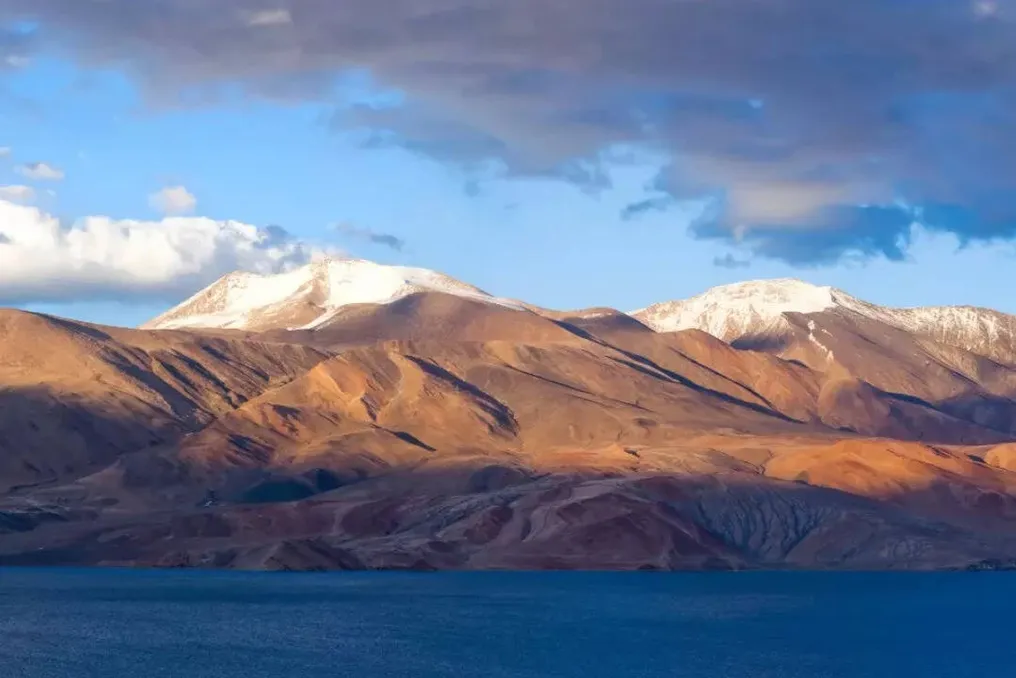
The Ladakh Administration has launched a project to revitalize the rapidly shrinking Tso Kar glacial lake by diverting an average of 132 cubic feet per second (approximately 320 million liters) of unused glacial water from the Rupso Harnak stream in the Changtang region.
Officials predict that the lake can return to its former grandeur within a year, calling this the first project of its kind in India aimed at restoring a high-altitude lake under such harsh climatic conditions.
Located at an altitude of about 15,000 feet, the lake has lost nearly 70% of its water over the last decade, shrinking from approximately 11,000 acres to just 3,200 acres. Previously a habitat for migratory birds, including the black-necked crane, it now attracts significantly fewer birds.
This project follows the successful diversion of 90 million liters of water from the Stok glacier into irrigation canals in the villages of Igu-Phey and Chuchot, located near Leh. The Administration called this the second major initiative for water resource management in the region.
The idea for restoration arose after the visit of Governor VK Saxena to Tso Kar on August 10. Local residents informed him that the lake once supported centuries-old salt trade and maintained a fragile ecological balance, but its decline led to the loss of pastureland and a reduction in bird populations.
Saxena instructed the Department of Public Health Engineering to conduct a site survey. His report, presented on August 30 after fifteen days of preparatory work, proposed the construction of an 11-kilometer reinforced concrete canal. However, Saxena rejected the idea of a new reinforced concrete structure and suggested initially directing the water into a depression via a simple earthen channel. Work began on September 2, before the onset of winter frosts.
The Rupso Harnak stream, located about 11 km from Tso Kar at an altitude of 18,000 feet, has a peak summer flow of about 132 cubic feet per second. Currently, 20 cubic feet per second is being diverted into the first depression, which filled up by about 20% in four days using an earthen channel and a non-operational concrete canal built in 1995.
Before reaching Tso Kar, the water will fill three natural depressions, creating freshwater wetlands covering areas of 270, 24, and 10 acres with a total capacity of almost 1.230 million liters. These wetlands will allow sediment to settle, providing cleaner water for the lake, and will also create new habitats for migratory birds and potential tourist attractions visible from the Leh-Manali highway.