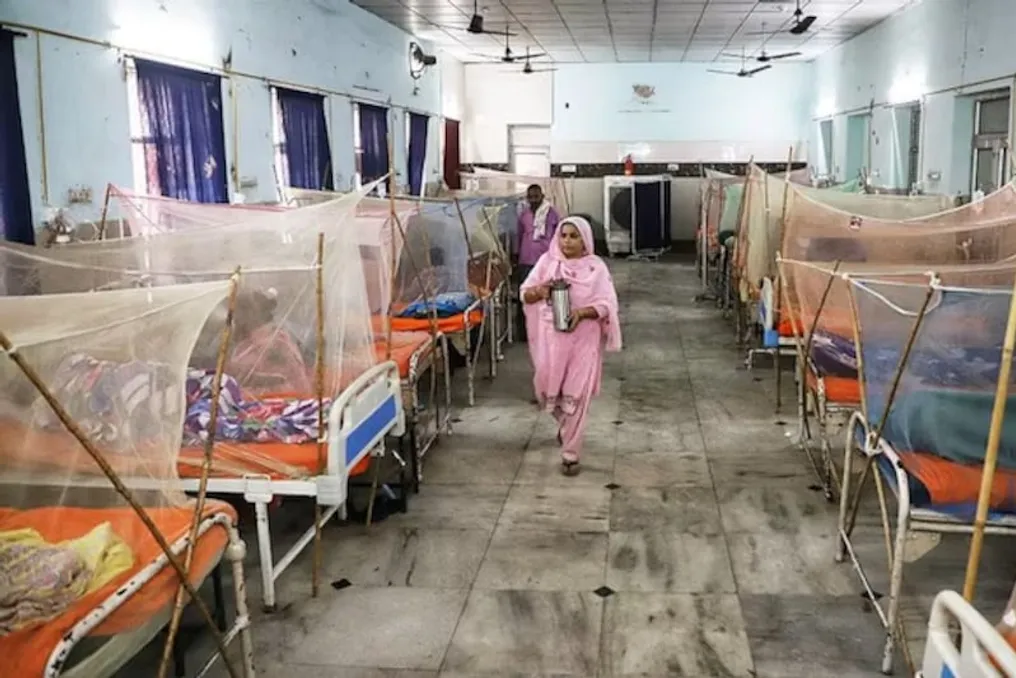
Dengue fever cases sharply increase in West Bengal; Murshidabad most affected
Read more
Aaj Tak
www.aajtak.in

Dengue fever cases sharply increase in West Bengal; Murshidabad most affected

There is a rapid rise in dengue incidence in West Bengal. According to the Health Department, by September 11, the number of positive cases among patients reached 5002.

The Murshidabad district has been the hardest hit. The Medical Department published statistics for the period from August 6 to September 11, according to which the number of dengue cases more than doubled in approximately one month. If 2410 cases were registered on August 6, this figure increased to 5002 by September 11.

Murshidabad recorded the highest number of dengue cases—1072 people. This is followed by Kolkata, where over 500 cases were registered. A significant number of cases were also noted in the districts of Uttar 24 Parganas (450 cases), Nadia (over 400 patients), and Malda (about 400 cases). In Uttar 24 Parganas, 366 positive cases were identified.

According to the Health Department data, 325 cases were registered in Howrah, and 325 people were confirmed with the disease in Hooghly. In East Bardhaman, 256 cases were recorded by September 11, and in West Bardhaman—154 cases. 126 patients were identified in East Medinipur, and 104 in West Medinipur. So far, 54 cases have been registered in Dadgram.

The rate of increase in morbidity in the state is very high. If there were 2410 cases on August 6, the number reached 5002 after about five weeks, meaning an increase in morbidity by more than double. The Health Department reports that the total number of dengue tests conducted in the state was 6826, of which 5002 were positive. The highest concentration of cases is observed in Murshidabad, followed by Kolkata and other affected districts.

Similar stories

Risks after temperature drop during dengue fever and symptoms that should not be ignored
Read more
www.aajtak.in

Risks after temperature drop during dengue fever and symptoms that should not be ignored

During the rainy season, there is an increase in dengue cases in some regions of the country. Although most people recover from dengue fever within a few days, some cases can be severe. Doctors warn that the danger may persist even after the temperature drops, so it is necessary to constantly monitor one's health to prevent deterioration.

According to doctors, patients and their families must understand that a drop in temperature does not always mean complete recovery. Sometimes, the patient's condition can begin to worsen precisely during the period of falling temperature. This usually happens between the third and seventh day of illness. At this point, due to fluid loss, blood pressure may decrease, which can lead to a serious condition in some patients.

Dr. Vijay Arora, Director of Internal Medicine at Yashoda Medicity Hospital, notes that if a patient with a positive dengue test starts to have a dropping temperature, it is extremely important to continue monitoring one's health. Special attention must be paid to several signs. If a person experiences severe abdominal pain, frequent vomiting, nose or gum bleeding, blood in vomit or stool, severe weakness or restlessness, difficulty breathing, or decreased urination, they should not wait at home. In such cases, it is better to seek immediate hospital care.

Dr. Vijay also points out the common anxiety regarding platelet levels. The severity of dengue is determined not only by the number of platelets; the patient's blood pressure, kidney function, results of other blood tests, and overall condition must be assessed. Special caution should be exercised for one to two days after the temperature drops. Regarding platelets, their count should exceed 40-50 thousand; if it is lower, platelet transfusion may be required.

Popular