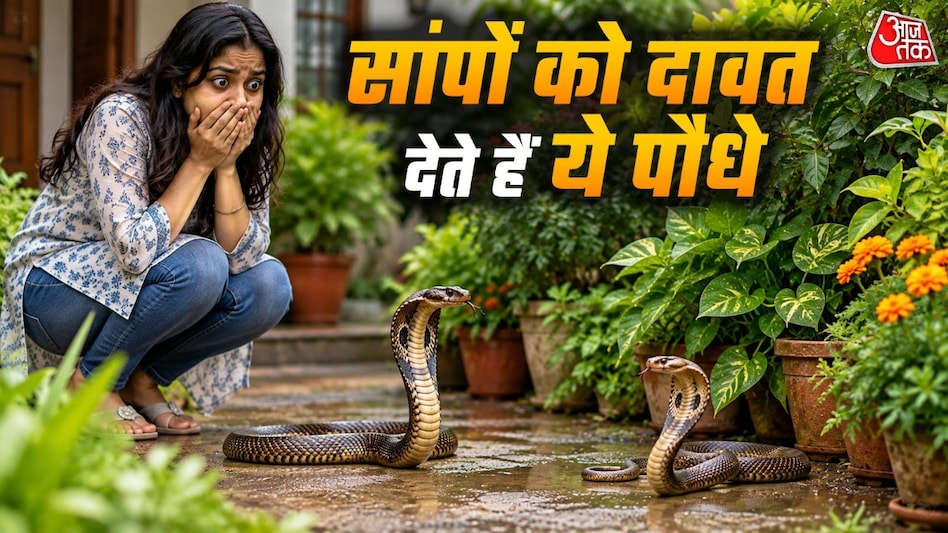
Some garden plants attract snakes: it is recommended to remove them for safety
Read more
Aaj Tak
www.aajtak.in

Some garden plants attract snakes: it is recommended to remove them for safety

People enjoy planting lush plants in yards or gardens because they not only improve the appearance of the house but also purify the air. However, it should be known that some dense shrubs and plants in the garden can attract snakes.

Snakes prefer moist, shady places where they can easily find insects or small animals. If such plants grow near your home, precautions must be taken, and they should be moved away from the yard immediately.

Plants that attract snakes

The scent of jasmine (Chameli) and night-blooming jasmine (Raat ki Rani) strongly attracts insects and small creatures. Snakes often settle near these bushes to hunt these animals and hide in the dense foliage.

Lemongrass, although often used as a utilitarian plant, creates many low areas when growing in dense clumps, into which snakes can climb. Although lemongrass may not directly attract snakes, its shade and cool spot can serve as a refuge that snakes like.

Jasmine grows as a dense and tangled shrub that can provide cover for snakes at ground level. Its dense foliage also serves as a hiding place for rats, insects, and small animals, which can indirectly attract snakes.

The warmth of sandalwood (Chandan) is very attractive to snakes. They hide in the dense shade of the tree to cool down.

Measures to ensure garden safety

To keep the garden safe, it is necessary to regularly trim the plants so that they look neat and are slightly elevated above the ground. It is also important not to allow accumulations of dry leaves and wooden piles around the plants.

To protect the garden, it is recommended to plant species such as marigolds (Gende) or snake plant (Sansevieria), whose strong odor repels snakes.

Similar stories

Six Dangerous Insects That Invade Homes During Rains and How to Prevent Their Entry
Read more
www.aajtak.in

Six Dangerous Insects That Invade Homes During Rains and How to Prevent Their Entry

The monsoon season and constant rain, while making the weather pleasant, contribute to a rapid increase in insect appearances due to dampness, water accumulation, and overflowing sewage drains. Although people often fear snakes or scorpions during the rain, there are actually many small and dangerous insects that penetrate bedrooms, kitchens, and bathrooms after rainwater accumulates.

Some of these insects bite with venomous stings, while others carry deadly diseases such as Dengue fever, malaria, and skin infections. The article examines six such dangerous insects that enter homes during the rain and also provides advice on how to protect against them.

Scorpion: When water collects in scorpion burrows during the rain, they seek a dry and warm place, hiding in shoes, clothes, or dark corners of the house. A scorpion sting is extremely painful and highly venomous.

Mosquitoes: Mosquitoes, which breed in stagnant water, pose the greatest threat during the rains. Their bites can cause fatal diseases, including Dengue, malaria, and chikungunya.

Centipede: In conditions of high humidity and dampness, centipedes enter homes through drains in bathrooms and kitchens. Their bite causes severe pain, as well as intense skin irritation and swelling.

Wasps & Fire Ants: During the rain, wasps or fire ants build nests near windows and rooftops of houses in search of dry places. Their sharp bites lead to allergic reactions on the skin, severe pain, and swelling.

Winged Termites: In the evening, winged termites are attracted by lamp light and begin to penetrate inside the house. They not only contaminate the floor but also secretly destroy expensive wooden furniture, hollowing it out from the inside.

Cockroaches & Toxic Beetles: When sewage overflows during the rain, cockroaches and various toxic beetles may appear in the house. They sometimes land on dirty dishes and food in the kitchen, increasing the risk of food poisoning and typhoid.

To protect against insects, it is recommended to use fine mesh screens on windows and seal the space under doors to prevent their entry. It is also important not to allow water to accumulate in pots, buckets, or on the roof, which will stop mosquito breeding.

Regularly spray a solution of vinegar, frankincense, or neoprene oil in the corners of the house, in bathroom drainage holes, and on windows. Additionally, during the rainy season, before putting on shoes, you should shake them thoroughly to avoid contact with potentially dangerous scorpions or centipedes.

Popular