Shafali Verma and Smriti Mandhana pair creates sensation in world cricket, setting partnership records
Read more
Aaj Tak
www.aajtak.in

Shafali Verma and Smriti Mandhana pair creates sensation in world cricket, setting partnership records

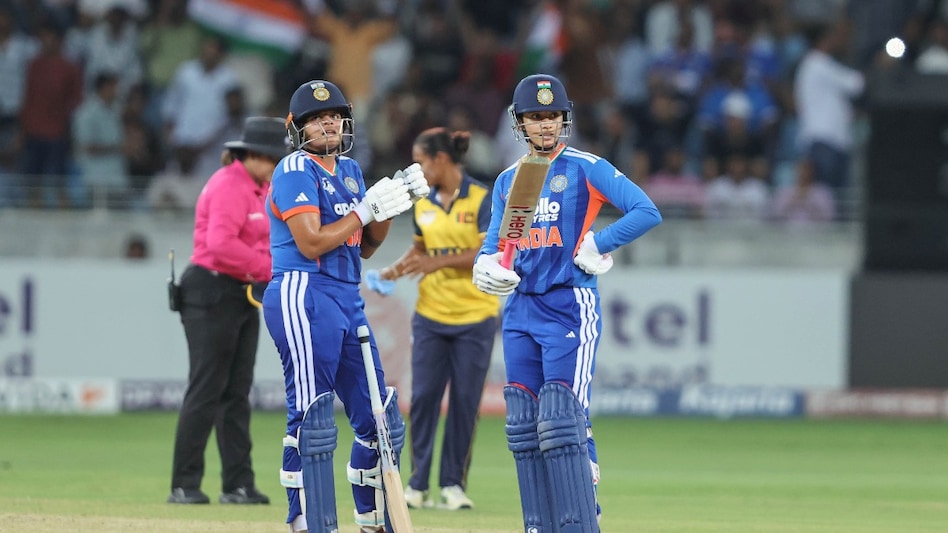
India's star opening pair, Smriti Mandhana and Shafali Verma, demonstrated outstanding play during the Women's Asia Cup 2026 final. Their performance was so impressive that the Sri Lankan team found itself entirely on the defensive.

In the major match against Sri Lanka, both athletes scored a combined total of over 100 runs. This is the sixth instance in the history of women's T20 international matches where this pair managed to score such a high number of runs in a partnership. By achieving this, they equaled the world record set by Isha Ojha and Tirta Satish from the UAE, and now lead the list of pairs with the highest run-scoring partnerships over 100 runs globally.

Shafali Verma started the game at a very aggressive pace. She achieved her quick half-century in just 24 balls, which became the fastest half-century in the history of the Asia Cup. This success also allowed her to equal the record set by Chamari Atapattu in the 2024 Asia Cup.

The combination of Smriti Mandhana's calculated timing and Shafali Verma's powerful hitting disrupted the rhythm of the Sri Lankan bowlers. In such a tense final match, the aggressive and calculated play of this opening pair helped India reach a substantial total score. Mandhana scored 59 runs off 39 balls, while Shafali Verma achieved 68 runs off the same 39 balls.

The Indian team managed to score an impressive 183 runs in the final, losing five wickets for 20 overs. This was the highest score for India in this tournament. After Mandhana and Verma got out, the middle order faced sudden difficulties, which slowed down the scoring rate. However, in the final overs, Rich Ghosh and Gunalan Kamalini continued to attack, pushing the team's score above the 180 mark. Considering the slow pitch in Dubai, achieving this goal for Sri Lanka in such an important final match seemed extremely difficult.

Similar stories

The Story of Lala Amarnath, India's First Centre Batsman Who Played Alongside His Sons for India
Read more
www.aajtak.in

The Story of Lala Amarnath, India's First Centre Batsman Who Played Alongside His Sons for India

September 11 marks an important date in the history of Indian cricket: 115 years ago, in 1911, Lala Amarnath was born, the first centre batsman for the Indian team. Amarnath became not just an athlete, but a significant figure who left a deep mark on the culture and system of Indian cricket, being involved in it as a player, bowler, captain, selector, coach, and commentator.

Lala Amarnath, born into a modest family in Lahore, demonstrated his talent in 1933-34, scoring 109 runs for the South Punjab team against MCC. Shortly after, he got the opportunity to play in India's first home Test match against England at the Jimkhana ground in Bombay. Despite India's difficult situation, Amarnath managed to counter the attacks of the English bowlers, completing a century in 117 minutes and becoming the first player to score a centre in international cricket for India, although the team ultimately lost.

In 1936, during a tour of England, Lala Amarnath was one of the most influential players in the Indian squad. However, a dispute arose with the team captain, Maharaja Kumar from Vijnagaram, known as 'Viji'. Following this incident, Amarnath was sent back to India mid-tour, which seriously affected his Test career, forcing him to step away from it for about 12 years. Nevertheless, his domestic performances continued, and in 1938-39, he scored an impressive 241 runs for the Hinduja team against The Rest.

Lala Amarnath's return was not limited to batting. In 1946, during a visit to England, he made a splash in a match at Lord's, dismissing players such as Len Hutton, Cyril Washbrook, Dennis Compton, and Wally Hammond in England's first innings. A specialty of his bowling was the ability to bring the ball inside with precise length, allowing him to play a useful role both with the bat and with the ball for the Indian side.

In 1947, Lala Amarnath was appointed captain of the first Australian touring Indian team after the departure of Vijay Merchant. The Australian team under Don Bradman was very strong, and India faced serious difficulties in five Test matches. Although his personal Test performances did not meet expectations, he performed brilliantly against regional teams, notably his innings of 228 runs against Victoria was noted by the great Australian player Neil Harvey.

In the 1952-53 season, Lala Amarnath once again led India, and this time the opponent was Pakistan. This was the first official Test series between the two countries, which India won, creating a historic moment. Nevertheless, Amarnath's relationship with Indian cricket politics remained complicated; due to disagreements with the then influential council officials, he faced problems regarding leadership and team decisions.

Throughout his career, Lala Amarnath played 24 Test matches, scoring 878 runs at an average of 24.38. In Tests, he scored 1 centre and 4 half-centuries. Regarding bowling, he took 45 wickets at an average of 32.91. In total across 186 first-class matches, he scored 10426 runs and took 463 wickets.

Although Lala Amarnath's sporting career concluded, his contribution to Indian cricket remains significant. He became a selector, and his name is particularly associated with the decision to give a chance to spinner Jaswant Patel in the Kanpur match against Australia in 1959-60. Patel secured a historic victory for India through his outstanding bowling. His family also continued the cricketing tradition: his sons Surinder Amarnath and Mohinder Amarnath represented India. Surinder also scored a centre in his debut Test match, and Mohinder played 69 Test and 85 ODI matches.

Lala Amarnath was characterized by his straightforward nature and ability to openly express his opinion. His contemporary Mushtaq Ali vividly described his personality. Given his contribution to Indian cricket, former Prime Minister Atal Bihari Vajpayee called him an 'icon'.

Pakistani cricketer Saeed Anwar, known for his historic match against India, has become a Mullah
Read more
www.aajtak.in

Pakistani cricketer Saeed Anwar, known for his historic match against India, has become a Mullah

Currently, the Pakistan team is on tour in England, where their performances have not yielded the expected results. The team has lost two consecutive Test matches, trailing the series 0-2. Now, the Pakistani team aims to win the final match of the series, scheduled for September 9th, to avoid the disgrace of a complete defeat. Significant changes have also occurred within the Pakistani squad ahead of the Edgbaston match: seven players were dropped, and the coaching staff underwent reshuffles.

Despite the current difficult period, the Pakistani team once held a very strong reputation in world cricket, featuring many outstanding athletes. Among them, one cannot forget the left-handed opener Saeed Anwar, whose trademark was the ability to score quickly from the start thanks to excellent timing and shot placement.

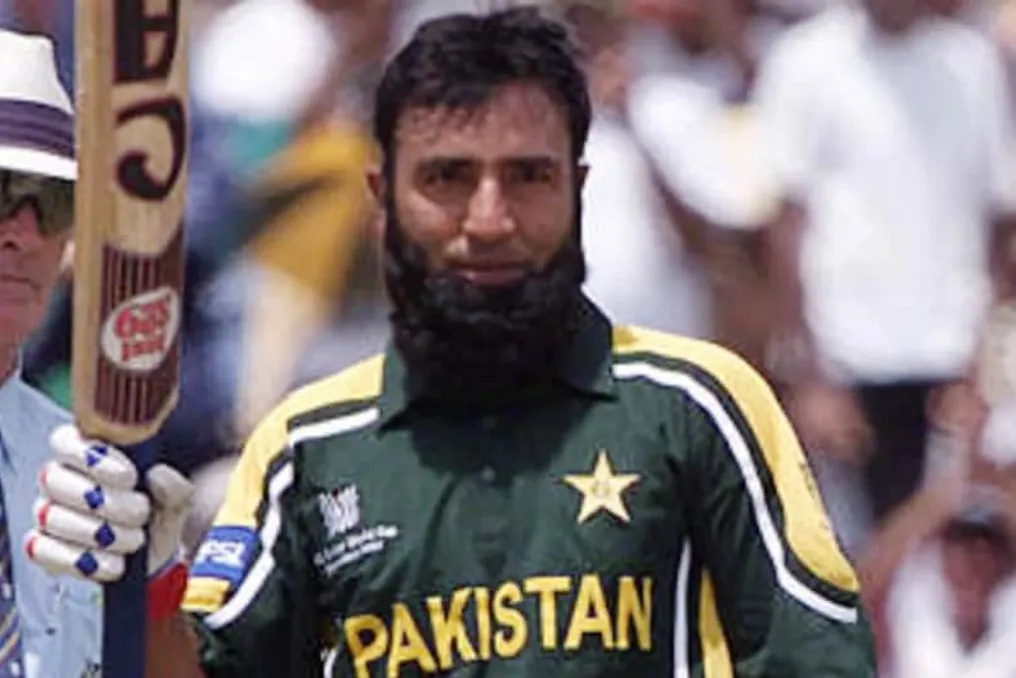
Saeed Anwar's international career, which marked his 58th birthday on September 6th (Sunday), spanned from 1990 to 2003. For Pakistan, he amassed thousands of runs in both Tests and ODIs. In 1997, during an ODI against India in Chennai, he played a knock of 194 runs off 146 balls, which was the highest individual score in an ODI at that time. He approached two hundred runs but was caught by Saurav Ganguly off a Sachin Tendulkar delivery.

Interestingly, this record of Saeed Anwar was matched in 2009 by Charles Coventry of Zimbabwe, who scored 194 runs without being dismissed. Subsequently, in 2010, Indian legend Sachin Tendulkar played a historic innings of 200 runs without being out against South Africa, thereby surpassing Anwar's record.

Anwar batted actively not only in ODIs but also in Tests, where he also registered many big scores. It is worth noting that many of his best Test performances took place on foreign soil. In 1994 in Wellington against New Zealand, he scored 169 runs, marking his first Test century. Two years later, in Hove against England, he delivered an impressive innings of 176 runs. In 1998, in a Test match against India in Calcutta, Anwar remained unbeaten on 188 runs, which was his highest Test score. His batting attracted attention because he hit boundaries not so much through power as through mastery of timing and placement.

For Pakistan, Saeed Anwar scored 4052 runs in 55 Test matches, maintaining an average of 45.52, and scored 11 centuries and 25 half-centuries. His ODI statistics were even more impressive: in 247 matches, he accumulated 8824 runs, including 20 centuries and 43 half-centuries. He was particularly renowned for his magnificent drives off the off-side. If a bowler left even a small gap outside the mid-stump, Anwar would immediately drive the ball to the boundary. His game combined aggression with a special kind of beauty.

Saeed Anwar's Test career concluded under very emotional circumstances. In August 2001, in a Test match against Bangladesh in Multan, he scored 101 runs, which was his 11th and final Test century. In that match, Pakistan posted a formidable total of 546/3 in the first innings, and five batsmen from the team scored centuries. This unique record of five centuries in one Test match is jointly held by Pakistan and Australia. However, for Anwar, this match brought more pain than joy.

After his daughter Bismah, who was three and a half years old, passed away after a long illness just two days after his century in the Multan match, Anwar returned to Lahore. After this tragedy, he did not play any more Test matches. He stepped away from cricket for some time, and his life changed. This is why the 101 runs scored in Multan entered the list of the most memorable and touching centuries of his career.

Having lost his daughter, Saeed Anwar returned to ODIs and scored a century against India in the 2003 World Cup. Although Pakistan lost that match, Anwar's innings was magnificent. He dedicated this century to his daughter Bismah. This innings became one of the most emotional moments of his international career.

Saeed Anwar announced his retirement from international and first-class cricket on August 15, 2003. Following this, he engaged in religious activities and began growing a beard. Anwar actively participated in events related to the propagation of Islam. Muhammad Yusuf, a former batsman for Pakistan, was also significantly influenced by Anwar in life. Yusuf converted to Islam in 2004 and later stated that Saeed Anwar had provided him with great assistance during his religious change. Before converting to Islam, Yusuf was known as Yusuf Johana.
Chamari Atapattu sets record by taking seven wickets for 5 runs in Women's Asian Cup
Read more
www.aajtak.in

Chamari Atapattu sets record by taking seven wickets for 5 runs in Women's Asian Cup

During the Women's Asian Cup held in Dubai, in a Group B match against Indonesia, Sri Lanka's captain Chamari Atapattu achieved a historic feat. At the Dubai International Cricket Stadium, she took seven wickets while conceding only 5 runs.

Thus, Atapattu became the first player in the history of any Asian Cup (both women's and men's) to take seven wickets in a single match. In 3.3 overs, she completely dismantled the attacking capabilities of the Indonesian team. Furthermore, in the 19th over, she took a hat-trick, claiming three wickets on the first three balls.

Thanks to her powerful performance, the entire Indonesian team was dismissed in 18.3 overs, scoring only 49 runs. Consequently, Sri Lanka won the match with a score of 75 runs.

Previously, the best performance in the Asian Cup belonged to Jaweria Khan from Pakistan, who took six wickets for 8 runs against Bangladesh in the 2008 Women's Asian Cup. Now, the record for seven wickets in one match in the Asian Cup belongs to Chamari Atapattu.

Chamari Atapattu's achievement is not limited to the Asian Cup; it is also the best performance for a Sri Lankan bowler (male or female) in T20 International. She broke the record of Ajtanda Mendis, who took 6 wickets for 8 runs against Zimbabwe in September 2012.

Chamari Atapattu is also the first bowler in the history of the T20I Asian Cup (women's or men's) to take six or more wickets. Before this, in the women's version of the T20I Asian Cup, three bowlers from Pakistan and one from Thailand had taken five wickets consecutively. In the men's version of the T20I Asian Cup, the only bowler to have taken five wickets is Bhuvneshwar Kumar.

Moreover, Chamari Atapattu became the second captain in the world to take seven wickets in a T20 International match. Before her, this feat was accomplished by Alison Stokes from Argentina, who took 7 wickets for 3.4 overs, conceding 3 runs, against Peru on October 14, 2022.

Popular