
Car sales grow in Brazil, driven by imports, but with low participation from traditional manufacturers
Read more
AutoPapo
autopapo.com.br

Car sales grow in Brazil, driven by imports, but with low participation from traditional manufacturers

Automobile sales in Brazil showed growth, although this is marked by the absence of contribution from traditionally considered manufacturers. Last August, the country recorded an average daily sale of 13.1 thousand units, which represented the second-best performance of the year, only behind May, which reached 13.7 thousand units per day.

Igor Calvet, president of Anfavea, highlighted the increase in the participation of imported vehicles and the consequent decrease in the share of domestically manufactured vehicles. He observed that in the first eight months of the year, there was a positive growth of 18.4% in sales; however, production grew by only 8.5%, stating that the market is not absorbing all the potential for growth.

Between January and August of this year, the commercialization of imported passenger car and light utility models rose by 30.3%, while domestically produced vehicles registered an advance of 17.2%. Calvet detailed that out of the 148 thousand additional vehicles sold, only 47 thousand were actually produced within Brazil.

Analysis of Imported Vehicles

Of the remaining 101 thousand vehicles, the majority comes from China, arriving in partially assembled (SKD) or completely disassembled (CKD) formats, meaning they did not contribute significantly with local content. Among the ten best-selling models last month, three were Chinese: one was imported, and the other two had minimum indices of Brazilian parts, such as tires and glass. The executive did not provide forecasts on how much the Chinese models can expand in the market.

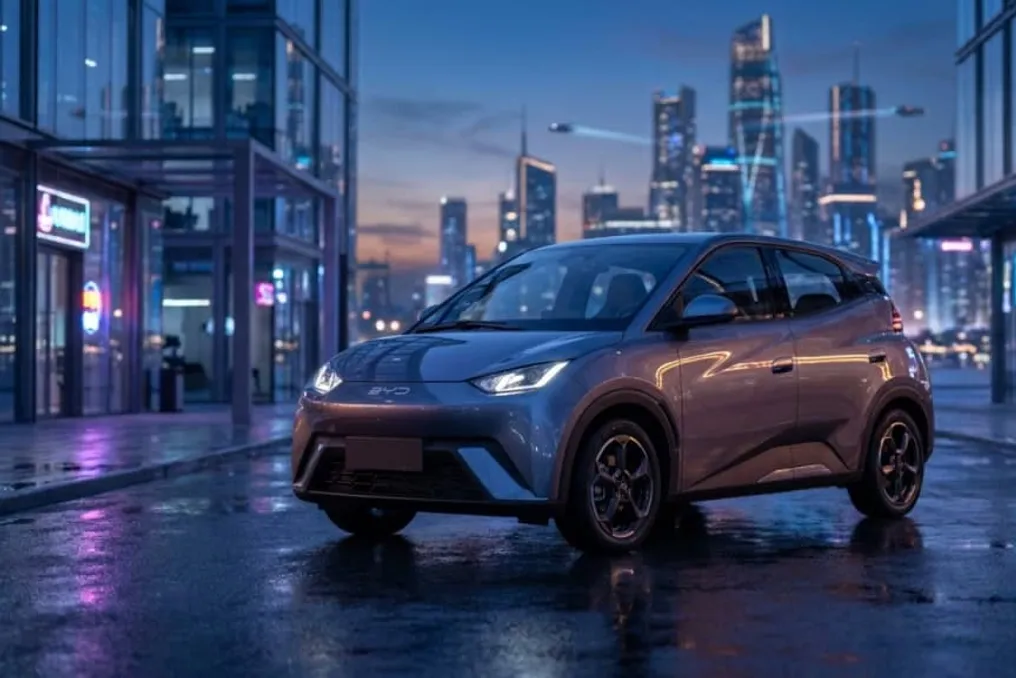
An important aspect to note is that starting in January, all imported electric vehicles, whether CKD or SKD, will be subject to a 35% Import Tax (I.I.) rate, a rate established since the 1990s. Despite this, there is still a considerable stock of BYD electric models that entered exempt from this tax.

In the international scenario, fiscal incentives have a fixed value in the local currency and are much lower than those practiced in Brazil. Additionally, Chinese exports to Argentina also caused a diversion of Brazilian vehicle sales in that neighboring country.

Even with the notable progress of electric and hybrid cars in the Brazilian market for passenger cars and light utilities (which together account for 94% of sales, with 1% remaining for buses and 5% for trucks), their presence in sales from January to August remains quite modest.

Despite the high growth percentages, these may be misleading due to excessively optimistic mathematical calculations, which could lead to premature celebrations, requiring a more cautious analysis of the overall picture.
Similar stories

Vehicle production in Brazil reaches record and is the highest in seven years
Read more
olhardigital.com.br

Vehicle production in Brazil reaches record and is the highest in seven years

The Brazilian automotive industry recorded the production of 271.2 thousand vehicles in August, marking the highest monthly volume since October 2019. This result indicates an increase of 6.8% compared to July and a growth of 9.4% when compared to August 2025, according to data released by Anfavea.

However, this production increase shows a significant change in the composition of the total volume. About two-thirds of the nearly 150 thousand extra units manufactured this year are models assembled under CKD and SKD formats, using imported components.

In the period between January and August, Brazilian manufacturers produced approximately 1.9 million vehicles, representing an 8.5% increase compared to the same period in 2025. This production is seen as a positive sign of the domestic market warming up, despite the decrease observed in exports.

It should be noted, however, that the majority of the additional units produced this year (two-thirds of the nearly 150 thousand) consist of SKD and CKD models, while only one-third corresponds to models with complete production in the national territory.

In a note, Igor Calvet, president of Anfavea, commented on the scenario. CKD and SKD systems depend on kits that arrive disassembled or semi-disassembled, which reduces the need for labor and may expand in the country with the continuation of sectoral incentives.

Exports totaled 39.8 thousand units in August, an increase of 2.2% over July. However, compared to August 2025, there was a sharp drop of 31.7%. Annually, shipments fell by 22.9%, driven mainly by the reduction in sales destined for Argentina.

In this context, Uruguay and Chile are also involved, as these markets have increasingly received vehicles manufactured in China.

Imports followed the opposite trend. In the first eight months of the year, Brazil received 406.7 thousand vehicles, a growth of 29.8%. More than half of this volume comes from China, whose participation percentage more than doubled during this period.

Regarding vehicle registrations, 275.1 thousand units were counted in August. This number was slightly below July's 1.6% due to having more business days, but exceeded August 2025 by 22.1%. From January to August, the total number of registrations reached 1.975 million, a jump of 18.4%, and the goal of 2 million was reached in early September, about a month before the 2025 record.

Electrified vehicles also reached a record level, accounting for 24.4% of registrations in August. Pure electric vehicles accounted for 25.9 thousand units. For the full year, electric and hybrid vehicles totaled 372 thousand registrations, a notable increase of 125.8%. It is relevant to note that models produced in Brazil constitute 39% of electrified vehicles sold in the country, many of which incorporate imported components via CKD or SKD.

Additionally, the Sustainable Car program registered a 27.2% growth in sales of covered models since its launch in July 2024, and its validity extends until the end of 2026.

Additional Information on Heavy Vehicles

In the heavy vehicle segment, the Move Brasil initiative helped mitigate the drop in truck sales, which fell from 31.5% in January to only 4.9% in August. Annually, 70.7 thousand trucks were registered. Buses registered a volume of 14.5 thousand units, which represents a setback of 7.6%.

The presented data highlights a dynamic domestic market but also demonstrates a growing insertion of imported products and parts. In this scenario, China has consolidated its presence in both imports and the composition of models assembled in Brazil.

Popular