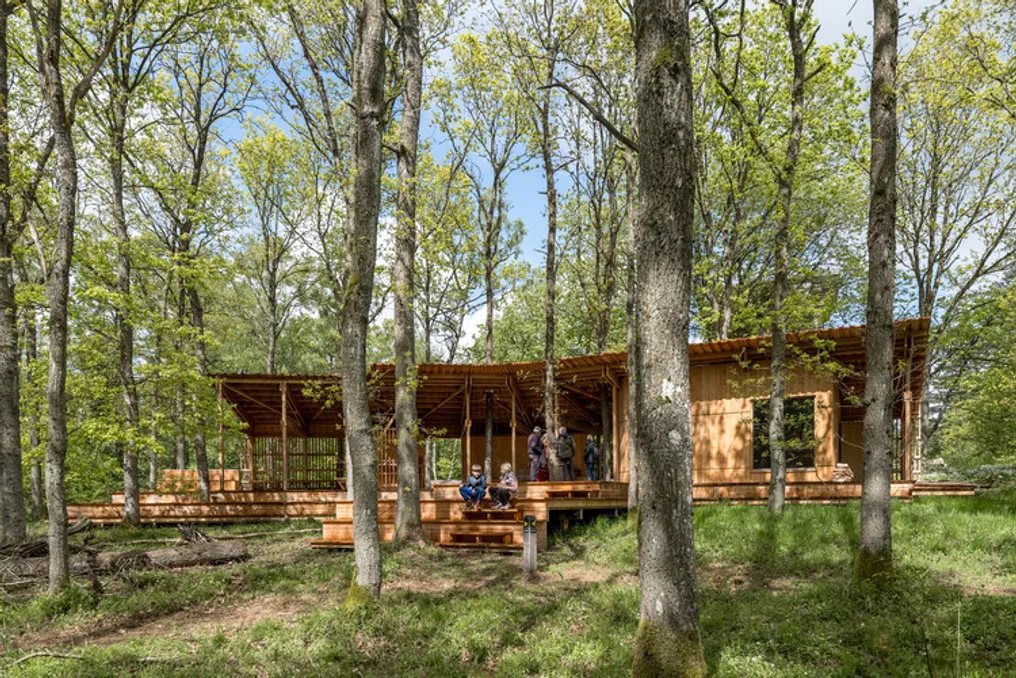
The Rytterknægten Trails Center, developed by the Matters firm, is part of the national network of Danish Trailcentres, an initiative aimed at fostering outdoor activities and expanding access to nature throughout Denmark. The project was signed in 2021 and was scheduled for completion in 2025, promoted by the DIF and Lokale & Anlægsfonden, in partnership with the regional municipality of Bornholm.
Located on the highest point of the island of Bornholm, 162 meters above sea level, in the center of Almindingen—the country's third largest forest—the pavilion provides visitors with a privileged view of the island's diverse terrain and vast biodiversity, utilizing viewpoints and leisure areas.
With an area of 100 m² and constructed from wood, the pavilion is slightly elevated above the forest floor and is reached by an inclined ramp. Its infrastructure includes an outdoor kitchen, a common room equipped with a fireplace, a bicycle repair space, an equipment storage area, and an information point, serving both occasional visitors and organized groups. The modular and movement-focused design promotes an engaging and inclusive experience of the forest landscape.
Discreetly positioned among the trees, the Rytterknægten Trails Center was conceived to encourage a natural and instinctive journey through the woods, stimulating exploration and curiosity. The project exemplifies an environmentally respectful construction methodology, where architecture functions as a link between human action and the natural setting, complementing and valuing the landscape rather than dominating it, thus promoting a sustainable way to experience the forest.
The meticulous planning directly influenced how the forest is accessed and used, allowing more people to enjoy it in a way that protects the ecosystem. Sustainability guided all phases of the undertaking, ranging from the selection of materials and low-impact construction methods to specific details. Elements such as wooden steps from the old Rytterknægten Tower were reused as furniture (benches and tables), the wood comes from a local sawmill, and many joints were designed to be disassembled in the future, facilitating recycling.
A crucial aspect is the focus on inclusion. The Rytterknægten Trails Center is accessible to everyone, regardless of age, ability, or origin. Special attention was paid to creating a stimulating environment for children and families, offering attractive trails, facilities, and educational resources that foster learning, discovery, and play in contact with nature. By introducing children to the forest early, a lasting bond and deep appreciation for the environment are established. It is essential to balance access with care to ensure space for both people and biodiversity, given that Danish nature requires greater protection and opportunities for experience.
This inclusive approach fulfills the central purpose of the project: making outdoor life more inviting and accessible through functional and well-planned facilities. Such infrastructures promote physical activity, strengthen the sense of community, and establish a more conscious relationship with the environment, creating solid foundations for social and ecological sustainability.