Fish farming cluster planned in Namangan region of Uzbekistan using South Korean technologies
Read more
UzDaily
uzdaily.uz

Fish farming cluster planned in Namangan region of Uzbekistan using South Korean technologies

The regional administration announced plans to create a large-scale, next-generation fish farming cluster in the Namangan region of Uzbekistan. This project involves attracting foreign direct investment and utilizing South Korean technologies.

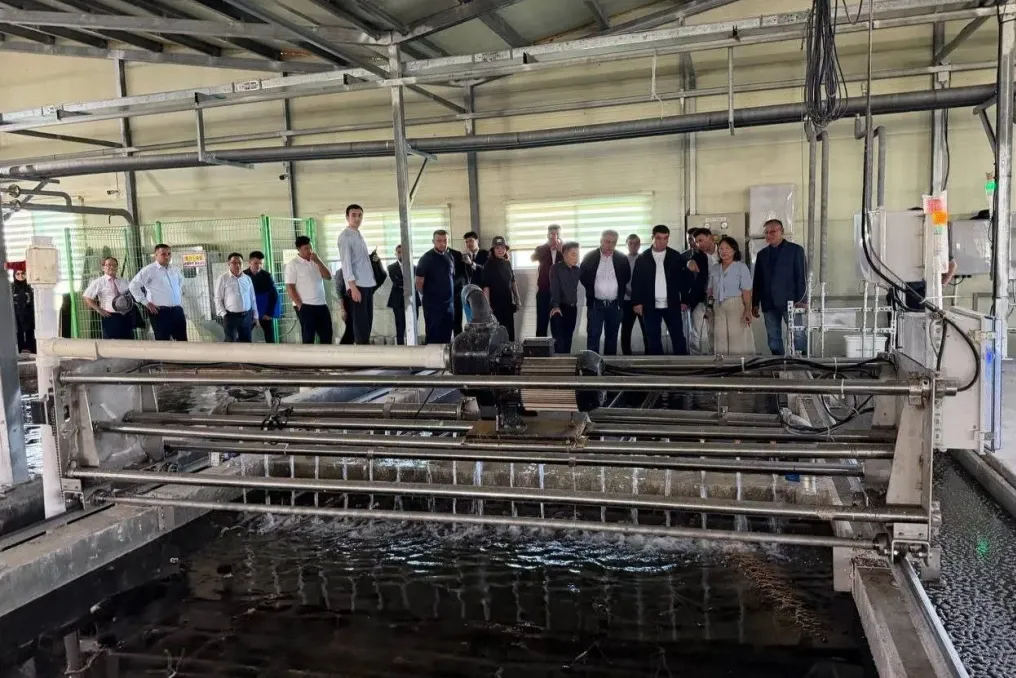
A delegation from the Namangan region visited South Korea as part of a working trip led by the region's governor, Shavkatjon Abdurrazzakov. During the visit, regional representatives inspected the Aqua Plaza & Jang Hang Fish Farm complex—a modern smart facility for aquaculture that employs innovative methods.

Following negotiations, the Namangan regional administration, U.K. Global Network, and Aqua Plaza & Jang Hang Fish Farm signed a tripartite memorandum of understanding and cooperation.

The planned complex will cover all major stages of fish production. One focus will be on implementing smart aquaculture technologies, which include digital and intensive management of water bodies. Furthermore, the project includes deep fish processing, industrial packaging, and the production of finished food products intended for export markets.

Another emphasis will be placed on creating an independent feed source. The Namangan region intends to localize the production of high-quality, nutritious fish feed that meets international standards. This project is expected to enhance the agro-industrial and export potential of the Namangan region, as well as strengthen food security.

Similar stories

Namangan expands cooperation with Japan in the field of education
Read more
uzdaily.uz

Namangan expands cooperation with Japan in the field of education

The information service of the Namangan region's hokimiyat reported that the Namangan region is increasing interaction with Japanese educational structures as part of the phased piloting of the Japanese education model.

The goal of these pilot projects is to improve the quality of education, develop modern skills in students, and integrate international experience into the educational process. Currently, 17 general education schools and 18 preschool educational institutions are participating in the project, where individual elements of the Japanese education system are being implemented.

Japanese specialist Mikako Goto, who has significant experience in this field, is also participating in the project. The new stage of cooperation includes KEI Advanced, which is part of the Japanese group Kawaijuku Group. This company is involved in assessing the quality of education, developing testing systems, training teachers, and promoting Japanese educational experience abroad.

Nobuaki Kimura, manager of KEI Advanced and Nippon Global Education and Assessment (NGEA), one of the company's key partners in Uzbekistan, arrived in Namangan. Representatives from the Japanese side were met by the Hokim of the Namangan region, Shavkatjon Abdurazzakov.

At the beginning of the meeting, the regional head thanked Mikako Goto for her work in implementing educational initiatives in the region. Nobuaki Kimura presented the activities of NGEA, which was established in Tashkent in 2023. The parties also discussed the company's experience gained during projects conducted in Uzbekistan.

Specifically, between 2021 and 2023, Japanese approaches to knowledge assessment and mathematics teaching were tested in 40 schools across 14 regions of Uzbekistan under the JICA project. During the negotiations, participants identified additional areas for cooperation in the Namangan region. Following the meeting, a memorandum was signed establishing general frameworks for non-commercial discussions on a modern integrated educational model, information exchange, study of potential areas of interaction, and preparation for further cooperation.

Popular