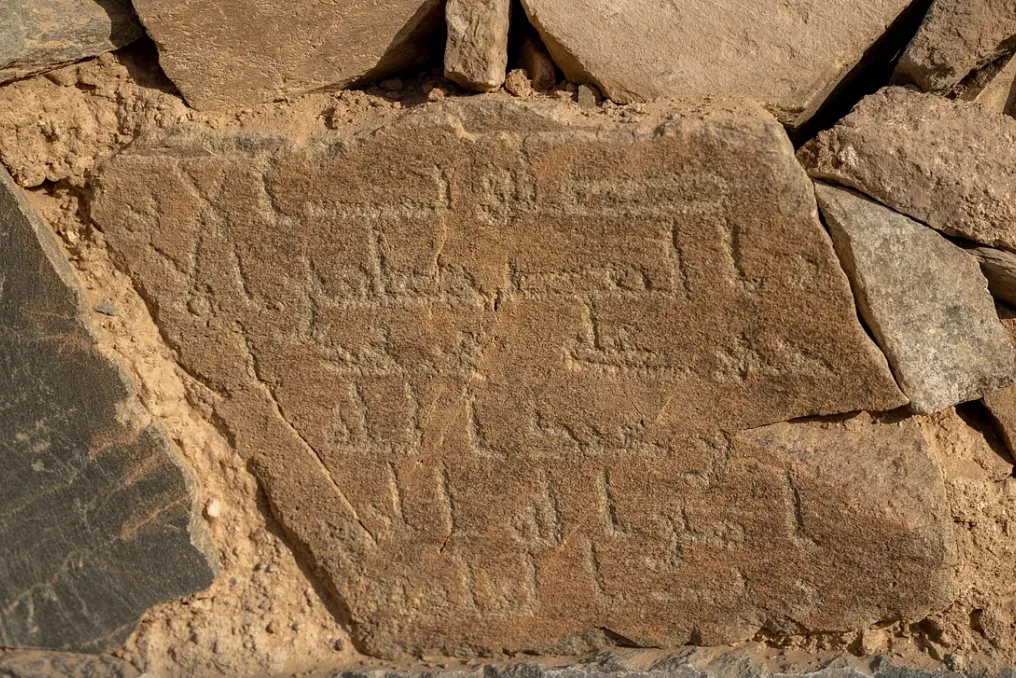
A major discovery was made during recent archaeological excavations in Saudi Arabia: a mosque dating back over 1300 years has been found. This find sheds additional light on the early Islamic period in the Kingdom, as well as on the architectural solutions used in the construction of mosques at that time.
The discovery occurred during the fourth season of archaeological work at the Al-Mamala site, located in the Al-Aqeek province, in the southwestern region of Al-Baha, Saudi Arabia.
The Saudi Heritage Commission published video footage of the recently found site, reporting that the ancient mosque contains several Islamic inscriptions. Among them are an inscription on the qibla wall and another on the exterior wall. The mosque was built from clad granite stones.
The mosque measures 10 meters by 16 meters and includes a square minaret located on the southeast part of the site, as well as a mihrab. Remains of gypsum plaster were found on the interior walls. The mosque structure is adjacent to eight service rooms and has three entrances: on the east, west, and south.
A member of the archaeology team noted that the distinctive feature of this mosque is the presence of Islamic inscriptions, which include both writings and Quranic verses, placed on both the interior and exterior walls of the structure.
Authoritative sources shared video footage of the excavation site. Furthermore, in June, archaeologists in Saudi Arabia documented 1774 finds in the Al-Mahd province in the Madinah region. Among these was a rare stone inscription bearing the name of Umar ibn al-Khattab, the second caliph in Islam, which was engraved on a stone. The inscription reads: 'Allah is the Protector of Umar ibn al-Khattab in this world and in eternity. There is no deity except Allah.'