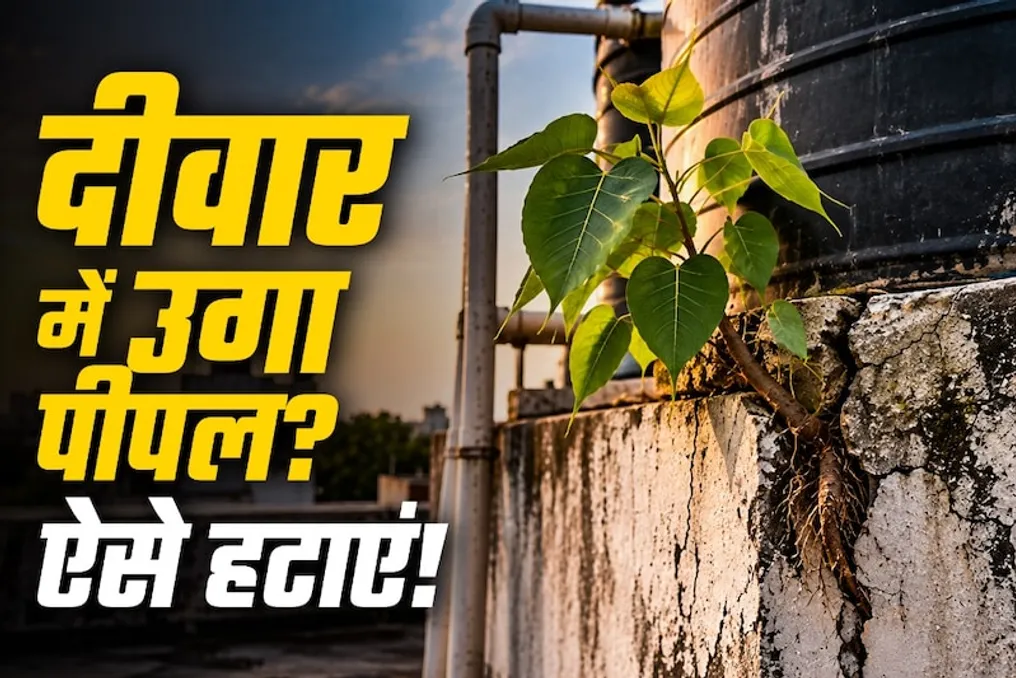
How to safely remove a peepal tree growing near a wall or water tank while preserving structural integrity
Read more
Aaj Tak
www.aajtak.in

How to safely remove a peepal tree growing near a wall or water tank while preserving structural integrity

When cleaning the house, people often cannot access the roof for many months. When you finally go up to the roof after a long break, you might discover that a peepal tree has grown next to a water tank or in a crack in the wall. If this has happened to you, you are not alone. The sudden growth of a peepal plant is a fairly common occurrence and is found in many homes, but it should not be ignored.

Initially, this plant looks small and weak, so people often try to simply pull it out. But if its roots have penetrated between the wall, roof, or bricks, their expansion over time can cause problems. There is a risk that cracks in the wall or roof will become even wider, so it is crucial to remove it the right way, rather than pulling it out by force.

Today, we will tell you about the correct method for removing a peepal plant that has grown near a water tank. With this technique, you won't have to yank it; thanks to this trick, the peepal plant can be easily removed along with its roots.

People often see a peepal growing near a wall or water tank and start pulling it forcefully. If the peepal plant has grown inside a brick or cement wall, do not make the mistake of pulling it straight up. Such an action may remove the upper part of the plant, but the roots will remain inside. Subsequently, the plant may sprout again from the same spot.

To remove the plant, hold its trunk pressed against the wall. Try to keep the grip as close to the roots as possible to ensure a good hold on the plant. After that, instead of yanking the plant sharply, slowly rotate it with light clockwise movements. This way, you are trying to loosen the plant slightly.

If the peepal roots start coming out during slow rotation, carefully extract them. Even if the root does not come out completely, try to remove it as much as possible.

Sometimes a structure resembling a node is visible under the root. When removing the plant, it is also important to remove this part, as leaving it can create a possibility of the plant regrowing.

If the peepal has grown on the roof, near a water tank, or in a wall crack, it is best to remove it while it is small. When it gets big, its roots can spread further and worsen existing cracks.

Note: If the plant has become very large or its roots have penetrated deeply into the wall near the tank/wall, it is better to seek help from a specialist rather than trying to pull it out by force yourself.
Similar stories

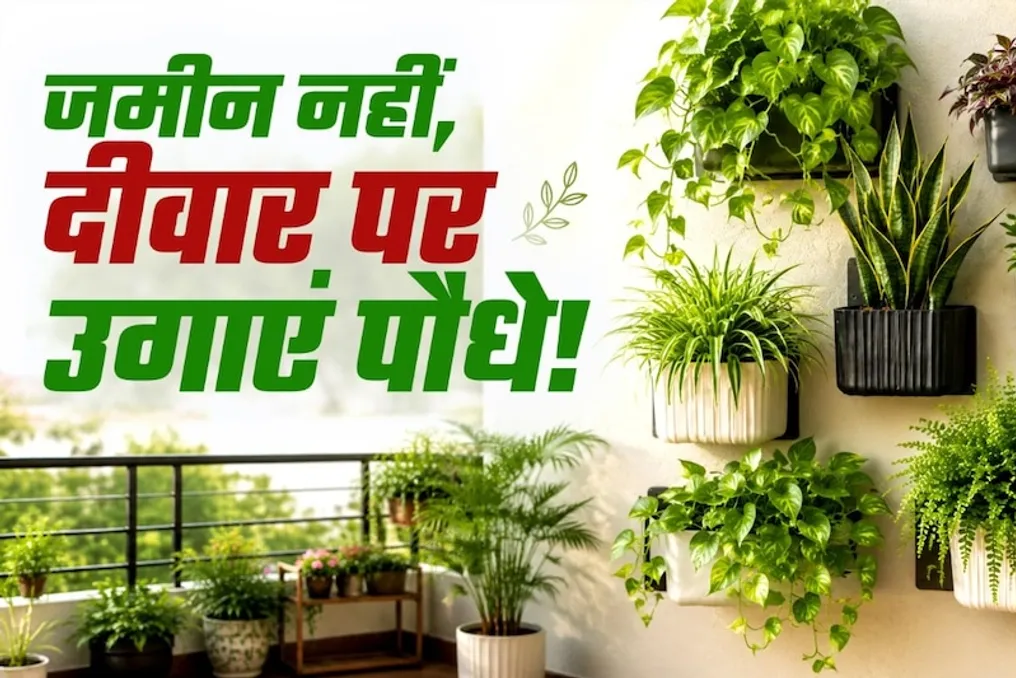
These 6 plants grow easily on walls and can give your home a green look without needing much space
Read more
www.aajtak.in

These 6 plants grow easily on walls and can give your home a green look without needing much space

Many people want to have plants in their homes, but in small apartments or studios, the problem arises of where exactly to place the pots. Placing pots on the floor reduces space and makes the house feel cluttered. In such cases, empty walls can be used to make the home beautiful and green by placing plants on them.

Using vertical gardening is especially useful in small dwellings because it allows you to increase the amount of greenery without taking up much space. This does not require soil or a large area. Below are six types of plants suitable for this purpose.

Plants that grow easily on walls:

1. Sansevieria (Money Plant): Sansevieria is a simple option for decorating home walls. Its trailing shoots can be directed upwards along the wall or hung in a pot, allowing them to hang down. In small apartments, on balconies, or near windows, it can be placed to beautifully decorate an empty wall.

2. Pothos: The long runners of Pothos are excellent for placement on walls. It can be placed in small floor pots, hanging baskets, or on shelves from which the runners will cascade. If you aim to create a natural, slightly jungle-like look in your home, this plant type will be a good choice.

3. Philodendron: The leaves of the Philodendron are very attractive, and some varieties are climbing. It can be placed in small pots or on shelves attached to the wall. By slowly directing the plant's shoots upwards or sideways, you can significantly change the appearance of the wall.

4. Syngonium in small pots: If you prefer compact plants with beautiful leaves rather than large ones, you can plant Syngonium. By placing it in small pots attached to the wall, you can create a green corner by combining several plants. Placing pots at different heights will make the wall even more attractive.

5. Hoya for creating a vertical garden: The runners and thick leaves of Hoya give a decorative look when decorating walls. By placing it in a small wall-mounted pot and allowing the runner to grow downwards, you can create the effect of a miniature vertical garden using several pots of different sizes on one wall.

6. Monstera for a stylish look: The large, characteristic-holed leaves of the Monstera distinguish it from other plants. If you want to give an empty wall in your home a more stylish look, it can be placed on a shelf or in a large wall pot. Instead of putting large pots on the floor, you can use wall-mounted plants, thus saving space.

Tips for placing plants on the wall

When greening a wall, you should avoid using overly heavy pots. You need to choose lightweight pots and ensure they have a proper drainage system. If water constantly drips directly onto the wall, it can lead to stains and dampness. It is also preferable to place plants in areas where they can receive enough light according to their needs. To achieve a more natural and beautiful look, it is better to place the pots on the wall not in a straight line, but at varying heights.

Popular