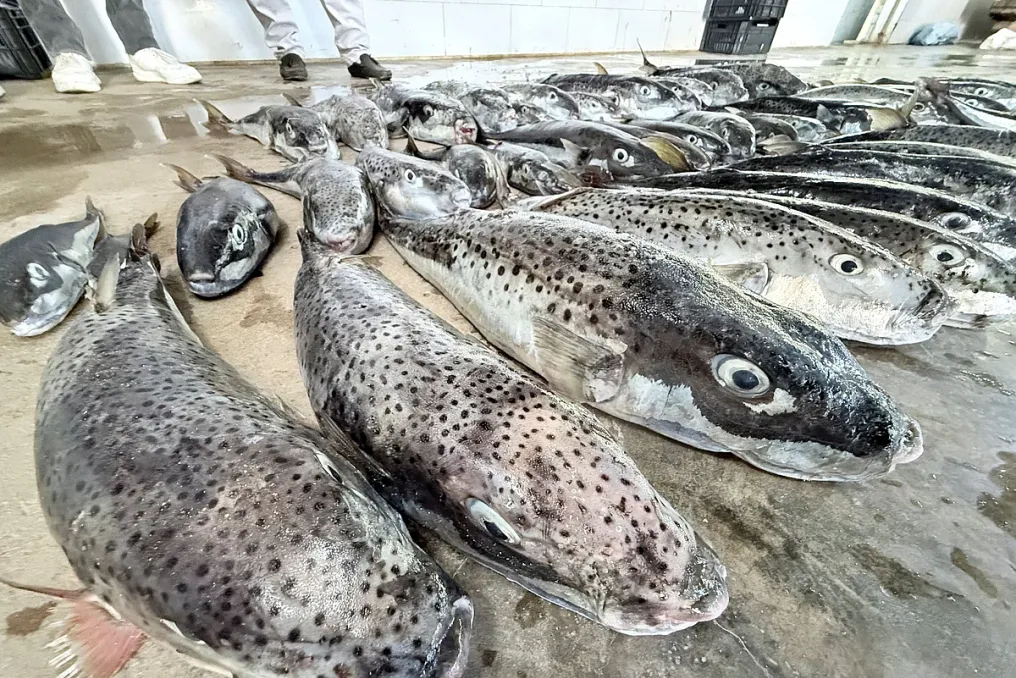
A new warning has been issued to residents and visitors of Oman regarding the consumption of pufferfish found in the Sultanate's waters. On Sunday, the Food Safety and Quality Center reported that some species of this fish contain potent toxins, such as tetrodotoxin, which can cause serious symptoms ranging from paralysis and difficulty breathing to death.
Consumers have been alerted to various dangerous species of fish and strongly urged to avoid purchasing, trading, or consuming them. The authorized body emphasized that cooking or freezing does not eliminate toxins or make the fish safe.
Specific toxic species were listed: Arothron hispidus, Arothron nigropunctatus, Canthigaster valentini, Arothron immaculatus, Chelonodon patoca, Diodon liturosus, Arothron, Lagocephalus lunaris, Diodon hystrix, Arothron meleagris, Lagocephalus sceleratus, and Diodon holocanthus. Consuming these fish can trigger severe ailments, including numbness, nausea, vomiting, muscle weakness, paralysis, and breathing problems.
The authorized bodies advised residents to choose fish known for their safety and to purchase them from reliable sources, adhering to all official instructions and regulations.
Red Tide Areas
Authorities caution against consuming any fish or mollusks collected on beaches affected by red tide blooms, as this causes severe neurological poisoning.
Improperly Stored Fish
Omani medical services advise against eating fish that has not been properly chilled, as this can lead to food poisoning from heat-stable scombroide histamine.
Seasonal Fishing Bans
Oman introduces temporary seasonal restrictions on the fishing and trade of certain commercial fish species, such as Kingfish (Kanad), during their breeding periods to protect marine resources.
Shrimp Catching
Shrimp catching is permitted only from September 1st to November 30th, and is prohibited during the rest of the year (from December 1st to August 31st).
Recently, Oman began inspecting fishery products in the market and warned fishermen and consumers against taking fish near affected areas after a vessel sank and an oil spill occurred. Authorities intensified preventive measures, which included monitoring fish unloading sites, processing plants, and markets, tracking movements and catch sources, and collecting and testing samples.
Technical teams were also formed to monitor coastlines and unloading points in provinces along the Arabian Sea. On August 6th, the Ministry of Transport reported the sinking of an oil tanker near Al-Kibliya Island in Oman, which is part of the Al-Hallaniyat archipelago in Dhofar. The sinking and oil spill threaten rich marine life and the natural ecosystem of the island, and environmental protection and safe navigation efforts are underway.
Within days, the presence of the oil spill was confirmed, and authorities managed the situation to prevent environmental damage and public safety risks. Initially, the oil began spreading northeast of the Hallaniyat islands towards the mainland coast, moving along the same path, with the observed expansion reaching about 449 km.
Efforts are underway to conduct and execute monitoring, surveying, and environmental remediation operations using technical monitoring equipment, satellite imagery, and numerical models to track the movement and spread of oil slicks and predict potential landing sites. Special attention is paid to areas of high ecological sensitivity. The Environmental Protection Agency confirmed that it will continue to publish official updates on the situation as developments occur to ensure the provision of accurate and reliable information to the public and media. It also strongly urged the public to obtain information from official sources and not to disseminate unverified figures, maps, or assessments.