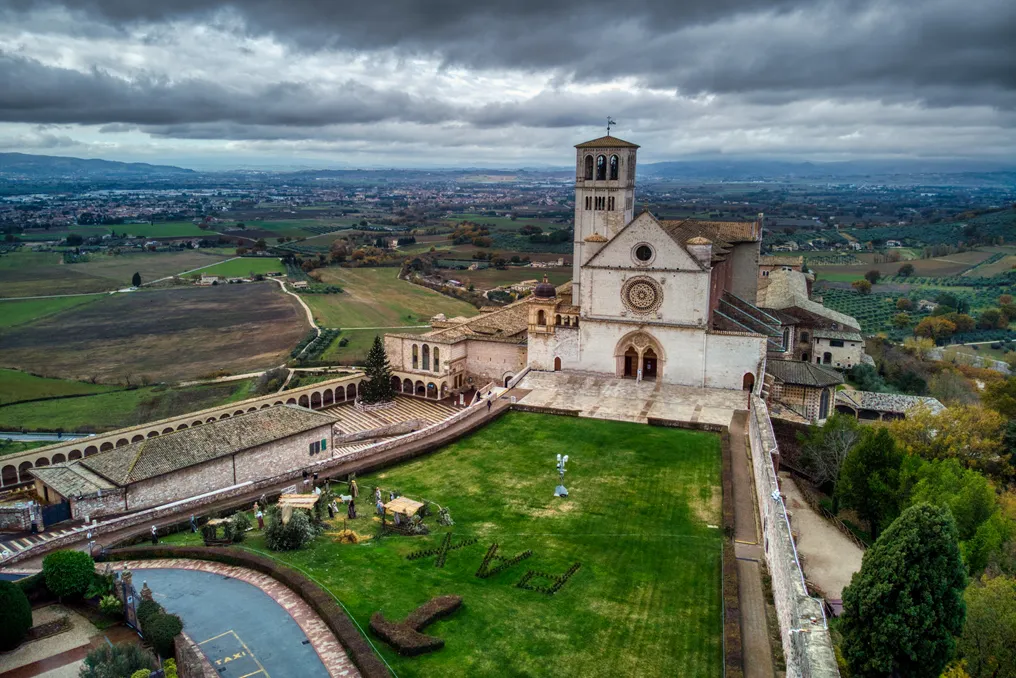
As part of events commemorating the 800th anniversary of the death of Saint Francis of Assisi, which occurred on October 3, 1226, Italy introduced a new tourist route at the end of July. This path, named Cammino di Francesco – Il Cammino della Luce, aims to offer a richer experience for lovers of religious pilgrimages and serves as a local analogue to the famous Camino de Santiago in Spain.
The Italian Ministry of Tourism seeks to create a more organized 'St. Francis Way' for believers and tourists who previously had to follow unofficial routes on their journey to Assisi.
Estimates suggest that over 300,000 people traveled along various religious trails in the country in 2025, which is a growing but still modest figure. In contrast, over 530,000 pilgrims passed along the Camino de Compostela during the same period.
Before the creation of the new St. Francis Way, pilgrims arriving in Italy had to move along irregular trajectories, often accompanied by poor navigation on some sections. There were frequent reports from parishioners that they got lost in the field due to a lack of signage or insufficient route maintenance.
Another issue was visiting small towns that were unprepared to host visitors. In the absence of an official map, not all local communities had developed commerce to support weary travelers. To solve this problem, Italy invested 40 million euros in improving infrastructure and marking, striving to overcome historical difficulties and form a more cohesive experience.
The officially approved version of the St. Francis Way includes various directions passing through the regions of Abruzzo, Emilia-Romagna, Lazio, Marche, Tuscany, and Umbria. The total length of the route is 1,546 kilometers, which can be walked, and it ends in Assisi. This is only a small part of a network of similar hiking routes across Italy; it is estimated that there are about 150 such pilgrimage trails in the country, covering approximately 33,000 kilometers of roads.
The culmination of the St. Francis Way is the opportunity to peacefully explore the inland areas of Italy that are not typical tourist destinations. Preserved medieval villages and untouched natural beauty create a landscape seemingly frozen in time, with the final section between Sansepolcro and Assisi being particularly well-known.
Regardless of the starting point, the route always leads to Assisi—a place that is an attraction in itself. The sanctuary city, recognized as a UNESCO World Heritage site where Saint Francis was born and died, has attracted pilgrims for centuries, even before the official launch of the new route, in search of a connection not only with nature and history but also with a spiritual bond, similar to what happens on other religious paths.