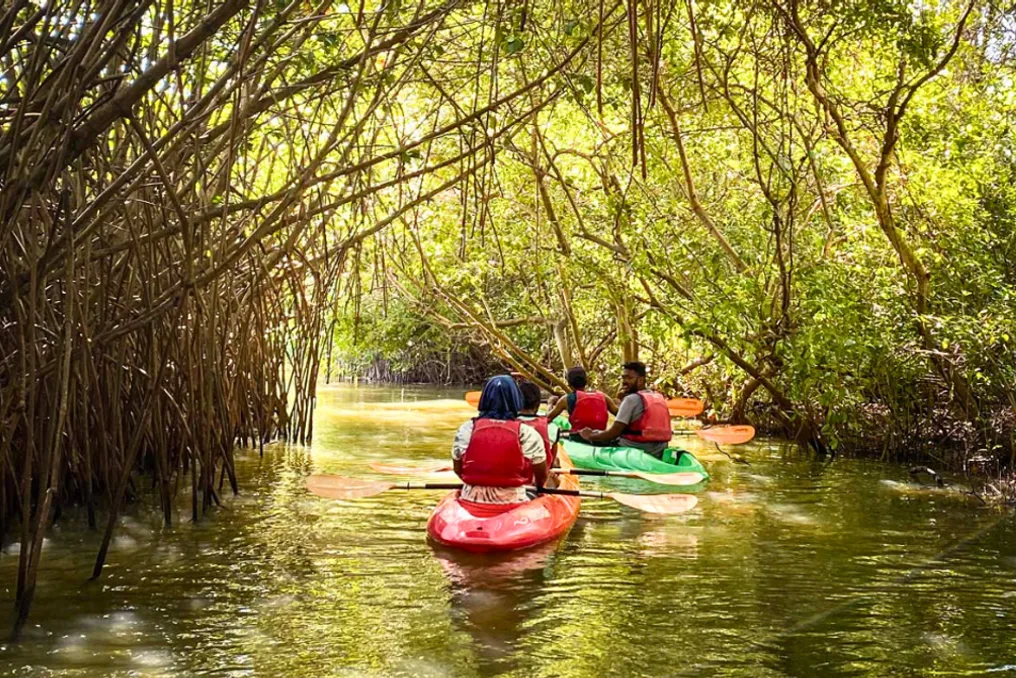
In the narrow creeks of Pichavaram village, Tamil Nadu state, one can take a kayak ride among the mangrove forests. As one moves deeper into the water, the waterway narrows, and the roots of the mangrove trees rise from the mud on both sides, forming a canopy of branches overhead.
There are no walking trails in this part of the forest; exploration is only possible by water. As the wider channels disappear, the trees become denser, the stream narrows, and the mangroves seem so close that they can be reached. This area of Pichavaram village, Tamil Nadu, is what tourists remember.
However, this place makes one wonder about the real contribution tourism makes to forest conservation and the well-being of the people who depend on it. Along the coast of India, mangrove forests are gradually becoming independent tourist destinations. Visitors take boat trips in Bhitarkanika in Odisha, observe birds in Kadalundi in Kerala, kayak in the waters of Karnataka, and enter the labyrinthine waterways of Pichavaram in Tamil Nadu.
The appeal of these places is obvious once you get inside. But behind this experience lies a deeper question: if tourists are willing to pay to see a healthy mangrove forest, can those funds help local residents earn income from protecting the forest?
Significant work by a small part of India
According to the India State of Forest Report for 2023, India possesses a mangrove cover area of 4991.68 sq km, which accounts for only 0.15% of the country's total geographical area. West Bengal holds the largest share, followed by Gujarat and the Andaman and Nicobar Islands. In comparison, Karnataka has only 14.20 sq km.
Despite the relatively small area, mangrove forests perform colossal work. Their roots slow down waves and retain sediment, thereby helping to protect vulnerable coastlines from erosion. Their streams serve as breeding and growing grounds for fish and other aquatic species. Furthermore, their swampy soils are capable of accumulating large volumes of carbon.
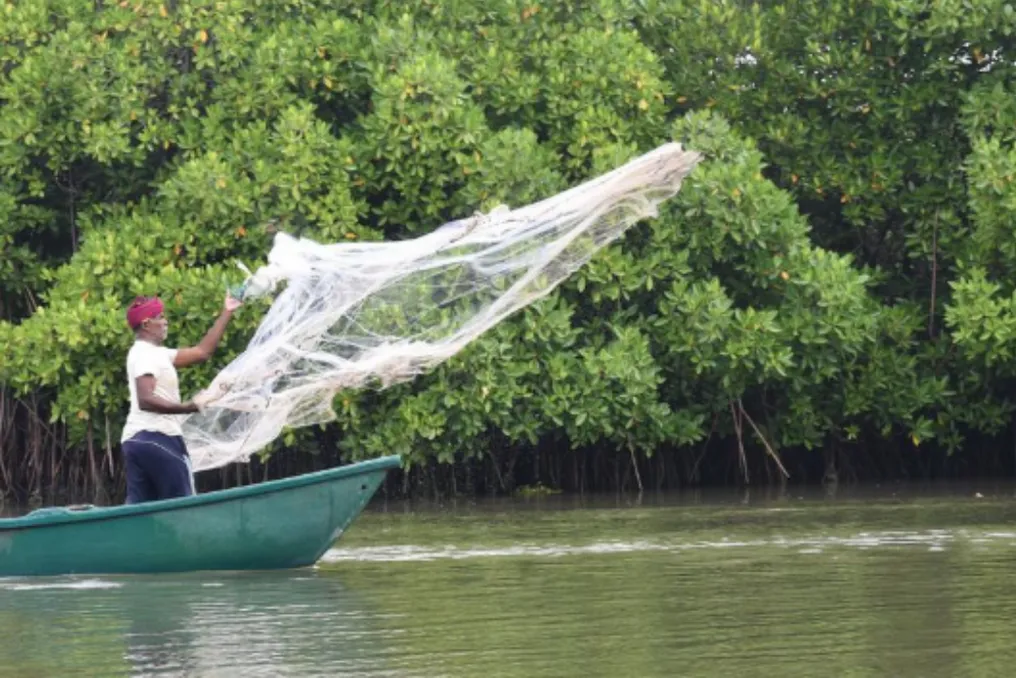
For residents living near these forests, mangroves support fishing, protect coasts, and define daily life. Tourism opens up another opportunity. What if the mangrove forest can generate income simply because people want to experience it firsthand?
When forest conservation starts generating profit
Signs of this process are already visible on the coast of Karnataka. In the Saligrama area and in the inland waters of Udupi, tourists can kayak through wetlands bordered by mangroves. A few hours on the water can bring income to the boat operator or guide. The same visitor might stay in a local guesthouse, eat nearby, or buy something at a small shop.
Money begins to circulate in the community without the need for cutting or harvesting mangroves. Studies show that this can promote conservation when local communities receive tangible benefits. A review published in the Journal of Environmental Management in 2024 analyzed studies of mangrove ecotourism in Southeast Asia between 2010 and 2022. It found a growing use of activities such as boat tours, wildlife watching, kayaking, and mangrove planting near these ecosystems.
Numerous studies have linked tourism revenue to more active community participation in conservation and restoration. However, one condition was consistently raised: local residents must receive a significant share of the profits. This is where the idea becomes interesting for India.
What changes when a boat trip becomes a source of livelihood? One example is the Sundarbans. Economists Indrila Guha and Santadas Ghosh studied whether tourism could improve living conditions in a remote island village in the Indian Sundarbans. Tourism there was seasonal, and few households depended entirely on it. Nevertheless, people working as boatmen, guides, and vendors lived better than those not involved in tourism. The study also showed that households dependent on tourism relied less on forest resources. For a family living near a protected forest, this is significant. If guiding tours, organizing boat trips, or selling food becomes a significant source of income, the pressure associated with direct dependence on forest resources may decrease.
An additional 500 rupees
Pichavaram is located between the Vellar and Kolerun estuaries in Tamil Nadu and is already one of the most famous mangrove tourist destinations in India. Visitors can choose motorboats on larger waters or kayaks capable of penetrating narrower creeks. Kayaks revealed a completely different side of the forest. As the creek narrowed, the experience became slower, closer, and much more thrilling.
However, when we booked the trip, we were told we would only be taken to a certain point. Once we were on the water, the boatman mentioned another spot deeper inside. He said it was especially beautiful and had previously been used as a shooting range. He offered to take us there for an additional 500 rupees. My initial reaction was annoyance. Why was this only offered after the trip started? But the more I thought about it, the more this small interaction began to reveal something bigger.
Pichavaram is seasonal. When tourist numbers drop during the monsoons, boatmen and others who depend on visitors have fewer trips and fewer opportunities to earn. If your income depends on who shows up that day, an extra 500 rupees from one group can matter. Thus, the issue goes beyond one unofficial collection. It points to a tourism system where the visitor doesn't always know what they are paying for, and the person transporting them through the forest doesn't always know how much they will earn that day.
What if the system worked differently?
Imagine arriving in Pichavaram and seeing clearly marked routes, prices, and schedules. A visitor could choose a standard trip or a longer journey through the creek before getting on the boat. The boatman would know exactly what portion of that fee he would receive. Part of this money could go towards protecting the mangroves themselves. These funds could aid in restoration, waste management, or monitoring. Sensitive creeks could be closed when necessary. Visitor numbers could be limited in fragile areas. Where appropriate, the use of kayaks and other low-impact options should be encouraged.
The tourist still gets the experience they came for. The boatman earns more predictably. The forest also benefits from every ticket sold. This is important because tourism can damage the landscape it depends on. Motorboats can create engine noise, underwater vibrations, and the risk of fuel pollution. Too many visitors entering sensitive zones can disturb wildlife or damage vegetation. Waste and uncontrolled flow of people add another layer of pressure. The mangrove forest can only sustain tourism when tourism respects its limits.
What should remain after the tourist leaves?
Perhaps the success of mangrove tourism should be measured by something other than the number of visitors. Are local residents receiving fair pay? Is the number of boats controlled? Are sensitive areas protected? Is a portion of the money spent by tourists returned for restoration and monitoring? And over time, is the mangrove forest becoming healthier? India has already begun linking mangrove restoration with livelihoods through the Mangrove Initiative for Coastal Habitats and Livelihoods, or MISHTI, launched in 2023. This connection stayed with me after Pichavaram. I remember paddling through the narrow creeks while the mangroves surrounded us, and the outside world disappeared around the bends. I also remember the extra 500 rupees. One moment showed me why people travel to experience these forests. Another showed me how much people who take us there need tourism to earn a better living. Perhaps mangrove forests don't need tourists just in large numbers. They need a model where every visit leaves something beneficial: a fairer income source for people living near the forest, and a stronger reason to ensure the mangroves continue to grow when the next kayak enters the creek.