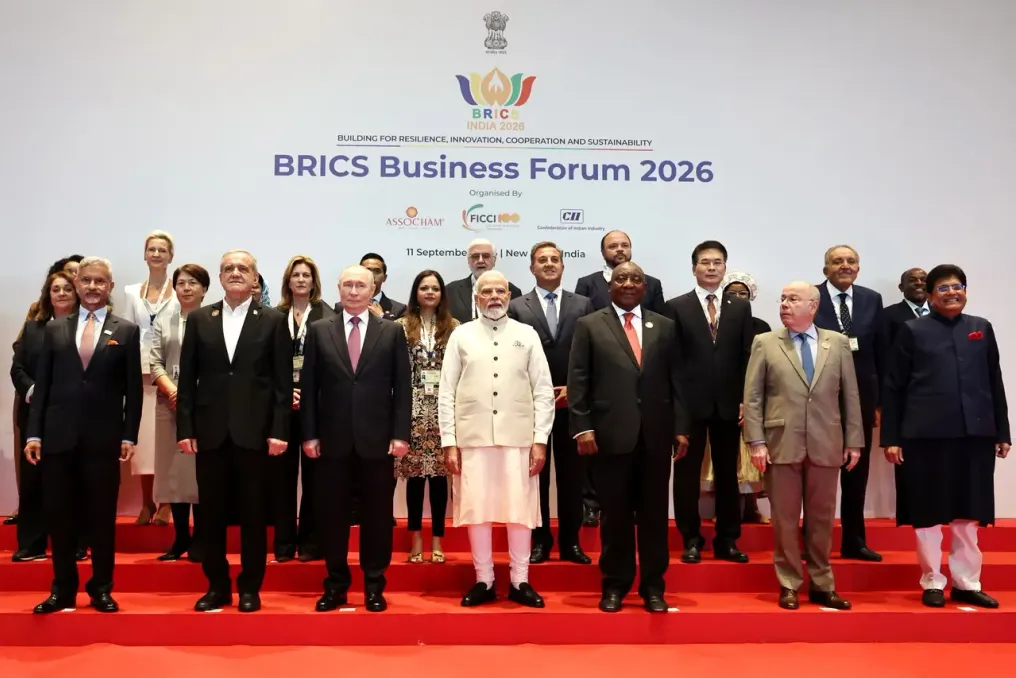
BRICS countries call for the restoration of the WTO dispute settlement mechanism
Read more
UzDaily
uzdaily.uz

BRICS countries call for the restoration of the WTO dispute settlement mechanism

The BRICS countries have called for the immediate restoration of a fully functional two-tier dispute settlement mechanism in the World Trade Organization (WTO). Furthermore, they expressed serious concern over the increasing use of unilateral tariff and non-tariff measures.

This position was set out in the New Delhi Declaration, adopted after the 18th BRICS summit. According to this declaration, the BRICS countries reaffirmed their unconditional support for reforming the WTO and strengthening the multilateral trading system, which must be open, fair, transparent, predictable, rules-based, and non-discriminatory, with the WTO playing a central role.

Participants emphasized the importance of preserving fundamental principles, including the most-favoured-nation treatment and the special and differential treatment for developing countries, especially the least developed. BRICS also confirmed its continued participation in multilateral negotiations in Geneva, which include discussions on WTO reform, and stated its intention to enhance coordination through the Informal BRICS Advisory Structure on issues undermining the organization's effectiveness and authority.

BRICS leaders reported plans to ensure the implementation of the outcomes of the 14th WTO Ministerial Conference and to continue constructive engagement to resolve outstanding issues. They also pledged to work on enhancing the WTO's authority, effectiveness, inclusivity, and relevance, as well as building an open global economy.

The declaration specifically highlighted the importance of finding appropriate ways to integrate pluralistic initiatives, including development-related initiatives, into the WTO legal framework, as well as developing forward-looking rules for the organization. Special attention was paid to the crisis in the WTO dispute settlement system. The BRICS countries strongly urged the immediate restoration of an accessible, effective, and fully operational two-tier dispute settlement mechanism as the foundation of trust and predictability for all WTO members. They also demanded the urgent appointment of new members to the Appellate Body.

BRICS leaders expressed strong support for the applications of Ethiopia and Iran to join the WTO. They also noted China's efforts to extend the zero-tariff regime to 53 African states with which it maintains diplomatic relations. The declaration separately indicated that the multilateral trading system has been at a crossroads for a long time.

In the view of the BRICS countries, the spread of restrictive trade measures that do not comply with WTO rules—including unjustified increases in tariffs and non-tariff barriers, as well as protectionism presented as environmental measures—threatens further decline in world trade, disruption of global supply chains, and increased uncertainty in international economic and trade activities. Such changes, according to the declaration, could exacerbate existing economic inequality and negatively affect the prospects for global economic development.

The BRICS countries expressed serious concern about the growing use of unilateral tariff and non-tariff measures that distort trade and contradict WTO rules. They stated their intention to work together to strengthen the organization's ability to respond to trade disruptions, taking into account the needs and priorities of developing and emerging markets. BRICS also opposed unilateral, punitive, discriminatory, and protectionist measures incompatible with international law, including carbon border adjustment mechanisms.
Similar stories

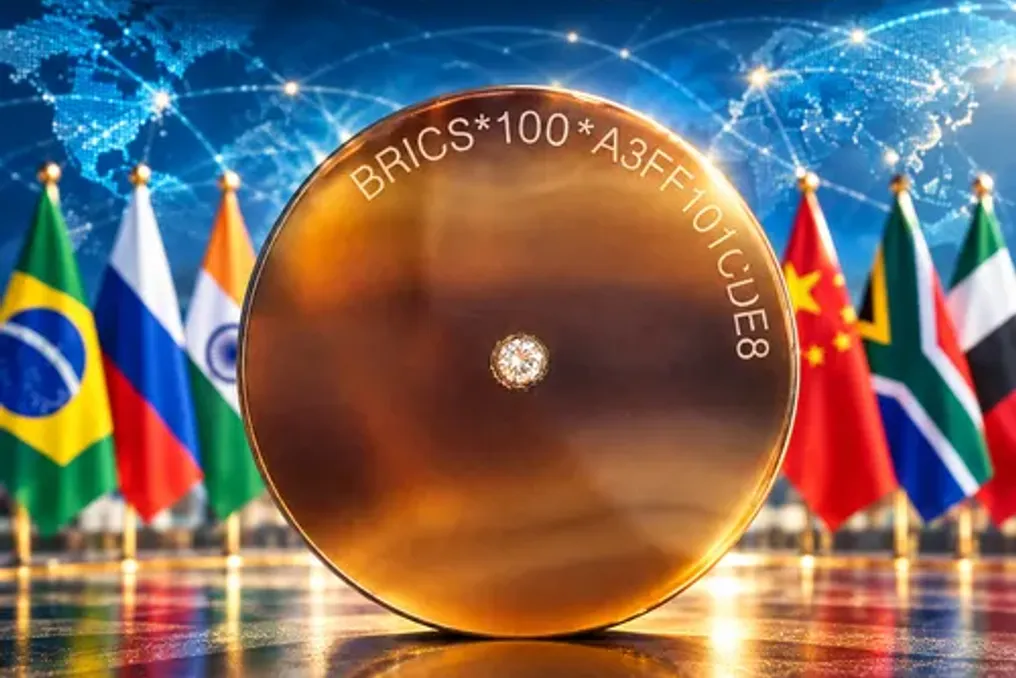
BRICSCOIN: A Currency for Trade Settlements Without Pegging or Interest, Containing a Diamond
Read more
iol.co.za

BRICSCOIN: A Currency for Trade Settlements Without Pegging or Interest, Containing a Diamond

BRICS nations are seeking a way to conduct trade settlements among themselves, bypassing the need to route every transaction through the US dollar. BRICSCOIN represents one specific answer to this problem: it is a settlement instrument that is not a national currency, is not pegged to gold, and is not a digital token. Central banks can use it exclusively for settling trade balances.

This instrument combines physical and digital components and is issued only with the unanimous consent of the central banks of the BRICS countries. It is neither paper nor purely digital currency.

The new BRICSCOIN is minted only by the unanimous decision of the Issuing Council, which includes one representative from each founding central bank: Brazil, Russia, India, China, and South Africa. There is no possibility of majority voting or an algorithmic issuance rule; one dissenting participant can block the process. This is a conscious trade-off of flexibility for legitimacy, as there is no supranational body that could force a reluctant member to accept a distribution they deem unfair; unanimity is the only principle consistent with a system lacking a higher appellate authority.

The limitations of BRICSCOIN are equally important. Unlike the Keynesian bank of 1943 (which was defined relative to gold) or the IMF Special Drawing Rights (which are valued based on a basket of currencies), BRICSCOIN has no anchor, is not backed by reserves, and contains no promise of convertibility. The formula for determining the value of one unit can be disputed by a member, but BRICSCOIN bypasses this issue instead of providing an answer to it.

Each coin consists of a certified diamond embedded in a disc. This disc undergoes a computed tomography scan (CT-scan) to record the unique location of internal inclusions at the time the stone formed—a physical fingerprint that cannot be altered or reproduced. This fingerprint is hashed and identically registered in a ledger maintained by all five central banks, with no master copy existing. Thus, any participant can verify the authenticity of the coin without trusting the party currently holding it. The ledger answers only one question: is this coin genuine? And it is never updated when the coin is transferred. Transactions are private, bilateral, off-ledger events, more akin to transferring a gold coin than to a blockchain transfer.

The market value of the diamond itself is insignificant compared to the value of the coin—each BRICSCOIN is valued at approximately $1 million, far exceeding the cost of the stone inside. This is because the diamond does not serve as collateral for this value; its function is to make the coin non-reproducible. This consensus-driven physical construction allows for something that a paper reserve currency structurally cannot do: it prevents the penetration of one member's domestic monetary policy into the assets of the others. When a country holds another country's currency as its asset for settlement, it inherits that issuer's inflation. If the issuer increases its own money supply, the balance of every foreign holder quietly depreciates along with it, regardless of whether they participated in the decision.

Thus, the issuer of the reserve currency exports its inflation to everyone who holds its money. The BRICSCOIN is not a balance requirement of any member, and no member can unilaterally create more such coins. New coins require the signatures of all five participants, and after minting, the coin becomes a fixed physical object, not a ledger entry that the central bank can inflate. The coin itself is a settlement instrument, similar to how gold was money in itself, not a claim on money. Neither importer nor exporter touches the coin: the importer buys BRICSCOIN from its central bank for payment, and its central bank transfers the coins to the exporter's central bank, and the exporter's central bank credits the exporter with funds in local currency—the physical coins move only between banks.

A settlement instrument without interest or pegging has one structural weakness: if one side of a trade relationship consistently runs a one-way deficit, that country simply depletes its coin reserves, and there is no market mechanism to automatically correct the imbalance. Solving this problem for uneven relationships is a complex task best postponed until the institution gains some operational experience. A more practical starting point is the opposite type of relationship: bilateral trade that is already close to balance, where transactions in both directions roughly offset each other, and neither side's reserves deviate too far in either direction.

Recent data on bilateral trade among the ten full members of BRICS+ indicates exactly such a starting point. Among the most balanced relationships in the bloc are the three largest and most strategically important.

Trade between China and Russia serves as a natural anchor, amounting to $245 billion with only a 6% imbalance, proving the mechanism's viability with real volume, not just as a symbolic gesture. Trade between India and South Africa, which amounts to less than $16 billion, presents a reverse test—small enough that an early miscalculation would not lead to major losses, making it a reasonable place to practice the process and verify before scaling up. Relations between Brazil and India are in the middle: they are large, transcontinental, and have already been discussed as a target for reducing the share of the dollar in settlements.

It is worth considering a second tier of nearly balanced pairs for a subsequent phase, as well as one pair included as a deliberate contrast.

The core argument in favor of BRICSCOIN is not its simultaneous launch across the entire bloc. It lies in selecting corridors where the mechanism can prove its worth without major risks—truly balanced trade, moderate volume, ready counterparties—and allowing the institution to gain trust before being asked to solve more complex cases. China–Russia, India–South Africa, and Brazil–India are precisely such starting points based on metrics.

Popular