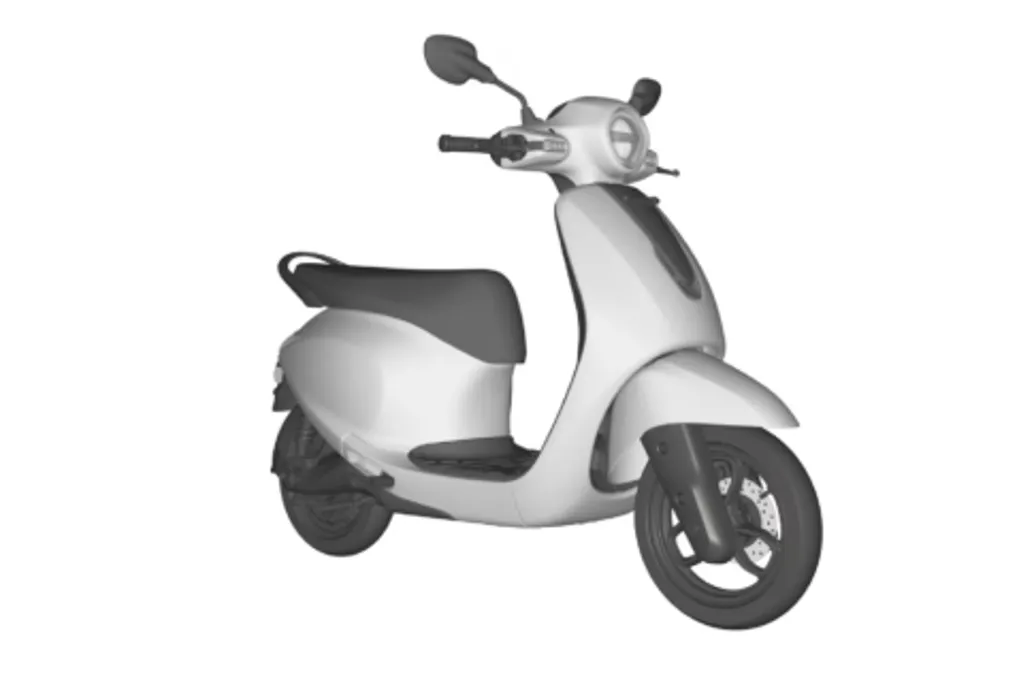
Bajaj has formalized the registration of the industrial design of its electric scooter, the Chetak, in Brazilian territory, which naturally raises expectations about its official launch. However, the brand itself has not yet issued statements confirming the arrival of the model. Market projections point to the use of traditional property rights safeguarding methods, especially considering the recent sector history, which demands caution due to the results obtained by Yamaha.
The risk associated with the segment is not merely speculative. The Neo’s Connected was the first fully electric motorcycle from a major Japanese manufacturer introduced in Brazil, marking Yamaha's debut in the electric market. Launched at the end of 2024 and manufactured in Manaus since January 2025, this bike was initially sold for R$ 33,990 but achieved low sales.
According to Fenabrave, Yamaha did not feature among the top 15 brands that registered electric vehicles in the country since the beginning of the year, representing a negative performance for one of the largest global manufacturers. The company reacted by adjusting the price in April, reducing it by R$ 8,000, bringing the Neo’s value down to R$ 25,990. Currently, it costs R$ 25,590 without shipping, remaining the most expensive electric motorcycle in Brazil, although the exact number of units sold is unknown, rankings indicate that very few were sold.
This is the landscape that the Chetak would face. In India, Bajaj sells the scooter for approximately R$ 5,000, a very competitive price. However, it remains uncertain what its arrival price in Brazil would be, whether through local production or import, considering taxes and necessary adaptations. Furthermore, even if it arrives at a low price, it would need to persuade an audience that has not yet shown great adherence to the category.
The perception that the segment presents risks is not exclusive to external observers; it also reflects the view of the world's largest motorcycle manufacturer. When questioned by AutoPapo about the recent registration of another electric vehicle in Brazil, Honda was emphatic in stating that, for now, it does not plan to introduce electric motorcycles in the country.
Despite recognizing the market potential, Honda conditions its decision on several factors, such as the energy matrix, charging infrastructure, market specifics, and consumer profile. The manufacturer stated: 'Honda continuously studies the introduction of new technologies into the Brazilian market, but follows the policy of offering the right technology, in the right place, at the right time.'
The message is clear: Honda seems to be avoiding repeating the mistakes of its competitor. Globally, the brand already has electric scooters such as QC and Activa and:, in addition to the WN7, its first effective electric motorcycle launched at the end of 2025. In Brazil, however, the preference is for prudence. Despite this, the company is not closed to possibilities, as it has a global goal of carbon neutrality by 2050, which sets a deadline for the arrival of electric models. As it concluded: 'Everything is possible.'
It is important to understand the meaning and limitations of the industrial design registration. Industrial design protection secures Bajaj's rights over the design in Brazil. Manufacturers usually register trademarks, patents, and designs in different markets aiming for intellectual protection and commercial planning, without this automatically meaning commercialization. In short, the registration increases interest in a potential arrival of the Chetak, but does not allow asserting that it will be sold in the country.
The presence of the scooter in Brazil is not unprecedented. Bajaj had previously exhibited the Chetak at the Interlagos Festival in 2023 to assess public acceptance, and the model reappeared in 2026 during the Brazilian stage of the MotoGP in Goiânia, being used by the KTM team for internal transport at the circuit.
The protected model is the Chetak C2501, which corresponds to the entry-level version of Bajaj's electric scooter line in India. This model uses a 2.2 kW electric motor and a 2.5 kWh battery, offering a declared range of up to 113 km and a maximum speed of 60 km/h. The time required to charge from 0 to 80% is about 2 hours and 25 minutes. Weighing 107 kg, the C2501 features a 25-liter compartment under the seat, a colored LCD panel, connectivity, Eco and Sport modes, and ramp start assistance. Its bodywork is metallic, the front brake is disc, and the rear is drum, and the battery has IP67 certification against water and dust.