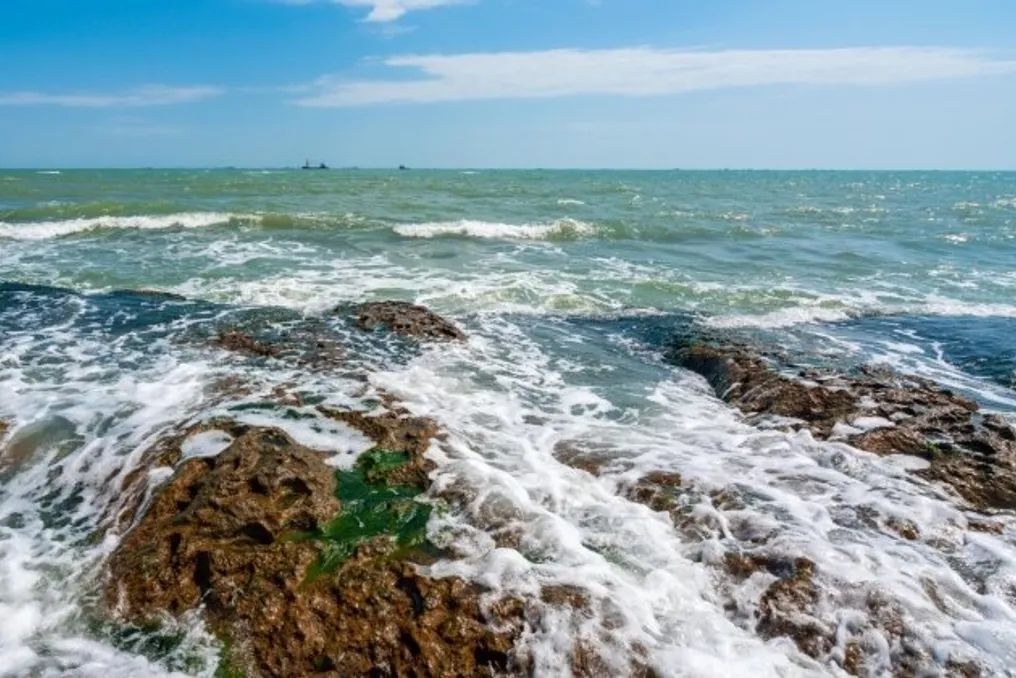
Iran will participate in the seventh meeting of the Parties to the Tehran Convention on the Protection of the Environment of the Caspian Sea, which will take place from September 20 to October 1. After a three-year hiatus, Iran will also assume the chairmanship as part of the convention's rotation upon conclusion of the meeting.
Tehran Convention
Arman Horsand, head of the Center for International Affairs and Conventions at the Department of Environment, noted that the Tehran Convention, which serves as the main basis for cooperation among the Caspian coastal states in environmental protection, celebrates its 20th anniversary this year since entering into force.
The Seventh Conference of the Parties (COP7) will last four days: the first three days will be dedicated to expert-level meetings, and the last day to a high-level session. The meeting will be attended by environment ministers and officials from the five Caspian coastal states, as well as representatives of the United Nations.
According to Horsand, key agenda items include the review and approval of documents related to various convention protocols, as well as the adoption of a declaration by the environment ministers of the member countries.
He emphasized that holding COP7 after a three-year break is particularly significant and can contribute to strengthening regional cooperation to protect the Caspian Sea ecosystem and address the environmental problems facing this body of water.
Furthermore, the official representative stated that since the meeting is taking place in Tehran, the Islamic Republic of Iran will take the post of rotational chairman of the Tehran Convention for the upcoming period.
In October 2025, DOE head Shina Ansari announced Iran's readiness to support and develop joint relations with the Tehran Convention, establish appropriate structures, and institute a permanent secretariat. These statements were made by her during a meeting in Tehran with Mahir Aliyev, Secretary of the Framework Convention for the Protection of the Marine Environment of the Caspian Sea (Tehran Convention), as reported by IRNA.
Both officials also discussed organizational matters and preparations for COP 7, as well as the views of the Caspian coastal states on cooperation in achieving the goals of the Tehran Convention, including reducing pollution and harmful substances in the Caspian Sea.
The Need for Joint Protection of the Caspian Environment
The need for joint protection and management of Caspian environmental resources has long been a concern for the Caspian coastal states. In 1998, the Caspian Environment Programme (CEP) was established as a regional initiative aimed at halting the deterioration of the Caspian Sea's ecological condition and promoting sustainable development for the long-term benefit of the Caspian population.
Since its creation, CEP has addressed various environmental issues by developing a coordinated management structure, creating Strategic and National Action Plans, and implementing transnational measures to eliminate immediate threats to the Caspian environment. Funded by the coastal states, the European Union, and the international community through the Global Environment Facility (GEF), CEP worked to formalize its structure and activities by concluding the Tehran Convention.
In 2003, the Caspian coastal states—the Republic of Azerbaijan, the Islamic Republic of Iran, the Republic of Kazakhstan, the Russian Federation, and Turkmenistan—signed the Framework Convention for the Protection of the Marine Environment of the Caspian Sea (Tehran Convention). After ratification by all five governments, the Tehran Convention entered into force on August 12, 2006.
The Tehran Convention serves as a comprehensive legal framework establishing general requirements and an institutional mechanism for environmental protection in the Caspian Sea region. It is based on principles such as the precautionary principle, the 'polluter pays' principle, and the principle of access to and exchange of information. Two main areas of focus include (i) prevention, reduction, and control of pollution, and (ii) protection, conservation, and restoration of the marine environment. The Convention contains provisions on environmental impact assessment, as well as general obligations related to monitoring, research, and ecological development.
COP 7 Will Focus on Protecting Caspian Seals
The Caspian Sea, known for its unique biodiversity, is home to various valuable species and plays a vital role in the region's economy, food security, and ecological sustainability. In recent decades, populations of marine life, especially sturgeon and Caspian seals, have sharply declined due to threatening factors such as illegal fishing, overfishing, oil pollution, industrial and agricultural waste, climate change, reduced water inflow, and habitat destruction.
The Caspian seal is the only marine mammal in the Caspian Sea. This species is currently listed as endangered on the IUCN Red List, with its population having decreased from a million in the past to 70,000 currently.
In recent years, the increase in discovered seal carcasses on the southern coast of the Caspian Sea has raised concerns among ecologists that the Caspian seal is under greater threat than ever before. As reported by IRNA, 18 carcasses were found on the coast of Mazandaran in just two months.
Addressing the coordination meeting on the protection of the Caspian seal species, Ansari stated that given the recent seal losses and their critical condition, conservation efforts must become a priority. Therefore, COP 7, which will take place in Tehran, will be dedicated to the conservation of the Caspian seal.
During the XI Nevsky International Environmental Congress, held from May 22 to 23, 2025, in St. Petersburg, Russia, the five Caspian countries (Iran, Turkmenistan, Azerbaijan, Russia, and Kazakhstan) discussed environmental problems threatening the region, such as water level reduction, pollution, habitat destruction, and decline in marine animal populations, according to Ansari quoting IRNA.
Emphasizing the need for regional cooperation to protect the biodiversity of the Caspian ecosystem, Ansari noted that focusing specifically on the Caspian Sea environment through regional diplomacy is crucial for saving endangered species, particularly the Caspian seal, through enhanced joint measures. The official representative continued by pointing to the importance of promoting intersectoral cooperation between responsible bodies, such as fisheries and veterinary organizations, stating that supporting joint efforts will help reduce conflicts over the conservation of these species.
}, {