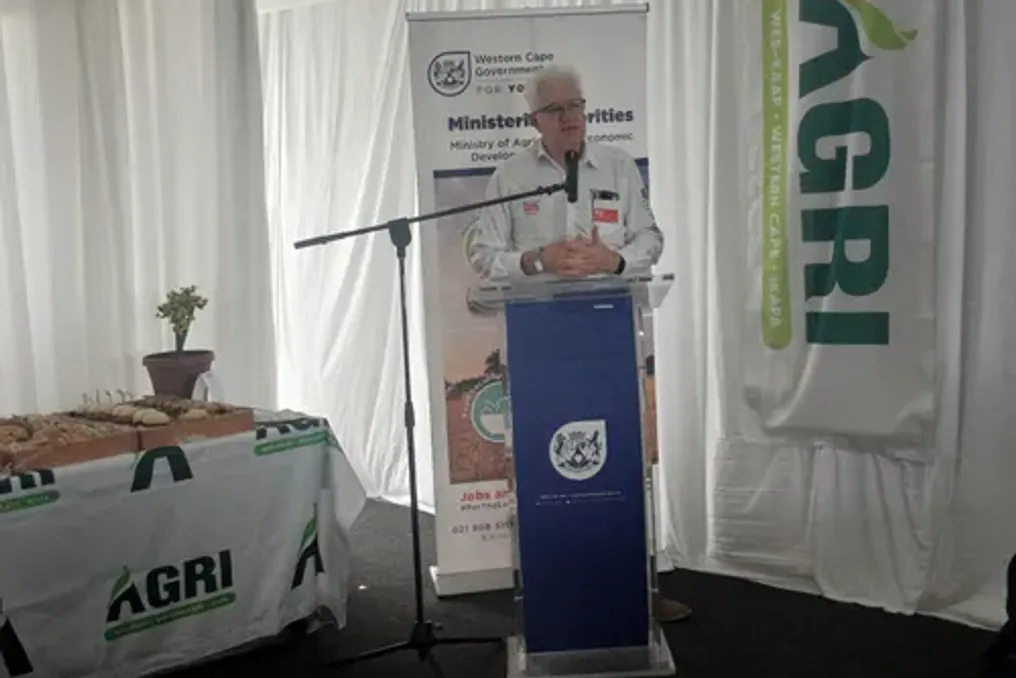
Western Cape Representative Warns Farmers to Prepare for Hotter and Drier Summer
Read more
IOL
iol.co.za

Western Cape Representative Warns Farmers to Prepare for Hotter and Drier Summer

The Head of the Western Cape, Alan Windey, strongly urged the agricultural sector to prepare for conditions that will become hotter and drier amid strengthening El Niño ahead of summer.

Authorities warn that a hotter and drier summer could place serious pressure on water reserves, farms, and communities in the Western Cape, and a deterioration of conditions conducive to wildfires is also expected.

This warning came after over 200,000 hectares of land were destroyed in the province during the last fire season, and intensifying El Niño conditions are expected to lead to higher temperatures in the coming months.

Premier Alan Windey emphasized that preparation cannot wait, calling on farmers, municipalities, and local communities to take necessary measures before the onset of summer conditions. He stated that all stakeholders, including farmers, producers, agricultural organizations, municipalities, and the government, must take steps to mitigate risks and protect livelihoods in this critical part of the economy.

According to provincial government data, the ENSO phenomenon is currently in the El Niño phase and is forecast to intensify in the coming months. Although the strongest manifestations of El Niño in South Africa are usually felt in regions with summer rainfall, authorities warned that the Western Cape may face increased temperatures, a higher risk of wildfires, and additional strain on already critical water resources.

Over 200,000 Hectares Burned Last Fire Season

The warning was issued against the backdrop of wildfires affecting over 200,000 hectares of Western Cape territory in the previous fire season. Windey noted that recent climate-related disasters have demonstrated the need for authorities, farmers, and communities to prepare for extreme conditions.

He stressed that everyone must be ready, regardless of their field—be it agriculture, education, healthcare, local government, or any other industry. The Premier added that one's residence in the Western Cape does not matter; everyone plays a role in reducing risks and ensuring community safety.

The Premier urgently asked residents and landowners in high-risk areas to immediately begin taking preventative measures. He pointed out that practical steps, such as clearing vegetation, maintaining firebreaks, managing biomass, and removing invasive alien plants, can significantly change the situation when conditions become hotter and drier.

The provincial government also expressed concerns beyond wildfires: reduced rainfall, rising temperatures, and increasing pressure on water resources pose potential threats to agricultural production, food security, and the economy of the Western Cape as a whole.

The Minister of Agriculture, Economic Development, and Tourism for the Western Cape, Dr. Ivan Meyer, reported that farmers have previously shown an ability to cope with severe climatic shocks, citing the drought observed between 2014 and 2016. Meyer noted that the current response must account for the severity of reduced rainfall, rising temperatures, and the strain on water resources.

The department plans to collaborate with industry stakeholders to develop measures to limit the impact of ENSO on farms and agricultural communities. These measures include strengthening conservation agriculture, improving water use efficiency in irrigated areas, prioritizing assistance for drought-affected crops, enhancing risk management and preparedness systems, and supporting agricultural workers.

Early Action Before Summer

The government's warning refocuses attention on preventive measures before the start of the fire season in the Western Cape, especially in agricultural and rural areas where extreme heat, dry vegetation, and limited water supplies can have serious consequences.

Windey emphasized that the province's experience in responding to climate-related emergencies has shown that preparation must encompass not only farmers and disaster management agencies but also municipalities, public services, and individual communities. The provincial government calls on all stakeholders to act before conditions worsen, warning that strengthening El Niño could exacerbate risks to farms, livelihoods, and communities in the coming months.

Similar stories

Western Cape agriculture development depends on markets, water resources, and financing
Read more
foodformzansi.co.za

Western Cape agriculture development depends on markets, water resources, and financing

On the second day of the Nampo Cape event in Bredasdorp, the role of new markets, ensuring water security, and access to financial resources for the growth of Western Cape agriculture were discussed. Organizers Food For Mzansi and Land Bank held a luncheon discussion, gathering a panel of participants.

Participants in the discussion included Sahumzi May, Chief Agricultural Economist at Land Bank; Mathiana Mzi, Regional Head of Commercial Banking and Transformation for the Cape region at Land Bank; Gianni Stridom, CEO of Agri Western Cape; and farmer Aldrink October from Kaapschon Boerdery & Ander.

May explained the opportunities for growth in the province's agricultural sector despite the possibility of another El Niño event, as well as the potential opened up by new markets. He noted that the Western Cape has existing infrastructure, including ports, but optimization of processes is necessary for development. May emphasized that there are already secured markets creating growth opportunities, and realizing this potential requires the involvement of both commercial and developmental parties to attract funding for development. China was named among the new markets that have been opened.

Furthermore, May pointed to the possibility of increasing water collection after periods of heavy rain and flooding in the province. He suggested that building infrastructure for reserving and collecting this water would contribute to irrigation development, allowing for the expansion of cultivated areas to meet market demand.

Farmer October highlighted the importance of water access and the difficulties associated with transporting it between different parts of the farm. He spoke about having a large reservoir at the winery and a small one at another farm, as well as having winter and summer water. The summer reservoir was located in the lower part of his farm in Overberg and required pumping water to the upper part, which was estimated at approximately R250,000, but investment was necessary for survival during the season.

Meanwhile, Mzi stressed the importance of banks acting as trusted advisors who understand the background, plans, and needs of farmers. He stated that when a bank becomes a trusted advisor, the farmer gives the bank a chance to understand their motivation, current challenges, and future expansion plans, allowing the bank to propose a solution that meets the client's needs.

However, Stridom urged farmers to remain optimistic and hopeful for the next season, noting the resilience of those who continue to produce food despite numerous industry challenges. He also highlighted several key commodities that could have an interesting future, including the wine industry. Stridom warned that the grain sector is under serious pressure, and structural change is necessary—whether in timing structure, pricing, or transport differentials. Otherwise, he warned, regions could lose their position in grain production.

El Niño threatens South African farmers due to expected dry and hot summer
Read more
iol.co.za

El Niño threatens South African farmers due to expected dry and hot summer

Farmers have been advised to use water judiciously, conserve soil moisture, and prepare livestock for potentially dry and hot conditions associated with the El Niño phenomenon.

South Africa's agricultural sector is preparing for a potentially challenging summer as El Niño conditions are expected to lead to reduced rainfall and increased temperatures across various parts of the country.

The Ministry of Agriculture has warned that this weather pattern could place significant strain on crops and livestock, strongly advising farmers to take proactive measures to conserve water resources, protect soil moisture, and prevent overgrazing.

El Niño is expected to last throughout the summer

According to the South African Weather Service's Seasonal Climate Outlook released on August 31st, El Niño is occurring and is expected to persist through the 2026/27 summer season. The Ministry noted that El Niño is a natural climate pattern that causes shifts in global atmospheric circulation. In South Africa, typical El Niño consequences include lower than usual summer rainfall combined with high temperatures.

This warning comes despite relatively favorable conditions in the previous summer season. The Ministry reported that increased rainfall during the 2025/26 summer improved reservoir levels and soil moisture in most summer-rainfall areas.

However, the transition to the new season does not follow the usual pattern in some regions. As indicated by the department, typically after the end of the winter season and the start of spring, rainfall is observed in all areas receiving summer rains. Nevertheless, this is not the case, especially when low rainfall and high temperatures are forecast, particularly during El Niño.

Crops face risk of crop failure

The department warned that farmers may face a combination of drought conditions and heat stress, which could have serious consequences for agricultural production. The Ministry emphasized that El Niño conditions in agriculture can lead to reduced rainfall and high temperatures, potentially causing drought and heat stress.

It was cautioned that such conditions contribute to crop and livestock mortality, especially when farmers have not implemented risk mitigation measures. Farmers were also alerted to secondary effects of water scarcity, including restrictions that could affect irrigated farming. Other issues include an increased risk of pests and diseases associated with hotter weather.

Farmers urged to conserve soil moisture

Agricultural farmers were advised to employ smart farming methods and avoid unjustified expansion of cultivated areas. The department encouraged the use of tools aligned with sustainable agriculture principles to conserve soil moisture and reduce erosion.

Farmers were also recommended to select appropriate varieties resistant to heat and drought, and to adhere to recommended planting times. Furthermore, they were instructed to use varieties listed in the National Variety List in accordance with the Plant Improvement Act.

Water shortage may affect irrigated farmers

Given the anticipated increased pressure on water resources, the department called on farmers to conserve this natural resource. Water harvesting techniques and more efficient irrigation systems, including drip irrigation, were recommended. Farmers were also advised to irrigate during periods when water loss is minimal.

The Ministry constantly urges farmers to irrigate at times conducive to water conservation, such as morning or evening, and to comply with local water usage restrictions.

Livestock producers warned against overstocking

Livestock producers also received an urgent recommendation to prepare for deteriorating pasture conditions. The department insists that farmers maintain herd sizes within the carrying capacity of pastures and available feed. It was warned that overgrazing can lead to excessive grazing, exacerbating drought consequences and increasing the likelihood of animal deaths.

Proposed measures include rotational grazing, supplementary feeding, and ensuring sufficient watering points.

Heat may trigger pests and diseases

The expected hot conditions may also create a favorable environment for certain pests and diseases, prompting the department to urge farmers to remain vigilant. Farmers are advised to conduct regular inspections and implement control measures where necessary. This includes routine veterinary checks and livestock vaccination.

The department stated that farmers must closely monitor weather and climate information provided by the South African Weather Service and respond to early warnings. It also reported that it will continue to monitor conditions and provide updates through monthly briefings and daily extreme weather alerts. Additionally, national and provincial agricultural bodies will collaborate with stakeholders to raise awareness and assist farmers in understanding and utilizing early warning information to mitigate disaster risks.

Popular