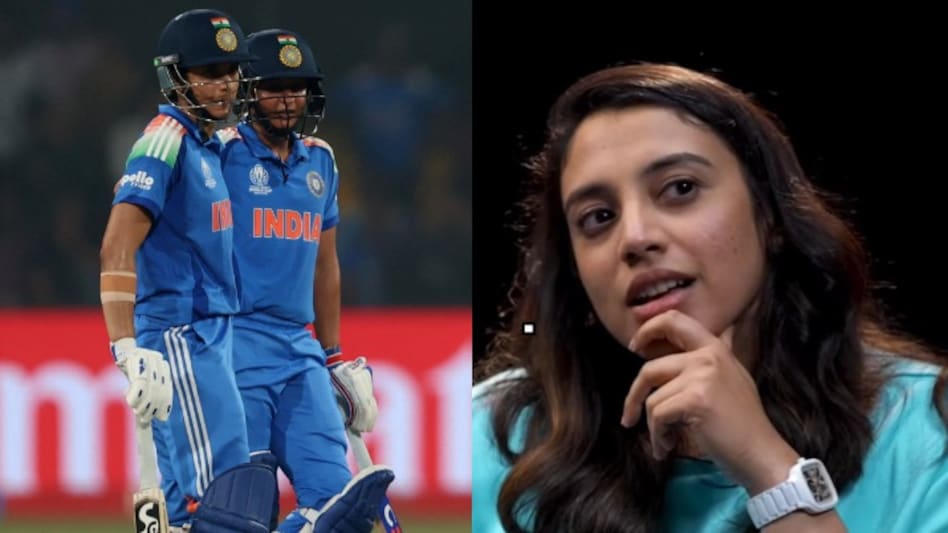
Samriti Mandhana openly spoke about her pain: 'I can forgive, but I will never forget'
Read more
Aaj Tak
www.aajtak.in

Samriti Mandhana openly spoke about her pain: 'I can forgive, but I will never forget'

The Indian women's team is preparing to play in the Asia Cup final against Sri Lanka on Sunday, September 13. Strong performance is expected from Samriti Mandhana in this match. However, shortly before the final, a video clip appeared on social media where Mandhana shared her anxieties.

Samriti Mandhana has played many outstanding matches in her career. In Women's T20 International, she has played 175 matches, scoring 4692 runs with an average of 30.46. In the upcoming final, she intends to demonstrate her skills once again.

Despite the outward calm on the field, Mandhana harbors pain and anger that she has recently spoken about openly. During one podcast, when asked about the hardest night of her life, she paused for a moment, and tears and pain were visible on her face.

Avoiding discussions about her personal life, she stated that she only wants to talk about cricket. She suggested that the difficult night might have occurred during some World Cup, and also named the period of the coronavirus pandemic as an extremely difficult stage in her life.

Regarding rumors about the breakdown of her marriage with Palash Muchhal, Mandhana has never commented publicly. In this interview, she maintained a clear boundary between her personal and professional life, focusing exclusively on the game.

Mandhana smiled and frankly admitted that although people may perceive her as quiet and simple externally, she holds a lot of anger inside. Nevertheless, she does not believe in revenge through expressing this anger. She does not expect sympathy from anyone nor does she want to be perceived as unhappy by others.

When asked if she forgives people easily, her answer was very strong. She said: 'I can forgive, but I don't know how to forget.' This means that she knows how to move on without conflict, but she will never forget what was done to her.

Similar stories

Experts advise Vaibhav Suryawanshi not to let fame influence his cricket career
Read more
www.aajtak.in

Experts advise Vaibhav Suryawanshi not to let fame influence his cricket career

Vaibhav Suryawanshi's batting has amazed the world, as he demonstrated incredible success against bowlers in T20 cricket at a very young age, leading to inflated expectations. Now that he steps onto the field, spectators expect not just good play, but explosive moments.

However, this is where another chapter of the story begins. Players who aim to hit every ball for a four or a six eventually encounter a situation where bowlers begin to use that same haste against them. An example of such risk was Vaibhav's elimination in the Dalip Trophy final in Chennai after a delivery by Vijay Tripura, which served as a warning about this danger.

With a score of 8 runs off 16 balls, while Vaibhav tried to send the ball outside the boundary, he himself fell into a trap due to his haste. Vijay nudged the ball slightly back, and Vaibhav stepped out of his defensive zone, intending to send the ball over the boundary. But this time, the ball bypassed not the bat, but the batsman's mind.

The ball spun in the air, Vaibhav missed, and Jagdishan bowled him out. This moment should prompt Vaibhav to pause and ask himself questions. What he sent far yesterday, the same player read today.

This dismissal is particularly interesting because he was facing the same Tripura Vijay, who had previously conceded three fours and one six from Vaibhav in his debut IPL match. At that time, Vaibhav managed to read Vijay. This time, Vijay read Vaibhav. In cricket, victory is not always achieved with words; sometimes one ball is enough.

Perhaps an image of the previous confrontation remained in Vaibhav's mind. Perhaps he thought Vijay would again be an easy target, so he stepped out of his defensive zone to reach the ball. But in Red Ball Cricket format, the bowler shows you not only the ball but also illusions. Vijay did the same: he allowed Vaibhav to come closer and then stopped the ball in the air in such a way that the batsman's entire mathematics was disrupted. Last time, Vaibhav taught the bowler a lesson; this time, the bowler taught Vaibhav a lesson.

T20 helped Vaibhav gain fame due to his fearless style of play, which is his main asset. However, first-class cricket tests this fearlessness. Here, it is not necessary to hit every ball. Sometimes the best shot is simply not hitting the ball. Sometimes the right play is not scoring runs for ten balls. It is also important to show the bowler that the batsman will not fall into his trap.

Vaibhav needs to learn this. He is not lacking in shots, power, or confidence. He needs to learn when 'not to hit'. This is what distinguishes an explosive batsman from a great batsman.

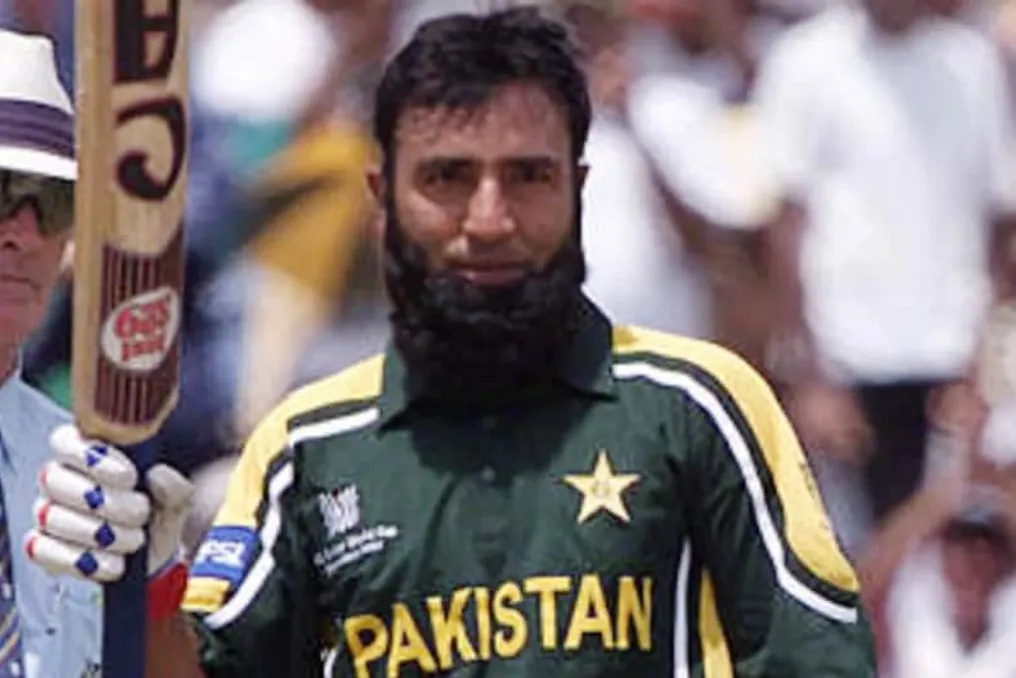
Pakistani cricketer Saeed Anwar, known for his historic match against India, has become a Mullah
Read more
www.aajtak.in

Pakistani cricketer Saeed Anwar, known for his historic match against India, has become a Mullah

Currently, the Pakistan team is on tour in England, where their performances have not yielded the expected results. The team has lost two consecutive Test matches, trailing the series 0-2. Now, the Pakistani team aims to win the final match of the series, scheduled for September 9th, to avoid the disgrace of a complete defeat. Significant changes have also occurred within the Pakistani squad ahead of the Edgbaston match: seven players were dropped, and the coaching staff underwent reshuffles.

Despite the current difficult period, the Pakistani team once held a very strong reputation in world cricket, featuring many outstanding athletes. Among them, one cannot forget the left-handed opener Saeed Anwar, whose trademark was the ability to score quickly from the start thanks to excellent timing and shot placement.

Saeed Anwar's international career, which marked his 58th birthday on September 6th (Sunday), spanned from 1990 to 2003. For Pakistan, he amassed thousands of runs in both Tests and ODIs. In 1997, during an ODI against India in Chennai, he played a knock of 194 runs off 146 balls, which was the highest individual score in an ODI at that time. He approached two hundred runs but was caught by Saurav Ganguly off a Sachin Tendulkar delivery.

Interestingly, this record of Saeed Anwar was matched in 2009 by Charles Coventry of Zimbabwe, who scored 194 runs without being dismissed. Subsequently, in 2010, Indian legend Sachin Tendulkar played a historic innings of 200 runs without being out against South Africa, thereby surpassing Anwar's record.

Anwar batted actively not only in ODIs but also in Tests, where he also registered many big scores. It is worth noting that many of his best Test performances took place on foreign soil. In 1994 in Wellington against New Zealand, he scored 169 runs, marking his first Test century. Two years later, in Hove against England, he delivered an impressive innings of 176 runs. In 1998, in a Test match against India in Calcutta, Anwar remained unbeaten on 188 runs, which was his highest Test score. His batting attracted attention because he hit boundaries not so much through power as through mastery of timing and placement.

For Pakistan, Saeed Anwar scored 4052 runs in 55 Test matches, maintaining an average of 45.52, and scored 11 centuries and 25 half-centuries. His ODI statistics were even more impressive: in 247 matches, he accumulated 8824 runs, including 20 centuries and 43 half-centuries. He was particularly renowned for his magnificent drives off the off-side. If a bowler left even a small gap outside the mid-stump, Anwar would immediately drive the ball to the boundary. His game combined aggression with a special kind of beauty.

Saeed Anwar's Test career concluded under very emotional circumstances. In August 2001, in a Test match against Bangladesh in Multan, he scored 101 runs, which was his 11th and final Test century. In that match, Pakistan posted a formidable total of 546/3 in the first innings, and five batsmen from the team scored centuries. This unique record of five centuries in one Test match is jointly held by Pakistan and Australia. However, for Anwar, this match brought more pain than joy.

After his daughter Bismah, who was three and a half years old, passed away after a long illness just two days after his century in the Multan match, Anwar returned to Lahore. After this tragedy, he did not play any more Test matches. He stepped away from cricket for some time, and his life changed. This is why the 101 runs scored in Multan entered the list of the most memorable and touching centuries of his career.

Having lost his daughter, Saeed Anwar returned to ODIs and scored a century against India in the 2003 World Cup. Although Pakistan lost that match, Anwar's innings was magnificent. He dedicated this century to his daughter Bismah. This innings became one of the most emotional moments of his international career.

Saeed Anwar announced his retirement from international and first-class cricket on August 15, 2003. Following this, he engaged in religious activities and began growing a beard. Anwar actively participated in events related to the propagation of Islam. Muhammad Yusuf, a former batsman for Pakistan, was also significantly influenced by Anwar in life. Yusuf converted to Islam in 2004 and later stated that Saeed Anwar had provided him with great assistance during his religious change. Before converting to Islam, Yusuf was known as Yusuf Johana.
Suryakumar Yadav discusses reasons for outburst after match against Pakistan
Read more
www.aajtak.in

Suryakumar Yadav discusses reasons for outburst after match against Pakistan

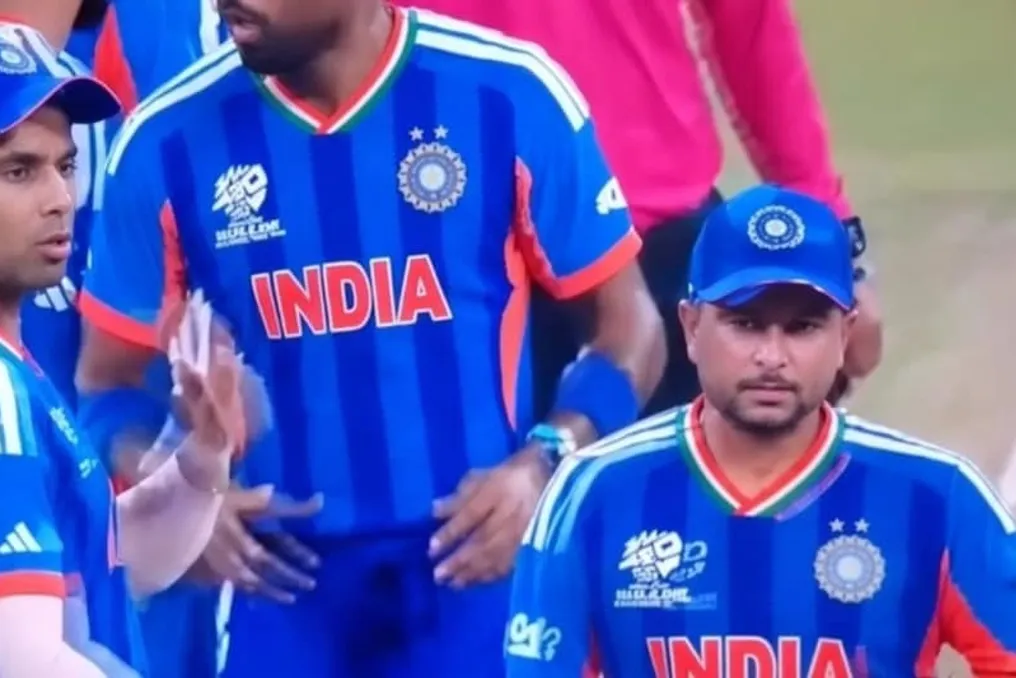
An incident occurred during the match between India and Pakistan that went viral on social media. The video captured Indian captain Suryakumar Yadav expressing anger towards Kuldeep Yadav, as well as the disappointment of Hardik Pandya. The appearance of this video raised questions about possible internal tension within the Indian team.

Suryakumar Yadav later shared the full story of this viral moment on Akasha Chopra's YouTube channel. He explained that the situation began with Kuldeep's concern about the possibility of bowling the ball.

Suryakumar recounted that during the game against Pakistan, Kuldeep wanted to bowl, but he was not given the opportunity. He noted that the match had started, and Kuldeep did not get time to bowl. He added: 'I finished Axar's overs, and then I gave the ball to Tilak, Varun, and Hardik.'

Kuldeep was worried about why he wasn't being given the ball, and according to Suryakumar, asked the captain: 'Why isn't my game working?' However, the circumstances of the match did not allow Kuldeep to come onto the field.

Kuldeep's additional frustration arose after he didn't receive the ball. After that, he was involved in fielding at long-on. At that moment, there was a slight chance to catch the ball. Suryakumar felt that Kuldeep did not show enough seriousness when attempting to catch the ball. He stated: 'He was at long-on. There was a chance to catch the ball. He ran very casually, and it was an easy ball, considering his skills.'

As soon as the ball dropped, Suryakumar's anger became evident in the video. Recalling the moment, he admitted that he was displeased with Kuldeep. He emphasized: 'He dropped the ball, and at that moment I got angry. If he had tried to catch the ball, and then it dropped, that would have been fine, but he didn't even try.'

Thus, Suryakumar's irritation was related not only to the dropped ball but also to Kuldeep not making the necessary effort to catch it.

This clip caused the most resonance on social media because Suryakumar and Kuldeep were looking at each other with expressions of anger, and Hardik Pandya's reaction was also captured on camera. Viewers might have assumed there was a serious conflict between the players. However, Suryakumar now clarified that there was no such serious disagreement.

He reported that after the match, when they met face-to-face, their faces indeed showed expressions of anger, but it was not a serious confrontation, but rather playful banter between them. Suryakumar said: 'When we met after the match, we were looking at each other angrily. He turned red with anger, and I looked at him angrily too. That's how it looked on screen, but it was friendly teasing.'

Suryakumar learned about the viral video after arriving in Ahmedabad. He noted: 'After arriving in Ahmedabad, I found out about this video. Sometimes it is good just to let go of a moment.'

Therefore, the video, which outwardly showed tension within the Indian team, had a completely different story: Kuldeep was upset about the lack of a bowling chance, then the ball dropped, and Suryakumar got angry. The camera recorded anger, and social media turned it into a 'dispute,' although in reality, it was light teasing between two friends.

Popular