Expert predicts India will become the world's largest economy and overtake the US within 25 years
Read more
Aaj Tak
www.aajtak.in

Expert predicts India will become the world's largest economy and overtake the US within 25 years

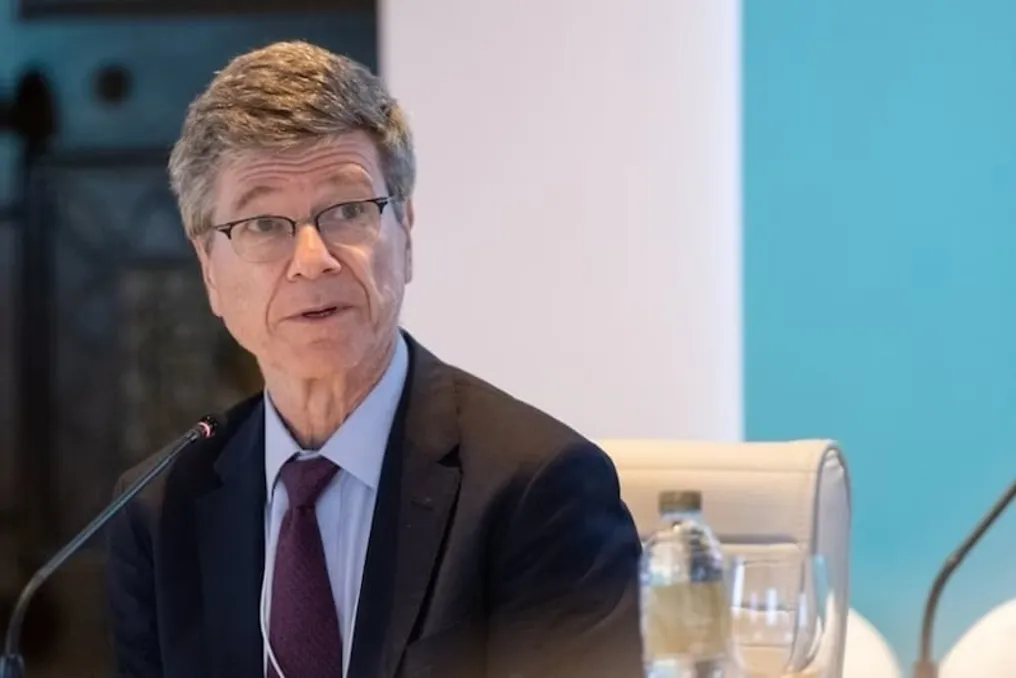
India is among the fastest-growing global economies, and its growth momentum is expected to continue. Not only global agencies but also leading economists express confidence in India's rapid GDP growth. Professor Jeffrey Sachs of Columbia University and economist made a significant statement regarding the Indian economy, believing that India is on track to become the world's largest economy, surpassing even America within the specified timeframe.

According to economist Jeffrey Sachs, India is moving towards becoming the second-largest economy in the world, overtaking the US within the next twenty-five years. He also believes that eventually, India could become the world's largest economy. Sachs justifies this by stating that the center of the global economy is decisively shifting towards Asia.

Jeffrey Sachs, a professor at Columbia University and an advocate for strengthening ties between India and China, asserts that these two Asian giants could become the two largest economies in the world in less than 25 years, while the US moves to third place. In an interview with India Today, Jeffrey Sachs stated: 'I envision a time about 25 years from now when India and China will be the two largest economies in the world. At some point this century, India will be the largest economy.'

He added that India is already demonstrating faster growth compared to other major economies. Deep economic and technological ties with China could further accelerate this progress.

Sachs called the relationship between India and China the most important bilateral partnership in the world, arguing that strong cooperation between the two countries could lead to greater results. Acknowledging the presence of mistrust and border disputes affecting India-China relations, he emphasized that both countries possess reliable economic and strategic alternatives to improve their relationship. In the economist's view, 'India's need for China is the same as China's need for India.'

Jeffrey Sachs noted that the focus of the world economy has once again shifted to Asia, where it was for 2000 years, and then briefly moved away after 1800. He stressed that as a result of this shift, India's strategic and economic ties with China, ASEAN, Africa, and the Persian Gulf countries will become increasingly significant. India is already the fastest-growing among all major countries, and foreign investment in joint ventures with China will give this growth an additional boost.
Similar stories

Experts warn: Despite 7.8% GDP growth, achieving developed country status by 2047 requires accelerating the pace of development.
Read more
www.aajtak.in

Experts warn: Despite 7.8% GDP growth, achieving developed country status by 2047 requires accelerating the pace of development.

India's economy demonstrated impressive GDP growth of 7.8% in the first quarter of the fiscal year 2026-27. This figure exceeded expectations amid global economic difficulties and the crisis in West Asia, indicating strong economic momentum for the country. However, this statistical result sparked debate.

Former Deputy Finance Minister Subhash Chandra Garg questioned the official GDP data and changes made in previous periods. Congress also accused the government of manipulating these figures. Subhash Garg asserted that the real growth rate of the Indian economy is only 2.6%, although he later revised his forecast to 5% in an interview.

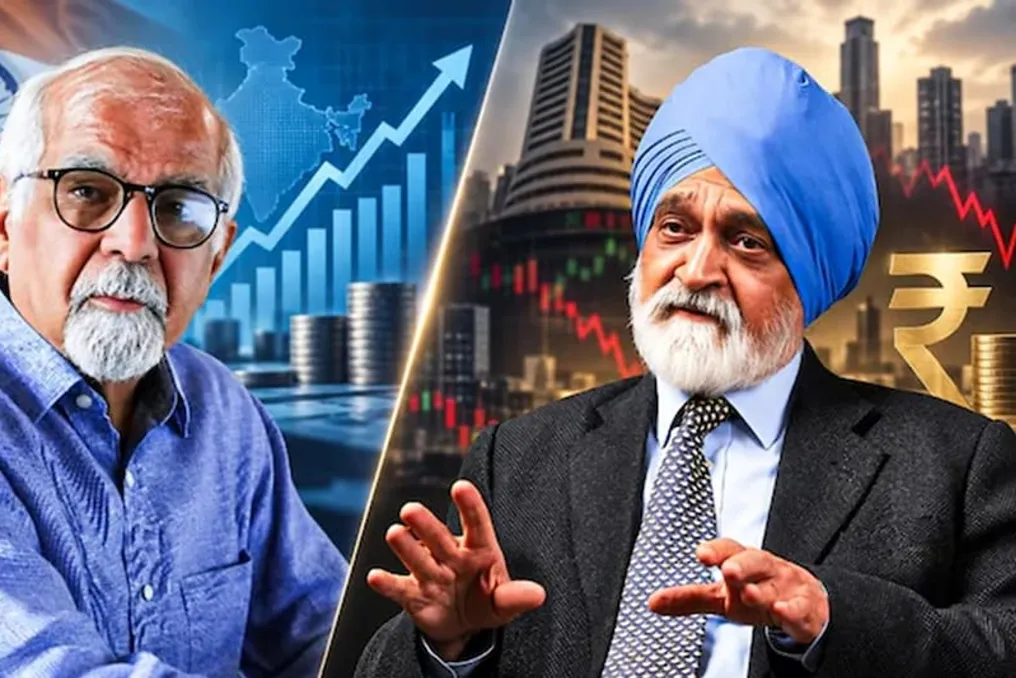
In contrast to these claims, two leading economists, Surajit Bhalla and Montek Singh Alawalia, refuted allegations of GDP data falsification. They emphasized that even with 7.8% growth, India will require faster economic growth to become a developed nation by 2047.

Following the release of new GDP data, former Finance Secretary Subhash Chandra Garg criticized significant adjustments made to the first-quarter figures of the previous year. He noted that the initial GDP at current prices was around 86 lakh crore rupees, but this amount was later reduced to approximately 80 lakh crore rupees in the new GDP series. Garg requested clarification from the government regarding the difference of 6 lakh crore rupees and used this as grounds for doubting the current growth calculation of 7.8%.

Garg's argument was that when comparing old and new figures on different bases, the GDP growth at current prices appears to be less than 2.5%. Nevertheless, the government and economists dismissed his calculations as unfounded, stating that GDP cannot be calculated by comparing data from two different statistical series.

After Subhash Garg's objections, the GDP data became a subject of political discussion. Congress criticized the government over the new GDP series, the GDP deflator index, and changes in past reports. The party stated that the new GDP series showed a decline in India's GDP of approximately 43 lakh crore rupees over four years. The government rejected these claims, explaining that the new GDP series uses 2022-23 as the base year and applies improved data sources and a new calculation methodology. The Ministry of Statistics and Programme Implementation (MoSPI) also confirmed that the correct method is not comparing data from different GDP series to determine growth rates.

Amid ongoing disputes over GDP data, Surajit Bhalla and Montek Singh Alawalia shared their views. Both agreed that there is no convincing evidence that the 7.8% figure is artificially inflated. Economist Nilakanth Mishra, representing India at the World Bank, also did not approve of achieving growth of 2.6% or 2.8% by combining different GDP series.

Surajit Bhalla noted that if the government aimed to show higher GDP, it could have also increased consumption data. However, in the new series, consumption was adjusted downwards. In his opinion, there is currently no evidence that the GDP data has been manipulated.

Separate from the GDP disputes, the most important point was the discussion of the 'Developed India 2047' goal. Although India did record strong growth of 7.8% in the first quarter of the fiscal year 2026-27, according to Surajit Bhalla and Montek Singh Alawalia, one or two quarters of rapid growth are insufficient to guarantee India's transformation into a developed economy by 2047.

Surajit Bhalla believes that to achieve this goal, India needs to maintain double-digit growth for a prolonged period. He positively assessed the strengthening of the investment-to-GDP ratio to about 34% but added that much faster growth is required to increase per capita income in dollar terms.

Montek Singh Alawalia also noted that the Indian economy looks stronger than pessimistic forecasts suggested. However, he believes the current pace is insufficient to realize the 'Developed India 2047' goal, insisting on the need for higher and sustained growth.

According to economists, national development is not just about increasing overall GDP. It is crucial that the growth in per capita income, employment, production, and development benefits reach broad segments of society. Economist Rohit Lamb distinguishes India's development model from those of China and South Korea. According to him, India rapidly transitioned from an agrarian economy to a highly skilled service sector, whereas large...

Popular