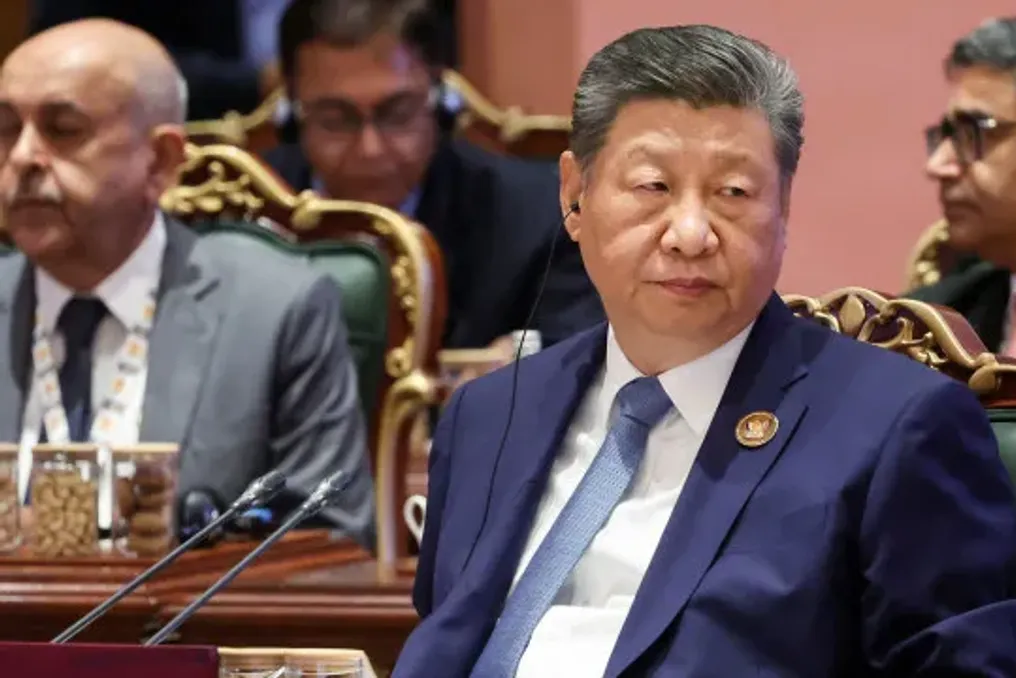
During his participation in the second and final session of the BRICS leaders' summit held in New Delhi this weekend, Xi Jinping presented cooperation proposals. The Chinese leader outlined five initiatives aimed at boosting the growth of the so-called Global South in the areas of artificial intelligence (AI), trade and investment, digital industry, smart manufacturing, and talent development, according to the official Xinhua agency.
Among the suggestions made by the leader of the world's second-largest economy is the offer to assist bloc countries in implementing open language models. This aims to create an AI zone that is both open and inclusive for the BRICS. Furthermore, proposals included building smart factories, establishing a cloud platform for members' digital industry, and training young professionals in advanced technology and innovation.
According to Xi, the 15th Five-Year Plan, approved this year, transcends merely being China's development roadmap; it also represents 'a list of cooperation opportunities for the world.' Through it, the Asian giant intends to continue promoting 'high-quality development,' high-level openness, the Belt and Road Initiative, and generating prosperity with other global nations.
In the same session, Indian Prime Minister Narendra Modi warned that using technology and essential minerals as geopolitical tools could compromise the unity of the bloc, especially in the context of the current global competition for technological development.
In response, the Chinese leader reiterated his call to the bloc and the Global South to strengthen multilateralism, respect authority, and play an active role in the United Nations and the reform of multilateral institutions, seeking to make them more effective, including the World Trade Organization (WTO) 'in the right direction.'
He also emphasized that the BRICS, particularly the group's largest economies, must ensure the stability and fluidity of supply chains, as well as encourage market integration. Xi argued that 'a world without rules is like an intersection without traffic lights where chaos and disorder would be inevitable,' advocating that global norms be established by mutual consensus and applied with equity, without double standards.
After India this year, China will assume the presidency of BRICS in 2027. This bloc includes Brazil, Russia, India, China, South Africa, Egypt, Ethiopia, Iran, Saudi Arabia, United Arab Emirates, and Indonesia. Xi's visit to India marks his first trip to the country in seven years and included a meeting with Modi, signaling a new advance in the normalization of bilateral relations initiated in 2024.