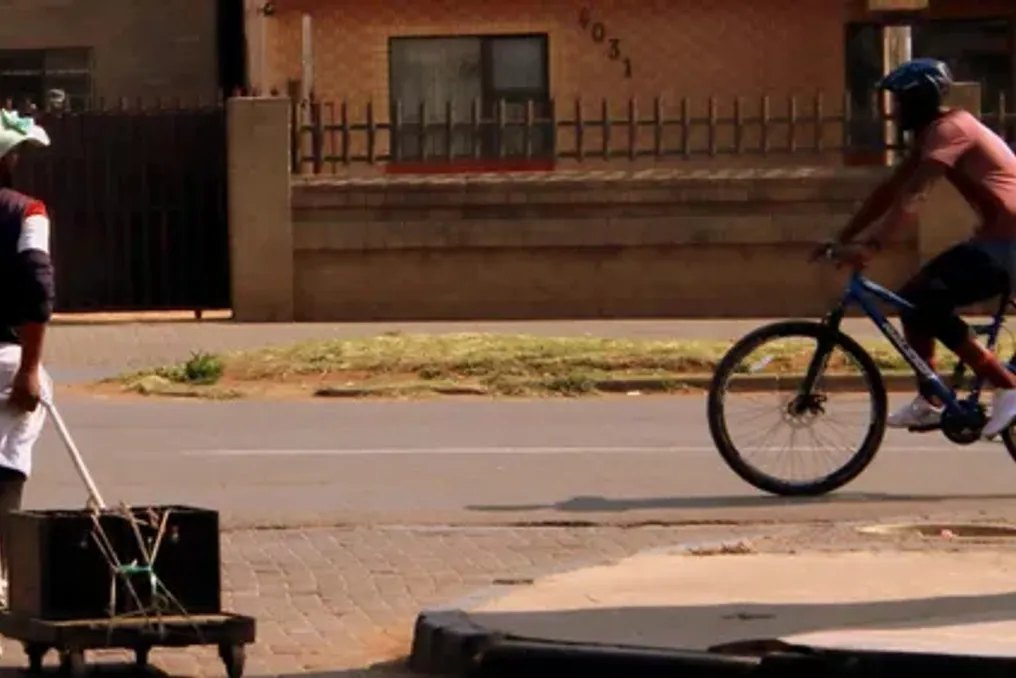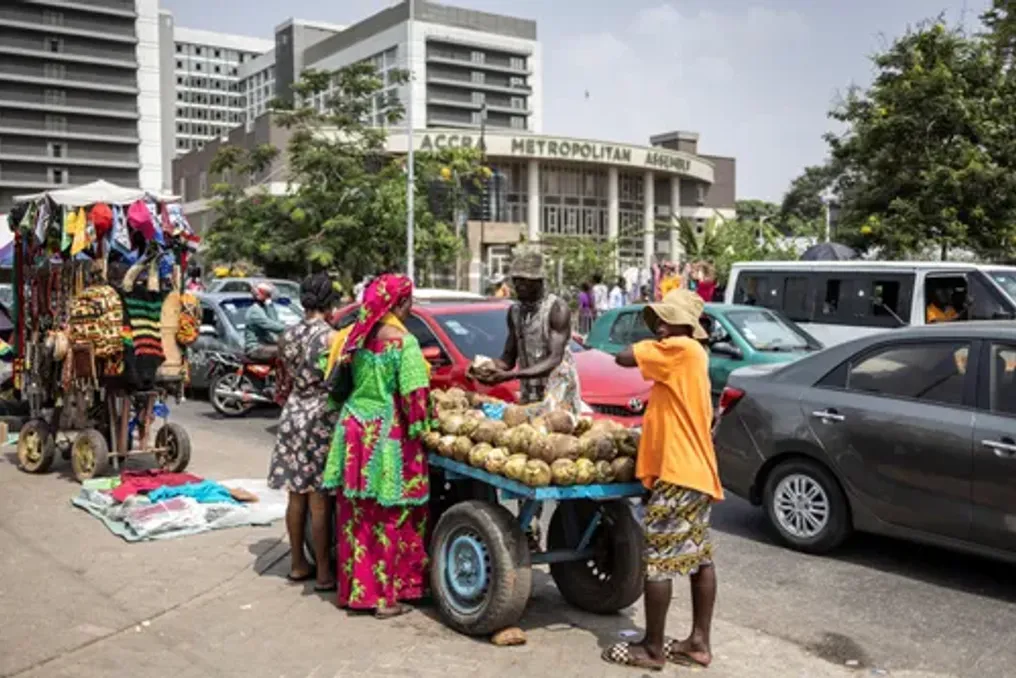
The informal sector of the economy in Africa is experiencing a boom in urban areas, streets, and public spaces, remaining unnoticed by authorities who often lack sufficient power to stop it. Tens of millions of Africans are forced to engage in unregulated, untaxed, and unprotected work due to poverty, unemployment, and bureaucratic red tape.
From Abidjan to Dakar and Abuja, mechanics, scrap collectors, motorcycle taxi drivers, and street vendors use even the smallest corners to conduct their businesses. AFP employees spoke with workers in the informal sector in several African cities, noting that their affordable prices make them indispensable for the daily lives of many people.
Lokhbib El-Pius Binir, who runs a money transfer point and sells bread, cookies, and drinks from a small street stall in Nigeria's capital, Abuja, stated: 'Life starts somewhere, so I started here.'
Conflict with Authorities
This 35-year-old managed to set up shop in a fashionable area, although such informal enterprises are mainly concentrated in poorer neighborhoods. He explains the authorities' tolerance by saying he conducts his business in a neat and ascetic manner: using a bench, an umbrella, a card payment terminal, and a table that he folds up and takes away every evening.
On one street in Côte d'Ivoire's economic capital, Abidjan, municipal employees pursued street vendors who displayed their stalls on sidewalks, and in some cases, on roads. This is a common situation in megacities across the continent, where kiosks, carts, containers, tables, and ground-level stalls are part of the urban landscape.
Yakuba Silla, a 44-year-old mechanic, was forced to move his informal workshop several times due to demolition operations in Abidjan, but he always managed to find a new place to resume his activities. He admitted to AFP that if it were up to him, he would choose something better: a fully compliant workshop with modern equipment, where he would pay taxes and participate in tenders. However, this requires 'many resources' or 'state support,' which he lacks.
According to the International Labour Organization, in the early 1970s, it was estimated that over 60 percent of employment in Africa was informal, but in recent years, this figure has risen to nearly 83 percent. In Côte d'Ivoire, Senegal, Mali, and Nigeria, this figure exceeds 90 percent of the active population.
Combating Informality
The UN asserts that the informal economy is a burden that limits growth potential. In a report published in July, the United Nations Development Programme (UNDP) noted that the development of many African countries is determined by the weight of the informal sector, the lack of scalable enterprises, and the shortage of opportunities for decent job creation.
Governments have taken a number of measures to counteract the informal sector, ranging from more repressive actions, such as demolitions and confiscation of goods, to supporting workers through training or transitioning services online. Nevertheless, they have failed to stop its expansion.
Yaya Dumbia, Deputy Mayor of Yopougon, Abidjan's largest district and a hub of informal entrepreneurship, where authorities created a 'sanitation brigade,' acknowledged: 'It is not an easy task. Sidewalks and public spaces are occupied. It is a real challenge.'
Economist Guillaume Libi believes that African countries are 'solving the problem the wrong way: through coercion.' He also blames the high tax burden and administrative barriers faced by those who wish to work legally.
Lobe Sarr, who has been dealing in various goods—fruits, juices, clothing, shoes, peanuts—for the last 15 years, finally opened a small street food stall in Senegal's capital, Dakar. The woman, around 30 years old, told AFP: 'Running a shop on the street is difficult. At least it gives us something to do and allows us to earn money to cover daily needs.'
Lack of Alternatives
Like other people interviewed as part of the AFP survey, she stated that she had no choice but to work informally. Besides small traders, the informal sector includes a large number of people employed without contracts or social security in crafts, security, the restaurant business, or cleaning, living in conditions of instability.
Economist Libi called this the 'survival economy, the only remaining open door' for many Africans, pointing to the inadequate institutional environment and strong population growth. According to the International Monetary Fund, the informal sector accounts for a significant portion of the continent's economy, reaching 65 percent of GDP.
However, according to economists, although this sector remains untaxed, it represents a significant loss of revenue for African governments. Countries need to implement policies that encourage informal sector workers to register with tax authorities, facilitate access to financing, and create the necessary infrastructure to accommodate small entrepreneurs.
In Côte d'Ivoire, reducing the 'significant weight' of the informal sector is one of the pillars of the ambitious national development plan presented in July, especially by creating status for small entrepreneurs. Benin's attempts have already shown results after introducing policies based on building new, modern markets and reorganizing large commercial zones. The informal sector in Benin, previously accounting for 97 percent, now provides 85 percent of jobs. Benin's authorities boast about a strategy that has allowed the state to increase tax revenues while improving working conditions and combating unsanitary practices.
The Situation in South Africa
South Africa's informal sector remains a vital source of livelihood, especially in a labor market where unemployment remains high. The latest Quarterly Labour Force Survey from Statistics South Africa showed that employment in the informal sector increased by 34,000 people in the second quarter of 2026, despite overall employment decreasing by 16,000. The official unemployment rate rose to 33.6 percent during the quarter. A 2023 study by Stats SA on employers and self-employed found that 1.9 million South Africans were running businesses not registered for VAT, compared to 1.5 million a decade ago. Businesses in the informal sector range from street vendors and small retailers to home-based enterprises and other unregistered businesses, but many face difficulties in obtaining financing, suitable trading space, and licenses.