Significant efforts have been made in India to expand access to clean fuels, including providing millions of households with gas connections under the Pradhan Mantri Ujjwala Yojana program. However, according to three new studies by the Council on Energy, Environment and Water (CEEW), the reality differs from positive statistical data. The studies question whether simply providing a connection is enough, or if true success should be measured by the complete absence of smoke in kitchens.
More than 2200 rural households participated in these studies across six states, over 1100 households in urban informal settlements, and more than 1000 migrant workers in ten cities.
The results show that although the number of LPG connections has increased, wood and other solid fuels are still used in many homes, especially in rural areas. According to the study, 73% of rural households use LPG, but only 23% rely entirely on it for cooking. Approximately half of the families continue to primarily use wood, indicating that despite having a cylinder, regular use of LPG is difficult. People often switch between using LPG and wood, which is called 'stacked fuel use.'
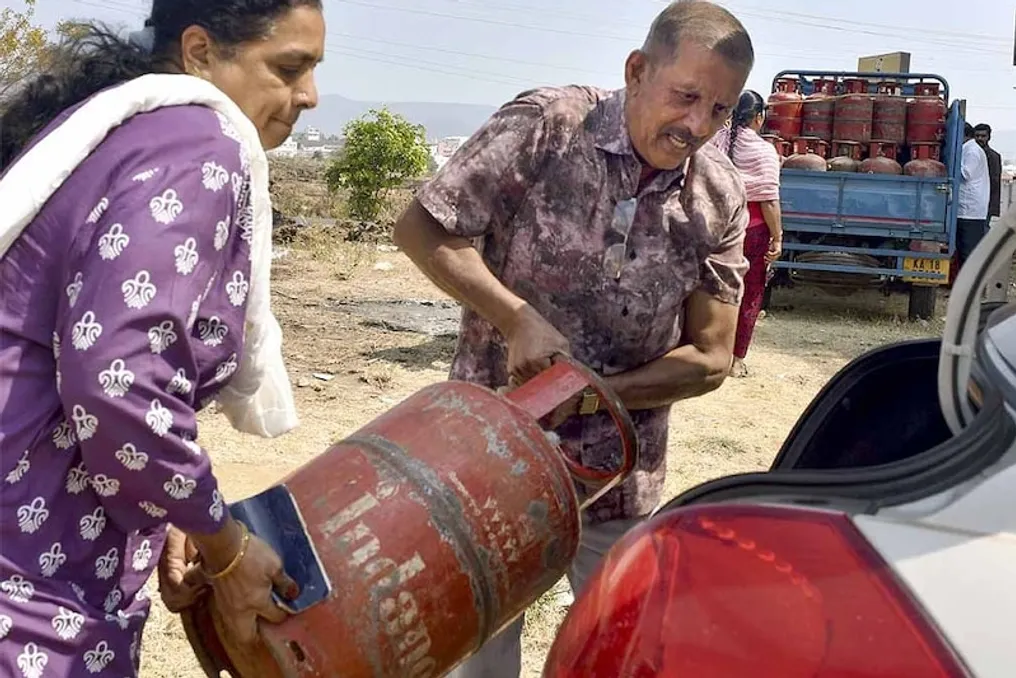
This situation is due to the high cost of refills and a weak system for delivering cylinders to homes. Only 47% of rural households using LPG receive a cylinder at home; the rest have to collect it themselves or incur additional costs. In remote villages, the problem is exacerbated, and families revert to traditional fuels because wood is easily available and seems free or cheap, despite the health risks.
In urban informal settlements and slums, the picture is somewhat better: about 70% of families rely entirely on LPG. Nevertheless, a lack of formal connections is also a serious obstacle here. 31% of families without official connections reported being denied due to lack of address proof. As a result, they purchase cylinders on the informal market, which costs more than the government price.
Migrant workers turned out to be the most affected group among all three studied groups. 74% of migrants use LPG, but 79% of them do not have a legal connection. Among migrants associated with the Ujjwala program, the share is less than four percent. Although changes were made in 2021 to simplify access through self-declaration, these benefits were not realized due to lack of awareness and bureaucratic hurdles.
The fuel choice of migrants also depends on where they live. About 70% of workers living on sidewalks or open spaces depend solely on solid fuels, such as wood or rice husk. This figure is only 11% in families renting accommodation. This clearly shows that the lack of permanent housing and identification is an obstacle to switching to clean fuel. Migrants purchasing on the informal market pay an average of 71 rupees per kilogram of gas, whereas the official price is about 59 rupees, meaning an extra expenditure of 20%.
The most important takeaway from the three CEEW studies is that people want to switch to clean fuel, but price dictates their decisions. According to the survey, at least 80% of surveyed families stated they would fully switch to LPG if a 14.2 kg cylinder cost 400 rupees. The average acceptable price for all three groups was around 500 rupees, while the actual price after subsidies is about 642 rupees. This suggests that with a small reduction in burden, usage could increase significantly.
CEEW Fellow Prana Bora notes that clean air cannot be considered separately from cooking methods, working conditions, and living environment. LPG is just the first step. Fellow Abhishek Kar also believes that policy must go beyond merely counting the number of connections.