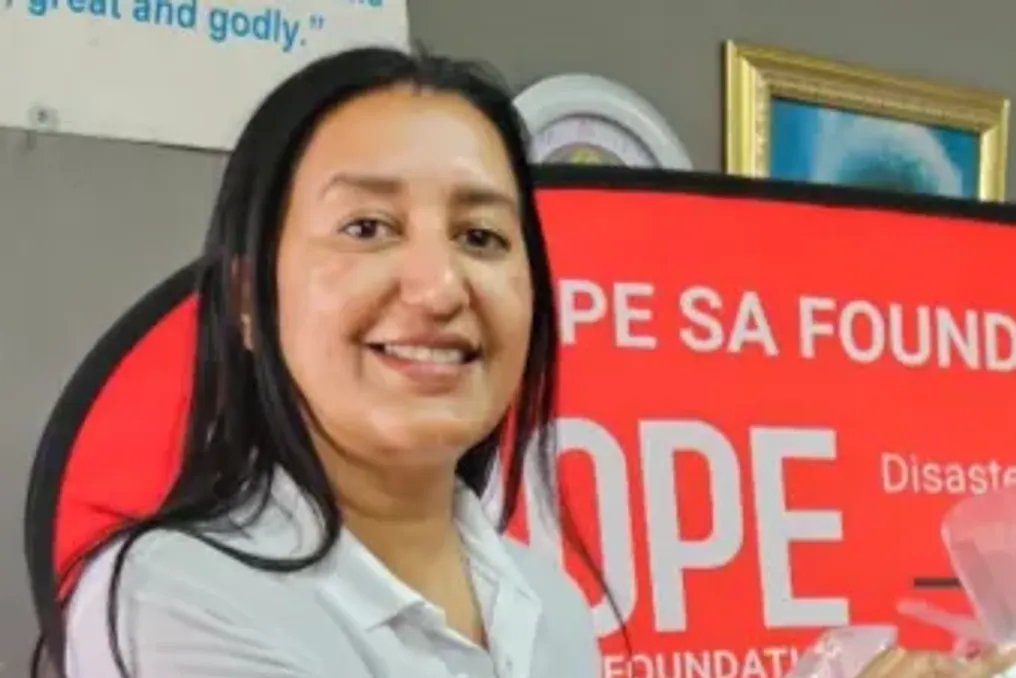
Namrita Sivasanker, founder of the Johannesburg-based non-profit organization Hope SA Foundation, stated that her childhood experience with abuse shaped a lifelong commitment to helping vulnerable women, children, and communities. According to Monishka Govender, helping others is not just work for Sivasanker; it is a life purpose born from hardship and sustained by an unwavering belief that even the smallest act of kindness can restore dignity and hope.
The 52-year-old CEO and founder of Hope SA Foundation, a Johannesburg NGO, has been supporting vulnerable communities across South Africa and internationally during natural disasters for many years. Sivasanker emphasized that her work became her life's calling because there are always people in need, and she feels a deep urge to respond when possible.
Since its establishment in 2020, the organization has significantly expanded its activities to include nutrition programs, disaster relief, humanitarian aid, school support initiatives, winter and hygiene drives, as well as assistance to vulnerable women, children, families, and the elderly. Since 2020, Hope SA has provided over one million hot meals.
From Childhood Pain to Purpose
Sivasanker explained that the roots of her humanitarian work trace back to her childhood, growing up in a home with an abusive father. At a young age, she understood what it meant to feel helpless and vulnerable. However, instead of letting these events define her life, she decided to transform her negative experience into something positive, stating: 'My experience could have made me bitter, but instead, I decided to turn my pain into a purpose.'
This personal background makes her work with vulnerable women and children particularly meaningful. She noted that many women face violence, poverty, trauma, and circumstances they did not choose. Sivasanker wishes for women to know that their current conditions should not dictate their future.
In the future, Sivasanker hopes to create a safe shelter or space where women and children fleeing difficult circumstances can find more than just temporary refuge. Her goal is to create a place where a woman can heal, receive support, knowledge, skills, and ultimately achieve financial independence, helping her transition from survival to empowerment.
Hope SA's activities have reached the most challenging areas of the country. During the Covid-19 pandemic, the organization provided food and essential supplies to families who lost their livelihoods. Later, it provided aid related to unrest in KwaZulu-Natal, as well as following disasters such as the explosion in Boxburg and tornadoes. Furthermore, the organization traveled to Turkey after the devastating earthquake, sending volunteers to assist local communities and supplying them with sleeping bags and children's necessities.
However, for Sivasanker, the most significant moments happened much closer to home. She believes that humanitarian work should not be limited to periods of public attention. 'One thing I am proud of is that Hope SA responds not only to crises when everyone is watching. We strive to be present even when the cameras are absent,' she said.
Carrying Stories Home
The work comes with emotional costs. Sivasanker has witnessed hunger, illness, despair, and violence, including instances of child abuse and people begging for food. These experiences do not disappear when she leaves the community. She admitted: 'When you constantly see suffering, violence, hunger, and despair, you cannot simply switch off those experiences when you leave the community. You carry them home with you.'
The emotional trauma she observed was sometimes overwhelming, especially given her own childhood experience. 'Seeing children abused and women trapped in difficult situations hurts me deeply because of my own childhood,' she shared. Nevertheless, she continues to work, relying on her faith, recalling moments when support arrives exactly when it is most needed—whether through a company donation of food, someone providing blankets, or the contribution of a volunteer or private individual.
She sees 'God's grace' in such moments. The main challenge for Hope SA is funding, as the demand for help often exceeds available resources. Sivasanker notes that if 500 people need food but resources only cover 300, then 200 remain hungry. She believes that sustainable partnerships between businesses and non-profits could help humanitarian structures plan for the future rather than constantly reacting to individual projects.
Despite the difficulties, Sivasanker expresses gratitude to donors, corporations, civil society organizations, volunteers, and citizens who have supported Hope SA. Support comes in various forms: money, food, blankets, water, children's supplies, transport, and time.
More Than Just Food
Sivasanker is convinced that humanitarian aid must go beyond meeting immediate needs. 'Feeding someone today is important, but we must also ask what we can do to help that person build a better tomorrow,' she asserts. This philosophy lies at the heart of her vision for Hope SA.
She aims to expand the organization's educational and skills development initiatives while continuing nutrition programs, food aid, school support campaigns, winter and hygiene drives, disaster response, and community work. Her main goal remains unchanged—to create a safe space for women and children where women escaping violence can access counseling, education, skills training, and employment or entrepreneurial opportunities.
'I want to teach women that they are not defined by what happened to them. I want children to grow up knowing that they deserve safety, love, and opportunity,' she says.
Unrecognized Hero
Sivasanker does not seek recognition for her work. 'I don't need recognition. If I can change one person's life, that is enough for me,' she states. Her measure of success is not the number of meals served or projects completed, but the moment someone begins to believe they have not been forgotten.
Sivasanker's story serves as a reminder that resilience can take many forms, including turning personal pain into a lifeline for others. She recalls a little girl who once believed she was meant for something more. 'I don't want my legacy to be about how many people I helped. I want it to be about how many people found hope again.'
For Sivasanker, the true meaning of Hope SA lies in preserving hope, one person, one meal, and one act of kindness at a time. She concludes: 'I believe that serving hands are mighty hands. You don't have to be rich to make a difference. Let's give, even when we have little, because sometimes the smallest act of kindness can mean so much to someone. Together we can give more than food. We can give dignity. We can give opportunities. We can give hope. Serving hands are mighty. Let's use ours to lift someone else up.'