
34 Indian Companies Featured in Great Place To Work's List of Best Asian Workplaces
Read more
Aaj Tak
www.aajtak.in

34 Indian Companies Featured in Great Place To Work's List of Best Asian Workplaces

In the analysis of Asia's best companies, India's presence proved to be quite significant. Out of the 100 best workplaces in Asia for 2026 from Great Place To Work, 34 companies based in India participate. However, no Indian company made it into the top 10 Asian leaders.

Hilton leads the top ten spots, followed by Marriott International, Cisco, AbbVie, DHL, Intercontinental Hotels Group (IHG), Micron Technology, Teleperformance (TP), Accenture, and Capella. Regarding the list of 100, about a third of the companies included operate in India.

Among the large Indian companies featured are names such as Flipkart Group, Infosys, HDFC Life Insurance, AU Small Finance Bank, Reliance Retail, Bajaj Finance, Max Healthcare, Aye Finance, Ujjivan Small Finance Bank, Zensar Technologies, Experian, Edelweiss Life, and HP Inc. According to Balbir Singh, CEO of Great Place To Work in India, most of these companies belong to the banking, financial services, insurance, and IT sectors.

A notable feature of this rating is that it was not based solely on company size, revenue, or brand popularity. Employee feedback played the most important role. The study considered the impressions of approximately 8.9 million employees from Asia and West Asia, with responses from over 3.8 million workers included in the ranking. Employees were asked questions regarding trust in the company, management, innovation, corporate values, and daily work experience.

According to the report, 93% of employees in the listed companies rated their workplace as excellent, and the average trust index stood at 91%. Furthermore, employees gave very positive ratings to aspects such as feeling safe at work, sense of hospitality, impartiality, and pride in belonging to the company; at least 95% of workers noted a positive experience based on these criteria. The report indicates that the employee experience in these companies surpasses the average level for Asian workplaces.

An important point in the report is that small and medium-sized enterprises outperformed large companies in employee experience metrics. The overall work experience score for SMEs reached 96%, while it was 91% for large companies. Similarly, in the trust index, SMEs took the leading positions with a score of 93, compared to 89% for large companies.

India's presence is not limited to large enterprises. Six Indian entities were also found in the small and medium-sized organization category: NIA Institutions, Vahdam India, Chalet Hotels, Serentica Renewables India, Kimbal, and Lord Mahavira Services India.

Within the 'West Workplace to Work,' significant attention was paid to employee training and skill development. In this area, the positive thinking indicator increased from 88% to 90%. Manufacturing, social services, and government agencies achieved a rate of 93% regarding training and development. The biotechnology, pharmaceutical, and healthcare sectors showed a result of 90%.
Similar stories

Microsoft research shows Indian employees are leading the definition of the future of work with AI
Read more
yourstory.com

Microsoft research shows Indian employees are leading the definition of the future of work with AI

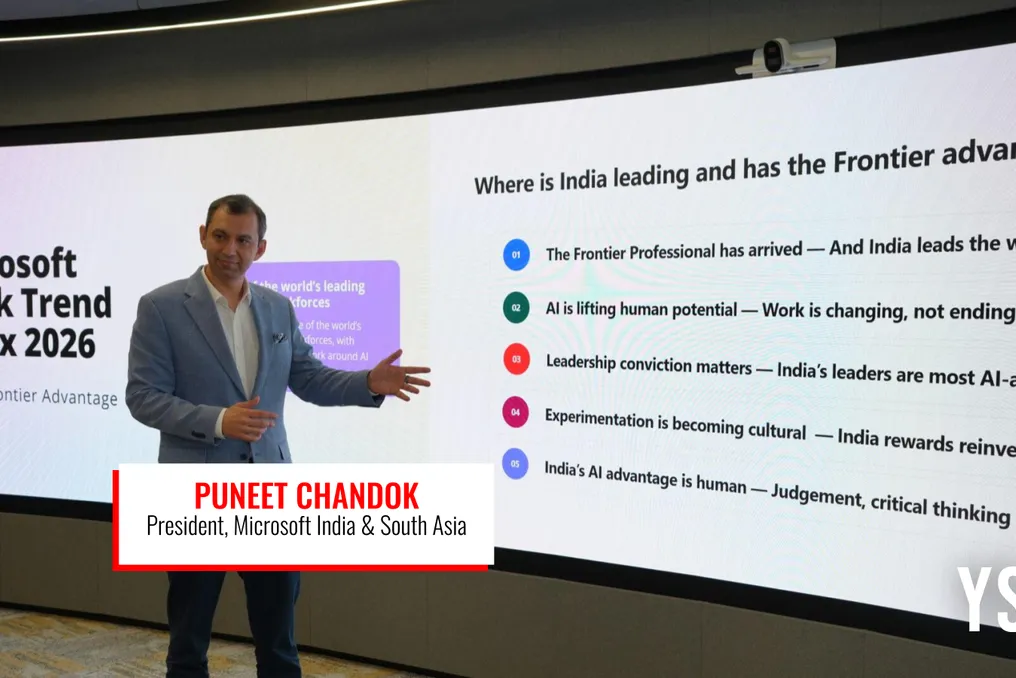
According to the Microsoft 2026 Work Trend Index, which focuses on the state of artificial intelligence in the workplace, India has become a global leader in workforce transformation.

New research from Microsoft, presented in Bengaluru on Thursday, demonstrates that specialists in Indian offices are moving beyond performing basic AI tasks to managing complex automated workflows. This transformation is changing daily employee activities, shifting them from routine work to high-level supervision.

Nearly a third of Indian specialists surveyed qualify as 'frontier professionals.' These professionals actively develop and control multi-stage systems using AI agents, balancing automation with strong human judgment.

The study covered 20,000 AI users across 10 markets and shows that India possesses one of the world's largest frontier workforces. Instead of letting technology replace them, these professionals are directing it to unlock new opportunities.

In India, 32% of AI users are frontier professionals, double the global average of 16% and the highest among the markets studied. Furthermore, almost 8 out of 10 Indian users claim that AI tools enable them to perform work that was impossible 12 months ago, compared to nearly 6 out of 10 globally; this figure reaches 85% among frontier professionals.

Puneet Chandok, President of Microsoft in India and South Asia, noted: 'One in three Indian AI users works with agents on multi-stage, real-world tasks. Globally, this is one in six. This is not lagging behind; this is leadership.'

This represents a huge leap from 2025, when business leaders merely expressed intentions to create human and agent teams on a large scale. Now, this aspiration has materialized, giving rise to new types of high-value work.

Despite the rapid adoption of highly automated systems, the results show that Indian workers refuse to delegate final responsibility. The study emphasizes that as automation becomes more complex, human judgment becomes more valuable, not less.

Indian AI users lead the world in prioritizing quality control of automated outputs. Nearly two-thirds consider evaluating AI-generated work a critical skill, compared to half globally. Moreover, 59% of Indian specialists place high importance on critical thinking, significantly higher than the global average of 46%.

Crucially, almost 9 out of 10 respondents in India state that they retain full responsibility for thinking, viewing system-generated material only as a starting point.

More than 4 out of 10 Indian workers feel that their company leadership has a clear and unified plan for using AI, nearly double the global average.

Managers are actively involved in AI adoption: both frontline managers (91%) and non-frontline managers (81%) use this technology. Frontline managers redesign team workflows to incorporate AI agents and automation. Meanwhile, non-frontline managers mainly adhere to traditional management methods and adopt/support AI, but with less intensity than frontline managers.

All of this is supported by a corporate culture that encourages rethinking. One in four Indian organizations rewards employees for rethinking workflows without immediate commercial returns, compared to only one in eight globally.

Scaling in large, complex operations is the ultimate test of AI implementation. In India, major IT companies are demonstrating how to transition from small-scale pilot projects to full enterprise transformation. In less than six months, Infosys, TCS, Wipro, and LTIMindtree jointly licensed over 4 lakh seats of Microsoft 365 Copilot, a generative assistant integrated into daily work applications.

Infosys is expanding its Copilot adoption to over 1 lakh employees, achieving a monthly active usage rate of 91% in delivery, engineering, and corporate departments. This figure reflects the proportion of licensed users who regularly interact with the tool, proving that it has become an indispensable work tool.

Speaking at an event in Bengaluru, Balakrishna D. R., Vice President of Execution and Head of Global AI Services and Industry Verticals at Infosys, noted: 'Building a frontier enterprise requires more than just technology. Organizations that achieve sustainable value from AI are those that combine leadership alignment, workforce readiness, management, and intelligence embedded in all business processes.'

AI deployments are bringing measurable productivity gains in Indian enterprises. At TCS, nearly 9 out of 10 licensed employees use this technology daily. TCS reports a productivity increase of 20–25% in research and content creation, as well as a reduction in process cycle time by 25–35%, which is the total time spent completing a business process.

Monthly active usage at Wipro exceeds 95%, saving an average of 250,000 full equivalent days per quarter, where each day represents one employee's workday. The company has also democratized agent creation, allowing employees to build over 29,000 custom user agents, alongside 60 enterprise-level solutions. Wipro and Persistent Systems have launched large-scale training programs to ensure all their personnel are fully prepared for AI adoption.

Ten Most Picturesque Places to Visit in India: From White Deserts to Blue Lakes
Read more
www.aajtak.in

Ten Most Picturesque Places to Visit in India: From White Deserts to Blue Lakes

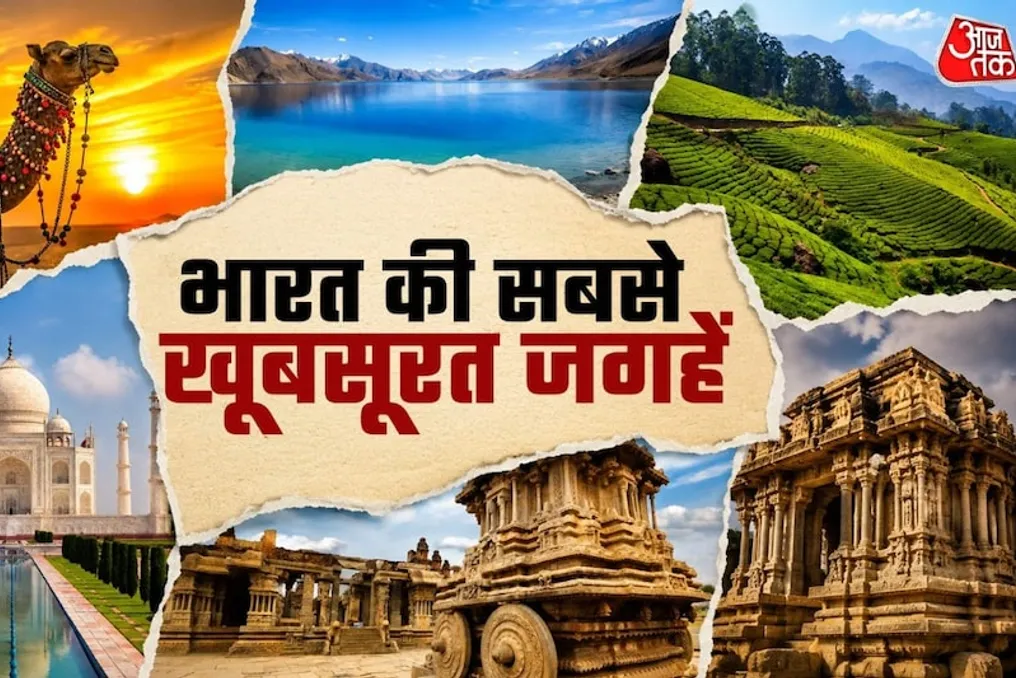
India is known worldwide for its magnificent landscapes, historical monuments, beaches, and unique natural attractions. The country hosts numerous places that are hard to imagine being located there. Among them, one can find both snow-capped mountain peaks and white salt deserts, as well as sites renowned for their centuries-old history and unusual architecture. Those who love to travel and wish to see the beauty of the country from the inside are recommended to include these locations in their travel lists.

Hampi (Karnataka)

Hampi in Karnataka is a wonderful place for lovers of history and architecture. Here, you can view ancient temples, palaces, and numerous historical ruins. It was formerly the main center of the Vijayanagara Empire, and today its ruins tell of its majestic history.

Ajanta-Ellora Caves (Maharashtra)

The Ajanta and Ellora Caves in Maharashtra represent an outstanding example of ancient Indian art and architecture. These caves, carved into the rocks, contain magnificent sculptures, paintings, and temples. For people interested in history, this place is comparable to a real treasure.

Taj Mahal (Agra)

The Taj Mahal in Agra is among the most famous historical buildings in India. This beautiful structure made of white marble has become world-renowned for its architecture and love story. The view of it in the morning and evening is especially impressive.

Radhanagar Beach (Andaman)

If you like the sea and quiet corners, Radhanagar Beach in Andaman will surely appeal to you. The clear blue water, white sand, and surrounding greenery make it very beautiful. Watching the sunset here is simply unforgettable.

Kutch Rann (Gujarat)

The Great Salt Desert of Kutch Rann in Gujarat is known for its vast white layer of salt. The endless white plain and the stunning sky view give this place a special uniqueness. Sunset and full moon nights here can be an unforgettable experience.

Munnar (Kerala)

Munnar in Kerala is famous for its lush green hills and extensive tea plantations. The local calm and cool climate is very pleasing to visitors. It is an ideal place to spend relaxing days amidst nature.

Pangong Lake (Ladakh)

Pangong Lake in Ladakh is world-renowned for its beauty and the blue color of its water. Located among high mountains, the lake changes its hue depending on the lighting. The calm atmosphere and mountain landscape here resemble a fairy tale.

Pench National Park (Madhya Pradesh)

Those who are interested in forests and wildlife should visit Pench National Park. This area is known for its dense forests and the animals living there. During a safari, one can see animals such as tigers in their natural habitat.

Dawki (Meghalaya)

Dawki in Meghalaya is famous for its exceptionally clean and transparent river. In clear weather, the water in the river is so transparent that objects on the bottom can be seen. The green mountains around enhance the beauty of this place.

Double-Decker Living Root Bridge (Meghalaya)

The Double-Decker Living Root Bridge, located in Nongriat village in Meghalaya, attracts attention with its unusual structure. These bridges are created through the natural growth of tree roots. To see them, trekking is necessary, but the surrounding greenery and natural scenery make the trip itself special.

Popular