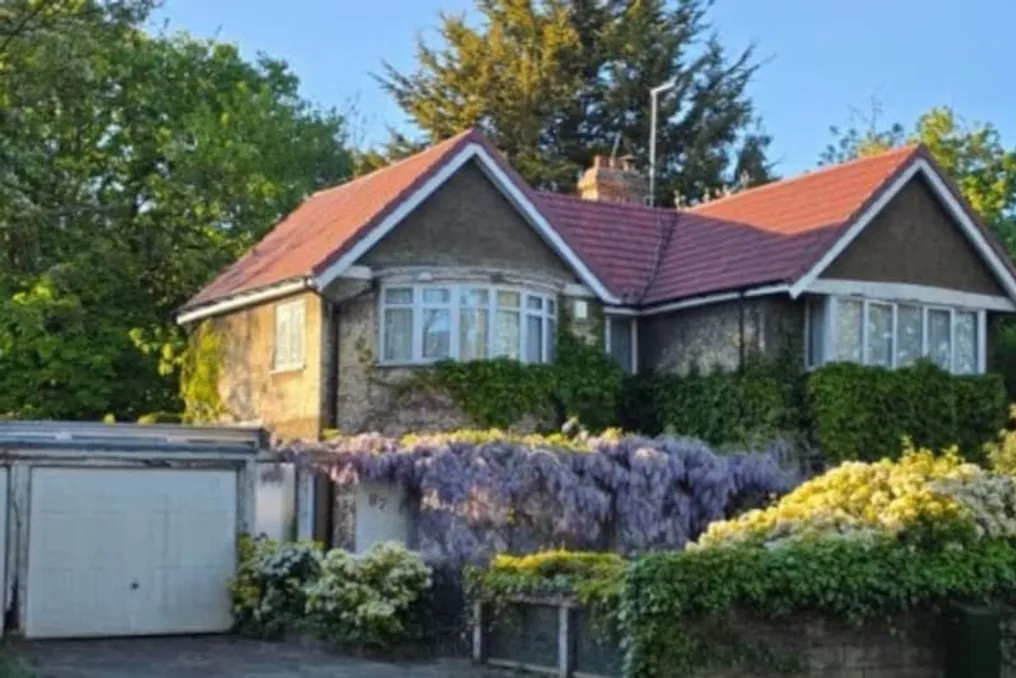
The unusually hot and dry weather this year in London has created a new concern among homeowners. Cracks have started appearing on the walls of many houses, doors are not closing properly, and it has become difficult to open windows. According to experts, a major cause of these problems could be ground subsidence.
Many areas in London and South East England are built on soil with a high clay content. This type of soil is characterized by expanding when wet, but shrinking after losing water during prolonged periods of heat and drought. This process of soil expansion and contraction is called 'shrink-swell.'
When the ground beneath a building shrinks unevenly, it can put pressure on its foundation. This results in movement in different parts of the building, which can cause cracks in walls, skewed door frames, or jammed windows. According to the British Geological Survey, subsidence is one of the most serious geological risks facing Britain.
Heat and drought are not the only causes of this threat; large trees around homes can also exacerbate the situation by drawing moisture from the ground. When rainfall is low, tree roots penetrate deeper into the soil in search of water. This can cause the soil around the house foundation to dry out further, increasing shrinkage.
This risk may be relatively higher in older houses, as they often do not have foundations as deep as newer buildings. Notably, more than half of London's houses were built before 1945, making the city's older structures more vulnerable to changing weather and underground changes.
This problem is no longer limited to London. Experts believe that due to climate change, hotter and drier weather is increasing in other parts of Britain, raising the risk of ground subsidence in those areas as well.
An increase in insurance claims related to subsidence has also been observed following hot and dry weather. In 2025, the UK insurance industry paid a record $415 million for subsidence-related claims, which was 10 percent higher than the previous year. In the second quarter of 2026 alone, over $97 million was paid out for such claims, with the average claim amount recorded at a record $27,000.
Experts estimate that if the period of hot and dry weather continues, this problem could worsen in the coming years. Some homeowners are facing difficulties obtaining subsidence insurance. Along with rising premium rates, some insurance companies are also backing away from renewing coverage.