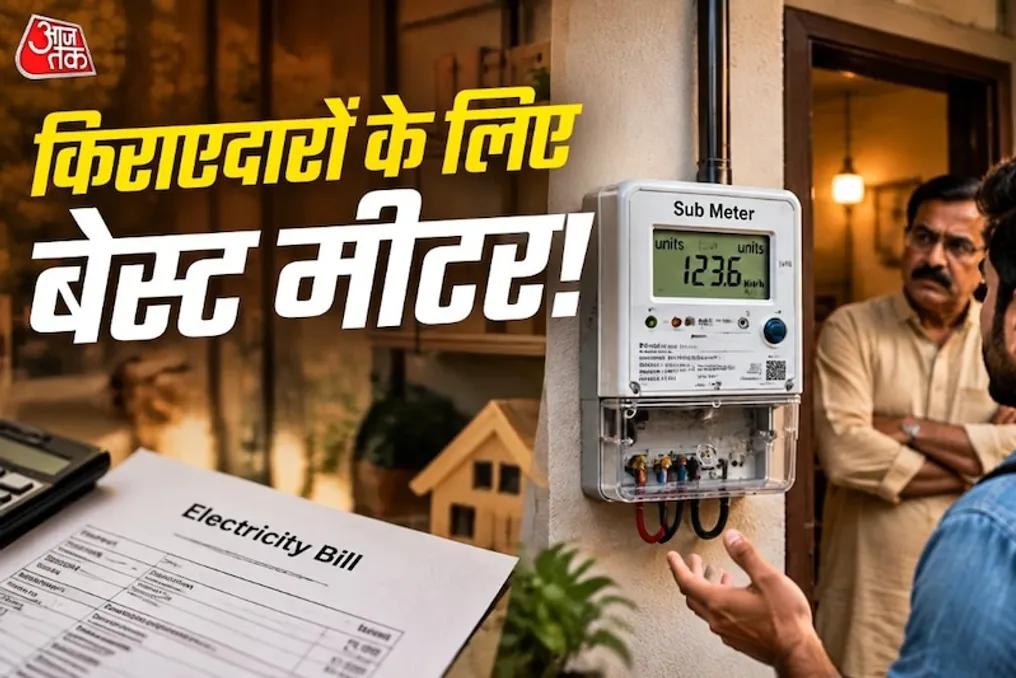
If you live in rented accommodation, the monthly electricity bill can be a source of problems. This is especially relevant when the landlord distributes the total bill for all premises among the tenants. In such circumstances, it is often difficult to understand exactly how much electricity was consumed in your part and what the bill amount should be. Sometimes, due to the absence of individual meters in the room or apartment, the tenant has to pay more.
However, there is a simple way to avoid these difficulties. Tenants can install sub-meters to separately track electricity consumption in their room or apartment. This type of meter is particularly useful for those renting accommodation who wish to monitor electricity usage independently.
A sub-meter is installed on the power line of the room, apartment, or section whose consumption needs to be measured separately. After installation, the meter records how much energy was used by all appliances in that room, such as fans, light bulbs, televisions, refrigerators, air conditioners, or other electrical devices. For example, if four tenants live in a house, but only one common power source is connected, splitting the bill becomes complicated. But if a separate sub-meter is installed in each section, you can see the individual consumption of each tenant. Thus, the accounting will be completely transparent and correspond to actual usage.
The main advantage for tenants is that they get an idea of their energy consumption. If the electricity bill suddenly increases, you can check the meter readings and find out how many units were actually used. This is especially valuable for those who have been living in rented accommodation for a long time. Furthermore, it can reduce disputes between the landlord and the tenant regarding utility payments. If energy-intensive appliances, such as an air conditioner, water heater, or cooler, are used in the room, their impact will also be reflected in the meter readings.
The price of a sub-meter varies depending on its type, manufacturer, and functional capabilities. Standard single-phase digital sub-meters can be found on the market for approximately 1000–2500 rupees. Higher quality models, equipped with smart functions or additional features, may cost more. Additionally, a separate payment may be required for the electrician to install the meter. Therefore, before purchasing, you should clarify not only the price of the meter itself but also the installation cost.
When choosing a sub-meter, you should not rely solely on a low price. It is important to ensure that the meter meets your power supply conditions. It is also necessary for the readings to be easily readable, and the quality of the device itself must be high. If you use appliances such as air conditioners, water heaters, or other high-consumption devices, the meter's capacity must match these loads. It is safer to entrust the installation to a qualified electrician rather than doing it yourself.
Although a sub-meter is useful for tracking electricity consumption, it should not be considered a replacement for the official meter used in public grids. The main connection and billing system is regulated by the rules of the energy distribution company. Consequently, for tenants, the sub-meter is a convenient tool for maintaining separate consumption records, especially when several rooms or tenants are connected to one main meter. This significantly reduces the confusion that arises monthly regarding the number of units consumed.