On the occasion of its 40th anniversary, which was celebrated last year, the Congress of South African Trade Unions (COSATU) has reached a mature stage, posing the question: will the upcoming congress be a moment of revival or a final submission to the political elite?
However, similar to the natural process of capitalism's evolution, the stage of maturity is associated with the dialectic of decline. A dying organism is characterized by a terminal state of degeneration, in which a fatal struggle occurs between a once-living entity that is now yielding to the virulent growth of its pseudo-image.
Recent events following the COVID-19 pandemic, especially after the 14th National Congress of COSATU in 2022, have shown that the historically established practice of organizational and class independence, formed through the assimilation of Marxist-Leninist proletarian ideology into the federation, has been replaced by ideological subordination and political slavery.
Unfortunately, this indicates that for some time, the atmosphere of suffocating neoliberalism has seriously disrupted the intergenerational transmission of Marxism-Leninism within COSATU. This has led to an ideological vacuum and strategic confusion, as young cadres taking responsibility for maintaining revolutionary ideological traditions face the need to guide the labor movement in the search for class struggle.
Before the 15th National Congress, taking place this month, it is becoming increasingly clear that the federation is degenerating to the lowest point of its historical arc. This arc began with the rise of radical proletarian ideology and militant activity, followed by a period when COSATU remained unequivocally committed to Marxism-Leninism as its ideological course and long-term fight for socialism.
Periods of popular assimilation of Marxism-Leninism, which shaped the political traditions of class orientation, factory militancy, and worker control, are fading as the current top hierarchy of the federation has abandoned class independence. Currently at the center is an ideologically questionable leadership that often dominates certain affiliates, seeking to subject this labor movement to the same elite political stratum that turned the African National Congress (ANC) into a neoliberal party.
The ANC, having become this pseudo-image, has become strategically lost, having long abandoned the common strategic orientation—the Freedom Charter—in favor of the grotesque vision of the National Democratic Movement (NDS).
The federation's top hierarchy exhibits a deep uneven level of class consciousness, and there is even an undisguised presence of self-aware ideological defectors who resolutely oppose the political and class independence of the workers in favor of submission to pro-capitalist and neoliberal leadership dominating the ANC.
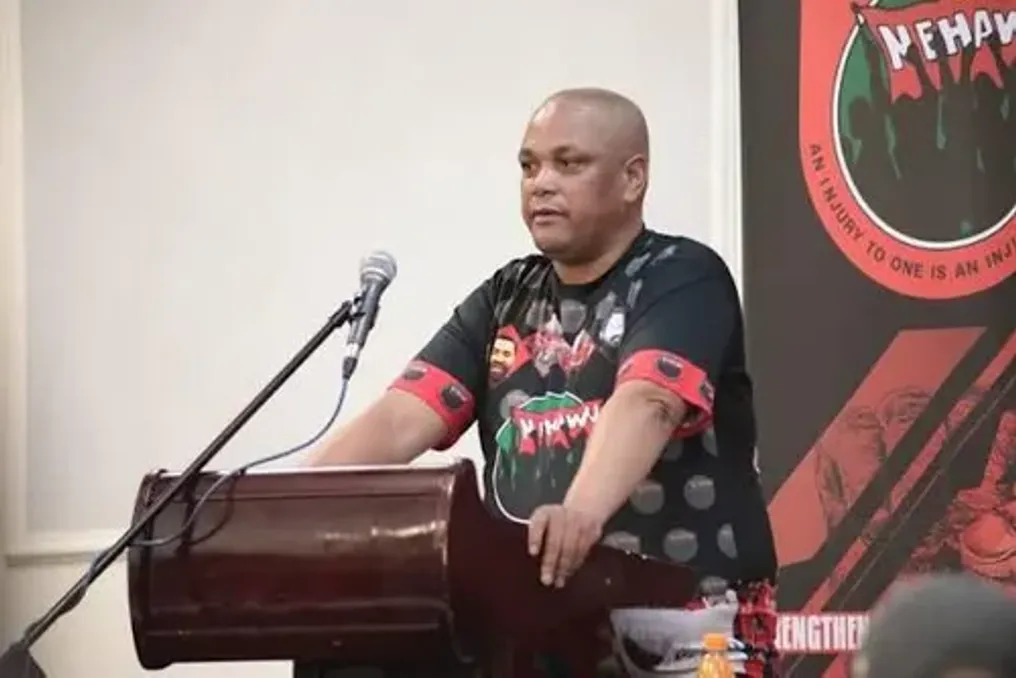
As NEHAWU, we recognize that this is partly related to the current decline in the impulse for struggle, marked by the dialectical intersection of unfavorable objective conditions and weak subjective agency of the working class, resulting in the neoliberal trajectory intensifying the shift of the balance of class forces in favor of capital and its political allies, some of whom are in the ANC.
Without coordinated ideological intervention, the trade union landscape will continue to produce cadres trapped in union consciousness, reformism, and consequently, political subjugation for a long time.
The historical irony is that when COSATU adopted its constitution at its founding congress in 1985, which 'firmly commits' the federation to a 'united democratic South Africa, free from oppression and economic exploitation,' two workers—Msi Dumo Hlatshwayo and Alfred Themba Kabula—composed a poem for this congress titled 'Tears of the Creator.' It was from this poem that these workers read sorrowful words about the history of the trade union movement in South Africa, where leaders were those who led to its demise, despite the accompanying political conditions.
In connection with this, they returned to the formative years of the trade union movement, which was 'derailed' by Kadali and other traitors. They passionately declaimed a cautionary history and poetically emphasized the inherent dangers of union consciousness. To underscore the essence of their message, they prophetically voiced the grim fate of the trade union movement left in the hands of collaborationist leaders, through whom it is doomed to fade and disappear.
To confirm their cautionary history, they challenged skeptics of their thesis with rhetorical questions: 'Where can one find the intensive care unit of the 1920s? Where can one find FNETU of the 30s? Where can one find CNETU of the 40s?' The poetic pair continued to mourn the fate of the workers and their trade union movement from one generation to the next until the revival and founding of COSATU, with a wise warning about such leaders when they proclaimed: 'They appeared, poisoned, and then disappeared!' Comrades Hlatshwayo and Kabula concluded their cautionary tale with a friendly reminder and admonition: 'May COSATU be wise today!'
Indeed, this cautionary tale has never been more relevant than it is today. Since its founding, COSATU's ideological orientation has been clear, even if a more detailed structure was to be developed at the 2nd National Congress in 1987, when the National Union of Education, Health and Allied Workers (NEHAWU) was just founded as a core for building a giant industrial union in the public sector.
Thus, since its inception, through the adoption of constitutions and resolutions, COSATU has been built on an ideological platform that obliged it, among other things, to work and fight for 'the restructuring of the economy that allows for democratic control and fair distribution of wealth creation' and 'attracting people to the program of societal restructuring to ensure that the wealth of our society is democratically controlled and distributed by its people.' These two strategic directions themselves constituted a clear anti-capitalist ideological commitment and a political practice of class orientation, serving as the ideological roots upon which the proletarian ideology of COSATU flourished.
Thus, it is undeniable that since its creation, COSATU has declared itself a red trade union, ideologically oriented towards Marxism-Leninism and organizationally towards factory militancy and worker control. In this regard, the federation maintained relative consistency throughout its history, culminating in the pivotal 14th National Congress in 2022, where delegates not only reaffirmed the ideological inspiration of Marxism-Leninism but also attempted to implement it by politically identifying the federation with its side of the working class, adopting by overwhelming majority a resolution supporting the Communist Party of South Africa (SACP) through the constitutionally highest democratic means—secret ballot.
This was due to the fact that the political nature and socio-economic content of the democratic transition and the institutional structures created by it since 1994 have perpetuated and even exacerbated the inequality of the inherited colonial society. The imported neoliberal macroeconomic model over three decades has worsened this reality, deepening and expanding the scale of poverty, hunger, and unemployment heavily concentrated in areas historically designated for the black population.
In the absence of political will and urgency to transform this socio-economic reality and the corresponding repressive geography of Apartheid, the masses of our people remain landless and forced to lead a survival lifestyle, trapped in generally unproductive rural areas, abandoned slums, ghettos, and decaying urban centers. Therefore, as NEHAWU, we conclude that the class content among the contradictions defining the inherited colonial society has now become the main feature of the political landscape, requiring the unification of organized working forces and the attraction of other popular forces to assert their class independence and place their own interests at the center of their political activity.
Indeed, parliamentary parties behave as if the terrible existence of the dispossessed masses of our poor people in isolated spatial and economic peripheries is the norm, despite the enormous potential inherent in the country due to its resources to change their lives. Even ordinary people, disillusioned and alienated from these political parties, realize that the class question is now the central determinant shaping the political landscape—whether for maintaining the status quo or for its radical transformation, as these parties simply treat the poor masses as their ignorant pawns, useful only for elections.
Ultimately, it is self-deceptive for a trade union movement born from the ideology and political practice of radical transformation, such as COSATU, to act as if in the current conditions of the Government of National Unity (GNU) there is still a political will to advance the National Democratic Revolution (NDR), even in its distorted version, whose ultimate goal is the realization of the NDS.
With the intensification of socio-economic contradictions against the backdrop of the persistent features of our colonial society and the suffocating neoliberal atmosphere, the central task of a radical and class-oriented trade union is the resolute and unwavering support of the broad masses of the dispossessed people in this society. It must form alliances with working formations that have no interest in the status quo. It must owe allegiance to no one, no class, no organization, except for the collective commitment to those who have consistently demonstrated their loyalty to the dispossessed masses.
It is therefore tragic that organized working formations like COSATU may be incapable of decisively taking the leading role on the side of the suffering masses of our people. Instead, they engage in shameful and poorly disguised political deceptions, trying to bring workers to ideological submission and political slavery to an agenda that contradicts their own class interests and primarily serves the interests of the elite and landlords, killing the working class for the past 32 years.