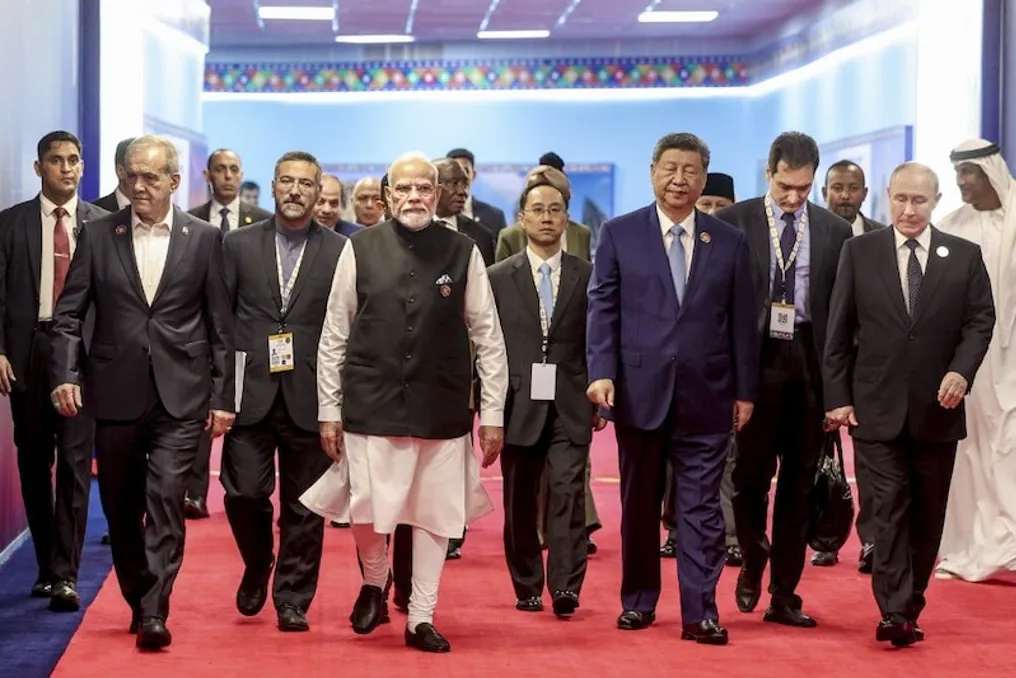
BRICS nations stated on Saturday that they oppose measures such as the 'Carbon Border Adjustment Mechanism' (CBAM), viewing them as unilateral, punitive, and discriminatory. The group emphasized that such decisions could harm climate change mitigation efforts, especially for developing countries.
The impact of this mechanism may affect the export of goods such as iron and steel products, cement, fertilizers, and aluminum, as these sectors have high carbon emissions. The CBAM mechanism is a taxation system applied to goods with a high carbon footprint. An additional fee may be charged upon import into another country, based on the amount of carbon emissions generated during the production of that good.
The European Union (EU) and the United Kingdom (UK) have already announced plans to implement a similar carbon tax. In this context, the position of BRICS nations is highly significant for countries like India, which exports substantial volumes of goods to these markets.
At the New Delhi Declaration, BRICS leaders expressed disagreement with measures like CBAM, characterizing them as unilateral, punitive, discriminatory, or protectionist, and non-compliant with international law. Leaders voiced concerns that such steps could weaken the ability of countries, particularly developing ones, to cope with the consequences of climate change, which could also hinder their adaptability and resilience to future risks.
Furthermore, BRICS nations agreed to strengthen cooperation in Intellectual Property Rights. Discussed areas include patenting processes, traditional knowledge, Geographical Indications, the use of intellectual property in business, and issues related to Artificial Intelligence (AI). The Declaration noted that respecting intellectual property rights is critically important in the digital age. Special attention should be paid to the rights of content owners used for AI training, while also considering the needs and priorities of developing countries.
BRICS leaders also expressed concern about the risks associated with the growing use of AI. They pointed out the danger of misuse or distorted representation of the knowledge, heritage, and cultural values of any country or community through AI. It was acknowledged that existing datasets and AI models often lack sufficient information about different countries and cultures, which can lead to imbalances in AI performance.
BRICS nations also highlighted the need to strengthen Global Value Chains (GVCs). This means increasing the reliability and sustainability of the entire product manufacturing process—from its creation to its supply and sale in various countries. To achieve this goal, the parties agreed to focus on technical cooperation among BRICS countries, trade facilitation, strengthening necessary infrastructure, and enhancing industrial potential. The necessity of improving inter-state connections, ensuring intellectual property protection, and guaranteeing safe and accessible access to new technologies was also mentioned. Additionally, the parties agreed to study new policies and methods to increase mutual trade.
In the Declaration, Special Economic Zones (SEZs) were identified as an important means for trade, investment, industrial, and technological cooperation. BRICS nations believe that SEZs should feature a favorable business environment, good conditions, and simple regulations. This will help companies expand their business and interact with other countries. Furthermore, support was given to implementing the BRICS GVC action plan within the broader BRICS understanding and promoting the BRICS GVC Roadmap for the period 2026–2030.