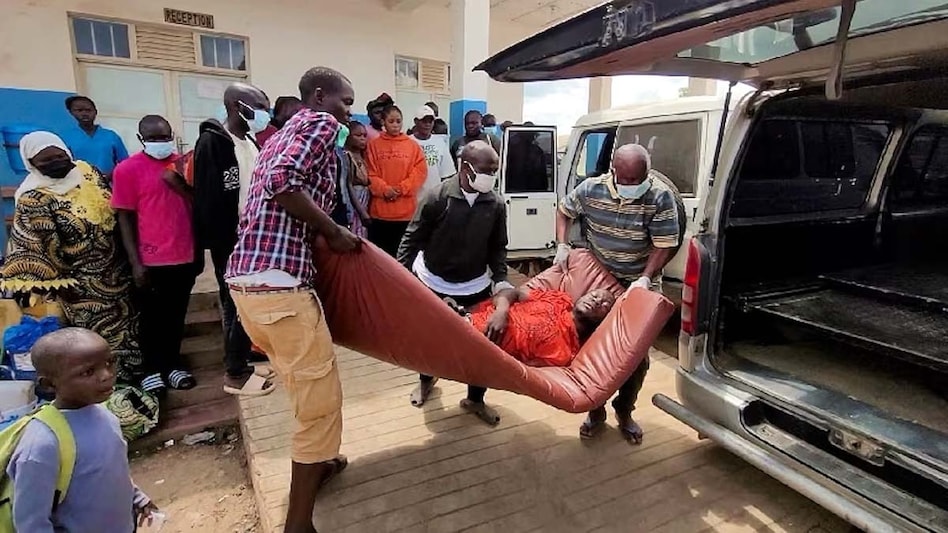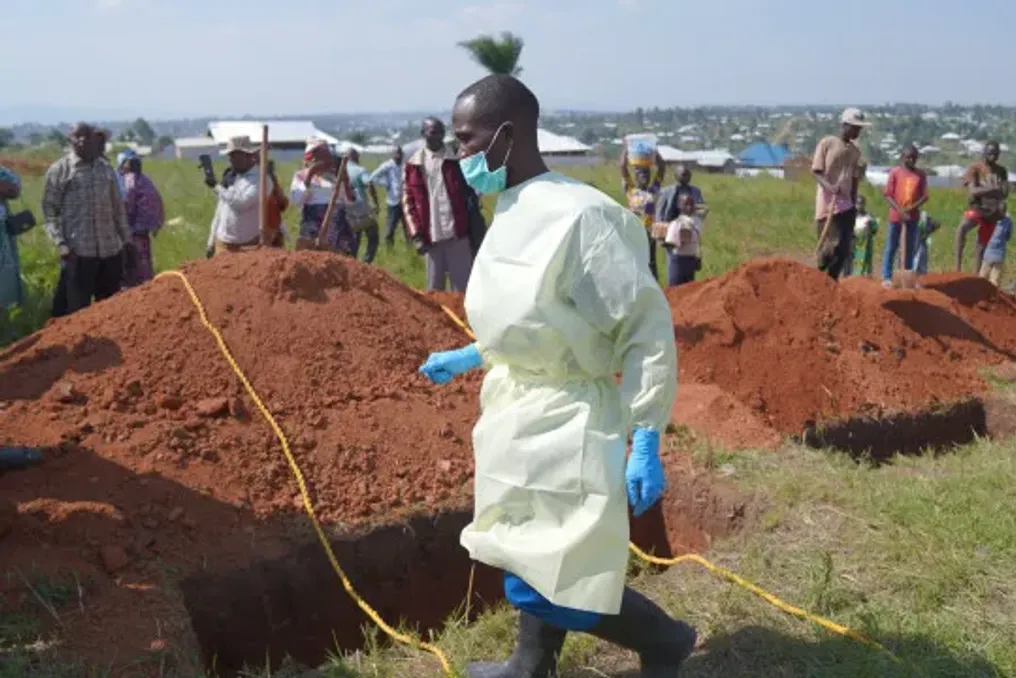
The Democratic Republic of Congo (DRCongo) reported its 17th Ebola epidemic, a highly lethal disease that has resulted in over 15,000 deaths in Africa over the last fifty years, in mid-May, albeit with a significant delay.
The outbreak began in the Ituri province, located in the northeast of the country. Currently, it is affecting remote and unstable areas in eastern and northern DRCongo, where health teams face difficulties controlling the rapid spread of cases.
This week, the epidemic expanded to a seventh province, Sud-Ubangui, which shares borders with the Central African Republic and Congo-Brazzaville. Congolese authorities registered a total of 7,022 cases, of which 3,398 people died and 1,671 recovered since the beginning of the epidemic.
Compared to the previous balance released by the authorities, which counted 3,310 deaths and 6,843 confirmed cases, the spokesperson for the Congolese Government, Patrick Muyaya, informed on social media on Saturday that the peak was reached in the early third week of August.
Muyaya also added that all indicators suggest a reduction in the number of cases, highlighting that ten of the sixty-one health zones impacted by the epidemic have not recorded new cases for at least twenty-one days. The epicenter of the crisis remains the Ituri province, where most cases were identified.
Ebola cases were reported in educational institutions a few days after classes resumed, causing apprehension among parents and health guardians. According to education sector managers, who chose not to be identified, there was great concern due to the uncertainty about each child's family origin and health status.
Angele Magani, mother of a student in Bunia, the provincial capital, expressed her fear to the French news agency AFP, despite school authorities offering reassurance about the adopted sanitary measures. Roger Mungimbo, a school official in Bunia, guaranteed that there was a mandatory rule for hand washing with soap and that all possible measures were taken to limit the number of students to a maximum of thirty per class. He also mentioned that children were regularly educated on the importance of not touching, not greeting, and washing their hands frequently.
The entities responsible for responding to the epidemic warn that the available financial resources are insufficient to provide adequate isolation and follow-up for patients in DRCongo. The World Health Organization (WHO) assessed on Tuesday that an additional five thousand health professionals would be needed to handle the situation.
Currently, various treatments and vaccines against the Bundibugyo virus, the agent causing the outbreak, are under testing, as there is currently no approved vaccine or treatment for this disease.