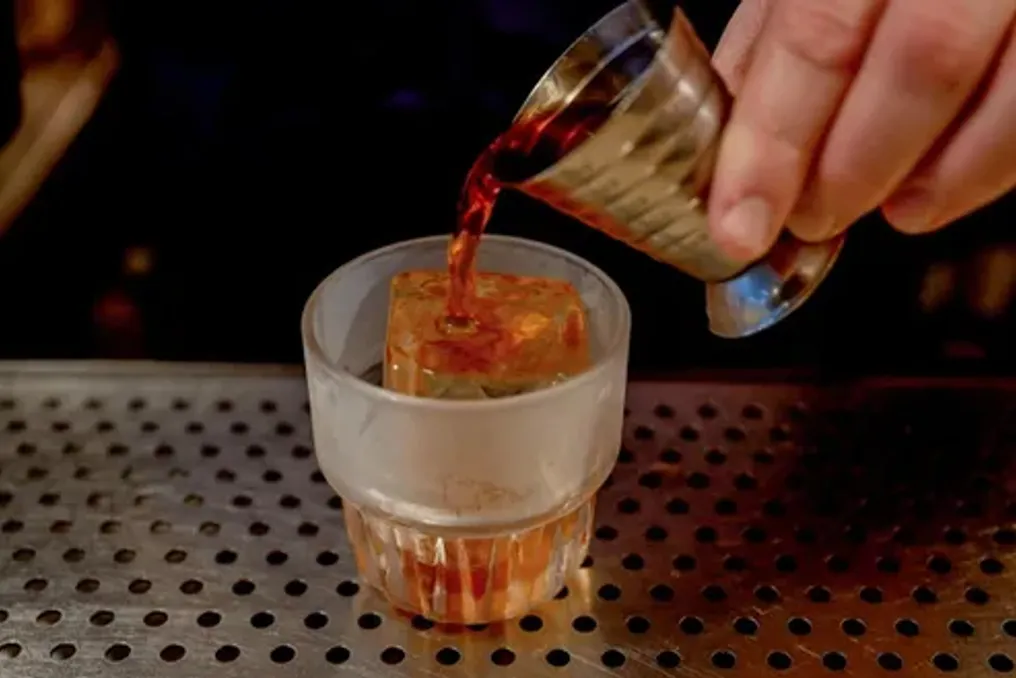
In the historic Japanese city of Kanazawa, artisans meticulously shape and cut ice cubes intended for chilling Negronis in some of the world's most fashionable bars. However, the popularity of this product extends beyond Japan, reaching bars in Australia and the United States, where one cube can cost up to 200 yen ($1.25).
These specialists work for Kuramoto Ice, a century-old company located in Ishikawa on the Sea of Japan coast, and is among dozens of Japanese enterprises that produce ultra-clear, high-quality ice. This luxury item, which industry experts believe melts slower than ordinary blocks, has become an integral part of Japan's cocktail culture.
Kuramoto Ice is one of the country's few international exporters, and since beginning exports in 2019, the company's total sales have more than doubled. Kazuhiko Kuramoto, the fifth-generation head of the firm, told AFP at the Kanazawa factory: 'We spend time and slowly freeze the water, keeping it in motion... That's how we get good ice.'
The forty-year-old Kuramoto noted: 'My heart rejoices when I see ice that resembles a gemstone,' saying this while pouring chilled hojicha tea into a glass filled with a large, clear sphere.
Japanese specialists use a technique originally from the USA, where water is frozen over 48–72 hours—significantly longer than the few hours needed for home ice or the 30 minutes required by industrial machines. When the freezing process begins and the ice forms from the outside in, various impurities in the water are pushed toward the center. However, the Japanese method involves removing this contaminated water and replacing it with a fresh batch. Constant stirring helps eliminate air bubbles, resulting in perfectly clear ice known as 'junpyo' in Japanese.
Although scientific evidence is scarce, it is believed that this method also yields a colder and denser product that chills rather than dilutes the cocktail. For instance, Native Bar, a trendy establishment in Singapore listed in Asia's 50 Best Bars this year, annually imports about 900 kilograms of ice from Kuramoto. Co-owner Yong Wei told AFP: 'Local ice is more economical, but Kuramoto Ice is cleaner, denser, and melts slower.'
In Kanazawa, workers in protective suits transport large blocks of ice around the workshop before proceeding to the delicate work of carving perfect spheres, cubes, and rectangular blocks with rounded corners. After packaging, the finished product, which can be made precisely to fit any glass, is stored indoors at minus 10 degrees Celsius before shipment.
Kuramoto's boss is aware of the environmental cost of transporting ice cubes thousands of kilometers but insists that such small items have a relatively low environmental impact. He mentioned that he dreamed of entering American bars after visiting Las Vegas more than ten years ago, when he noticed that cheap, easily melting ice was used in expensive cocktails, diluting the flavor.
The time-consuming ice-making technique, often employed in Japan to ensure higher product quality, has largely fallen out of use in the US. Bartender Shingo Miyachi at the Hilton Hotel bar near Tokyo prepares a Negroni using one of the large, clear cubes from Kuramoto Ice. The ice fits perfectly in the glass, and its transparency makes it almost invisible. Miyachi told AFP: 'The ice truly has a huge impact on the taste of the cocktail.' He added that if the ice melts, 'it especially affects the aftertaste after the first sip.'
Handling ice is considered a crucial skill for Japanese bartenders, who often begin their training by practicing precise crushing techniques. Miyachi explained: 'When you look at the ice and see the level of attention to detail, you can understand how seriously the bartender takes the cocktail's flavor and how much care they put into it.' He concluded: 'A cocktail is truly born only when the glass, the ice, and the liquid become one entity.'