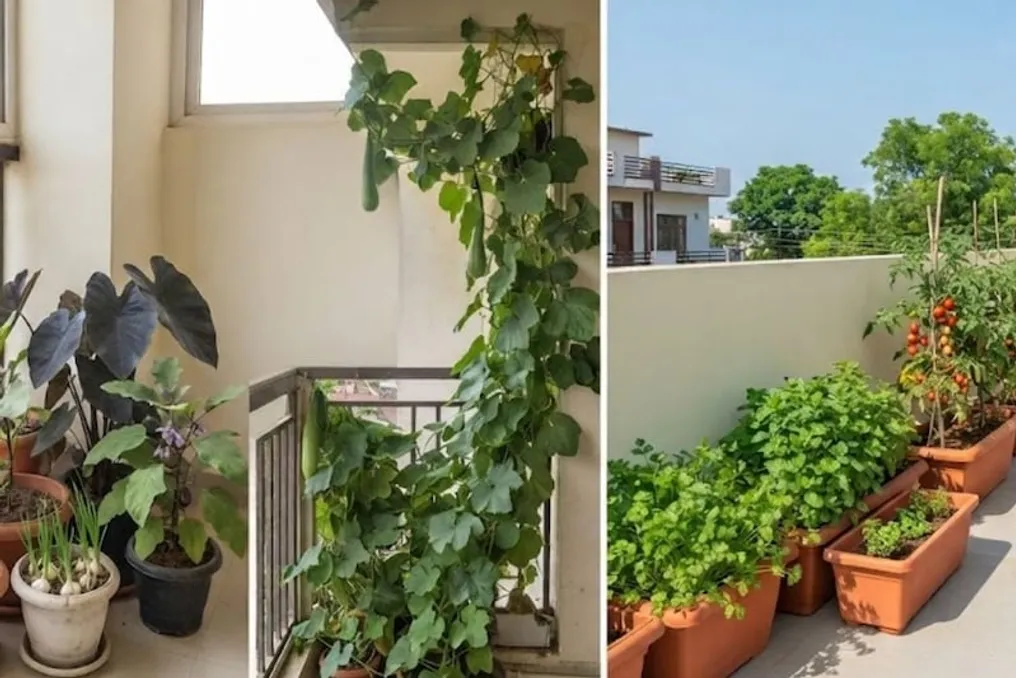
There is currently a growing trend towards creating home gardens, where people grow various vegetables and herbs such as tomatoes, chili, cilantro, and mint on balconies, rooftops, in yards, or near windows. This helps maintain greenery indoors and provides access to fresh produce when needed. However, Vastu Shastra has specific beliefs regarding plants that require attention to their nature, direction, and placement.
There are recommendations to avoid placing certain types of vegetable plants inside the house. These include onion, garlic, arbi, and eggplant. These beliefs are based on religious and traditional Vastu practices.
In Vastu and religious beliefs, onions and garlic are considered plants of a Tamasic nature, so it is advised not to plant them inside the house or near a place of worship. If they must be grown, a garden can be set up away from the main living area.
There are also some negative perceptions of arbi in Vastu; according to some beliefs, it is associated with Rahu and Ketu. It is believed that placing it inside the house may amplify the influence of negative energy, although there is no scientific basis for this.
According to Vastu, it is also not recommended to plant eggplants indoors. Some beliefs associate eggplants with financial difficulties. If a person wishes to grow eggplants, they should be planted in an open area of the house or in a separate garden.
The vines of burdock and pumpkin spread quickly and require significant space to grow. Therefore, it is better to avoid planting them in rooms, narrow parts of balconies, or near the main entrance. According to Vastu principles, vines should not be allowed to completely cover the entrance door. It is practically more sensible to place vines where a support structure like a net or sturdy frame can be created.
According to Vastu, growing some green and healthy produce at home is considered a good deed. Among these are cilantro, mint, green chili, and tomatoes. These plants can be placed on a balcony, rooftop, or in areas that receive sufficient sunlight. Cilantro and mint are particularly easy to grow in small pots, while tomatoes and green chili are better suited for larger containers.
In Vastu, the east and north directions are generally considered favorable for plants. It is believed that planting in these directions brings positive energy into the home. However, it is not recommended to place very large and dense plants directly in the center of the house or in a passageway. When creating a garden, it is important to consider not only the direction but also the needs of the plants themselves, as most vegetables require many hours of sunlight daily, so a location with adequate natural light must be chosen.
The main entrance to the house is the primary area of movement. Therefore, plants whose branches or vines might block the passage should not be placed here. It is also necessary to avoid long-term storage of dry, withered, or damaged plants inside the house. In Vastu beliefs, healthy and lush plants are associated with positivity. From a practical standpoint, regular cleaning and pruning of plants help maintain the garden in better condition.