Springboks win first tournament of greatest rugby rivalry, Erasmus downplays gap with All Blacks
Read more
IOL
iol.co.za

Springboks win first tournament of greatest rugby rivalry, Erasmus downplays gap with All Blacks

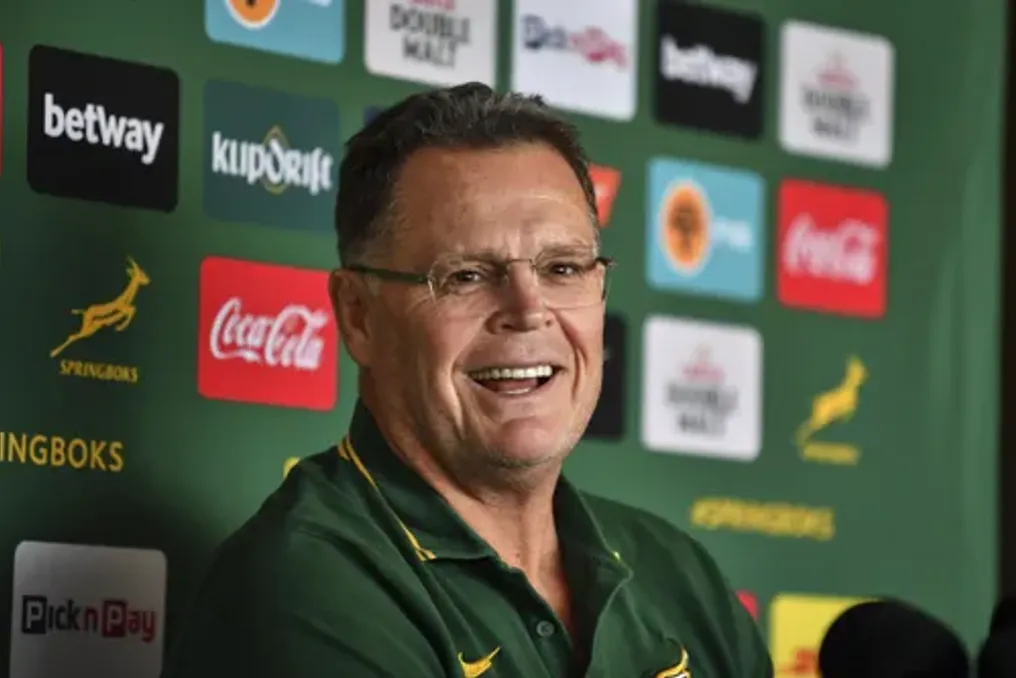
Springboks coach Rassie Erasmus expressed satisfaction after his team defeated the All Blacks in Baltimore on Saturday. Despite the Springboks starting with a 0-1 deficit, they managed to win the first four-match 'Greatest Rugby Rivalry' tournament with a score of 3-1 after a tense final in Baltimore.

Greatest Rugby Rivalry

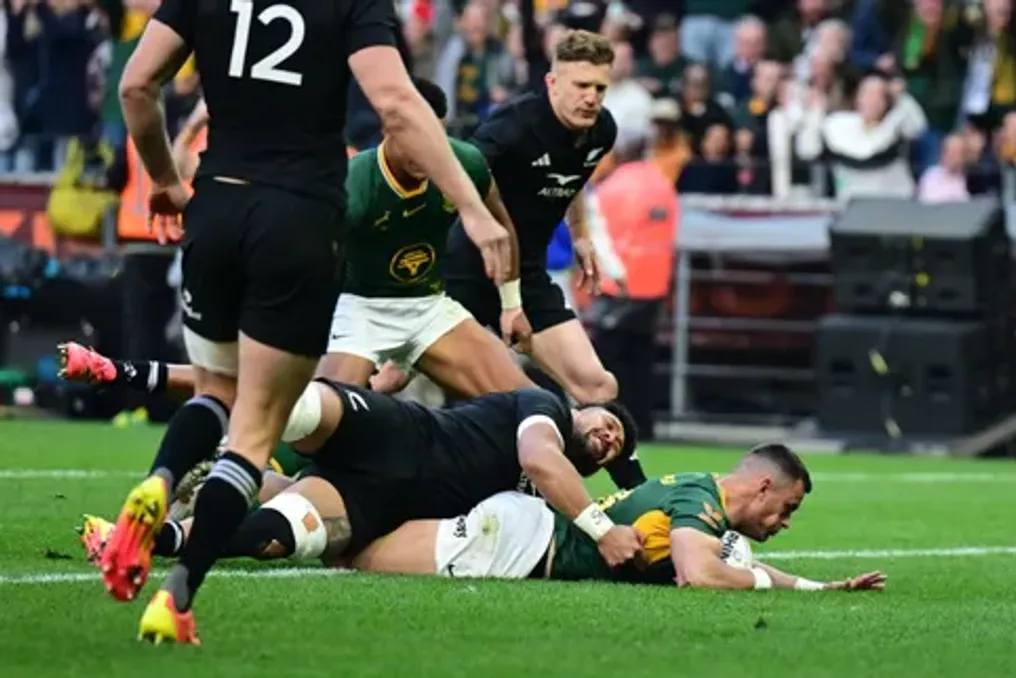
The Springboks secured the series with a convincing, albeit error-prone, victory of 43-28 over the All Blacks at M&T Bank Stadium on Saturday. This win was an impressive turnaround after the visitors shocked the world champions in the first match at Ellis Park Stadium.

The Boks team responded to the defeat by winning the next three games in Cape Town, Soweto, and Baltimore, thereby claiming the title of the first series champion. Although the trophy was won in the US with a very convincing triumph, Erasmus quickly downplayed the final score, discussing the difference between the two teams.

Responding to the question of whether the 3-1 victory makes the team better against opponents, Erasmus noted: 'I wouldn't say we are the best team. At sixty minutes I thought we were still balanced.' He added that the victory was achieved due to more points on the board, considering this probably the most important thing in most games. He emphasized that until the last eleven minutes he was not sure of the victory.

Although the Springboks controlled the game at various times, the All Blacks did not give up and continued to apply pressure until the final whistle. The converted touchdown by substitute player Bioden Barrett late in the match allowed the Kiwis to maintain a more respectable score, demonstrating their fight.

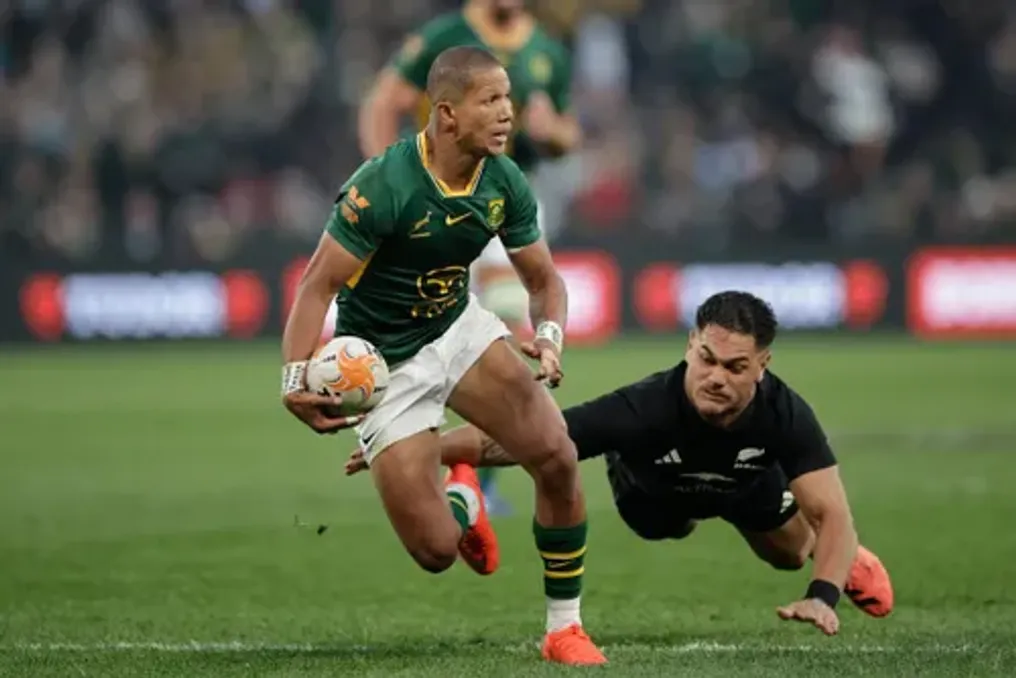
The Springboks' dominance in the forward play, as well as skillful second-row attacks in the second half, ensured constant scoring. The decisive moment came in the last 10 minutes when winger Kurt-Lee Arendse broke through the defense to score the crucial touchdown. Following this, substitute forward Cameron Hanekom scored the sixth touchdown for the Boks.

Commenting on the game, one player noted: 'When Kurt-Lee scored, it was a turning point. He started to outrun the guys. He admitted that he was experiencing a mental and physical slump after concussions. The game was still balanced then. Sometimes someone like Cheslin Kolbe changes the game, today the whole team did it, but I think Kurt-Lee did something special.'

Similar stories

Springboks defeated All Blacks in Baltimore and won the series of the greatest rivalry in rugby
Read more
iol.co.za

Springboks defeated All Blacks in Baltimore and won the series of the greatest rivalry in rugby

The Springboks secured a convincing victory over the All Blacks with a score of 43–28 in the final match of the greatest rugby rivalry series, held in Baltimore. This win allowed South Africa to claim a historic 3–1 series victory.

The second half of the match proved decisive, as the Springboks managed to pull away from the New Zealand team in Maryland state. The victory was ensured by dominance in the forwards and precise execution of attacks in the backline.

The game took place at M&T Bank Stadium in front of an enthusiastic crowd. The South African team overcame the resistance of the competitive New Zealand squad by utilizing a destructive combination of forward power and backline skill. This triumph concluded an unforgettable multi-match tour in the United States.

The Greatest Rugby Rivalry

The Springboks demonstrated both power and style to defeat the All Blacks in the final match of the series. This secured them a historic 3–1 victory, allowing head coach Rassie Erasmus to mark his significant one hundred and first Test match in the series.

More to Come...

Springboks aim to defeat All Blacks in the 2026 final home match
Read more
iol.co.za

Springboks aim to defeat All Blacks in the 2026 final home match

Rassie Erasmus emphasized the importance for the Springboks of playing home matches in 2026, especially the third game against the All Blacks, which will allow them to avoid losing the series.

Erasmus explained that the series is extremely important for the team, which they desperately want to win. After losing the first game and winning the second, the team decided to keep the squad, considering it the best decision for one of the key matches of the series.

He noted: 'We cannot win (the series) this Saturday, but we can guarantee that we won't lose it, as the last match will be either a draw or (a complete victory in the series). Therefore, we just feel that this is the best team to achieve our goal this weekend.'

Next week, the 'Greatest Rivalry' tour will conclude in Baltimore, making the match at the FNB stadium near Soweto the last for the Boks in the country in 2026. Erasmus added: 'This is our last match on South African soil in 2026. We would like to give our fans a victory.'

If the team does not resolve its defensive issues, the All Blacks may take advantage of it. In the first two matches, the All Blacks repeatedly caught the Boks off guard in wide areas where an unprotected player was always present. The Kiwis scored nine points against four South Africans.

Erasmus commented on the Kiwis' game, noting: 'They were brilliant in the wide areas. That is what they do very well under Dave Rennie. Under his attacking coach, they are hard to stop.'

He also spoke about Mike Blair, the former Scottish midfielder recruited by Rennie: 'Their two halves were the result of individual defensive errors. They beat us and outsmarted us in the other two, and we must be ready for that. So this is an area where we must improve.'

Furthermore, Erasmus stated that the South Africans had to work harder for their points than their opponents because the Kiwis have players who individually surpass the Boks players physically: 'Undoubtedly, that is something we must fix.'

Erasmus formed a starting lineup that differs only slightly from the squad that won in Cape Town. Damian Willemse was replaced by Cheslin Kolbe at fullback, and Kurt-Lee Arendse plays on the flank instead of Kolbe. Recently, before last week's match, Erasmus fielded a reserve front line consisting of Gerhard Steenkamp, Dion Fourie, and Thomas du Toit in the starting lineup, while Ox Nche, Malcolm Marx, and Vilko Lou played on the bench.

Erasmus explained how this was possible: 'We did it, it worked. I see that there was some issue with this. But an hour before the match, when you submit your player list, if they are in your 23-man squad, you can change the entire bench and start other guys if you want.'

He confirmed the legality of this action: 'It complies with the rules of the game. Frankly, we thought it would be a very wet match, and there is no doubt that heavier players scrum better on heavy fields, and lighter ones on firm fields. This weekend we plan to stick to this starting lineup.'

Rassie Erasmus's tactics and Cheslin Kolbe's mastery helped Springboks defeat All Blacks
Read more
iol.co.za

Rassie Erasmus's tactics and Cheslin Kolbe's mastery helped Springboks defeat All Blacks

The Springboks resumed their campaign in the rivalry dubbed 'The Greatest Rugby Rivalry' in an exciting match at the DHL Stadium. They secured a convincing 33–26 victory over the All Blacks, leveling the four-match series at 1–1.

Recovering from a disappointing loss in Ellis Park, South Africa combined early physical intensity with refined tactical ingenuity to take control of the game from the visitors. This set the stage for the third test in Soweto.

This review presents five key moments from the memorable evening in Cape Town, including bold coaching decisions and individual outstanding performances.

Siya Kolisi's return restored attacking dominance

Siya Kolisi's return to the defensive line provided the Springboks with the necessary physical power and authority in the tackle contest in attack that they lacked in Ellis Park. His presence allowed them to neutralize New Zealand's destabilizing tactics, giving the hosts cleaner ball and a much stronger foundation.

The flanker captain demonstrated his impact by scoring the decisive try shortly before halftime, confirming that his leadership qualities and work rate are absolutely indispensable in high-stakes matches.

Rassie Erasmus's genius front-line plan

Rassie Erasmus once again demonstrated a masterful coaching move by starting the game with Deon Fourie, Gerhard Steenkamp, and Thomas du Toit to absorb the initial onslaught from the opposition. Then, in the 35th minute, he made the bold decision to bring Malcolm Marx and Ox Nche on before halftime. This gamble paid immediate dividends as the fresh, world-renowned pair won a penalty scrum inside the All Blacks' 22-meter zone, directly leading to Kolisi's try and decisively changing the momentum before the break.

Cheslin Kolbe's flawless kicking proved decisive

In a classic test match decided by narrow margins, Cheslin Kolbe's metronomic accuracy in goal-kicking became the determining factor. Playing as the primary goal-kicker playmaker, the winger proved to be man of the match, scoring three conversions and four penalties, totaling 18 points. His perfect percentage allowed the Springboks to punish New Zealand's errors and maintain the scoreline, reducing the significance of Handre Pollard's late absence.

Springbok defense was exposed in the wide areas

The experienced combination of centers Jesse Kriel and Damian de Allende showed immense strength, each scoring a crucial try in the first half. However, their play was not flawless. These two Springboks players conceded two tackles from Will Jordan, leading to an All Blacks attempt. The visitors enjoyed themselves on the flanks, overcoming the Bok defense's pressure and scoring points.

Slow start doomed resilient All Blacks

For the second week in a row, the pace of the game was dictated by an early start, but this time New Zealand found themselves trailing. A conceded try in the first two minutes forced the visitors into a chasing mode in Cape Town. Although goals in the second half from Leroy Carter and Ardie Savea demonstrated their relentless fighting spirit, the All Blacks ultimately set too high a bar against the determined defense of the Springboks.

Popular