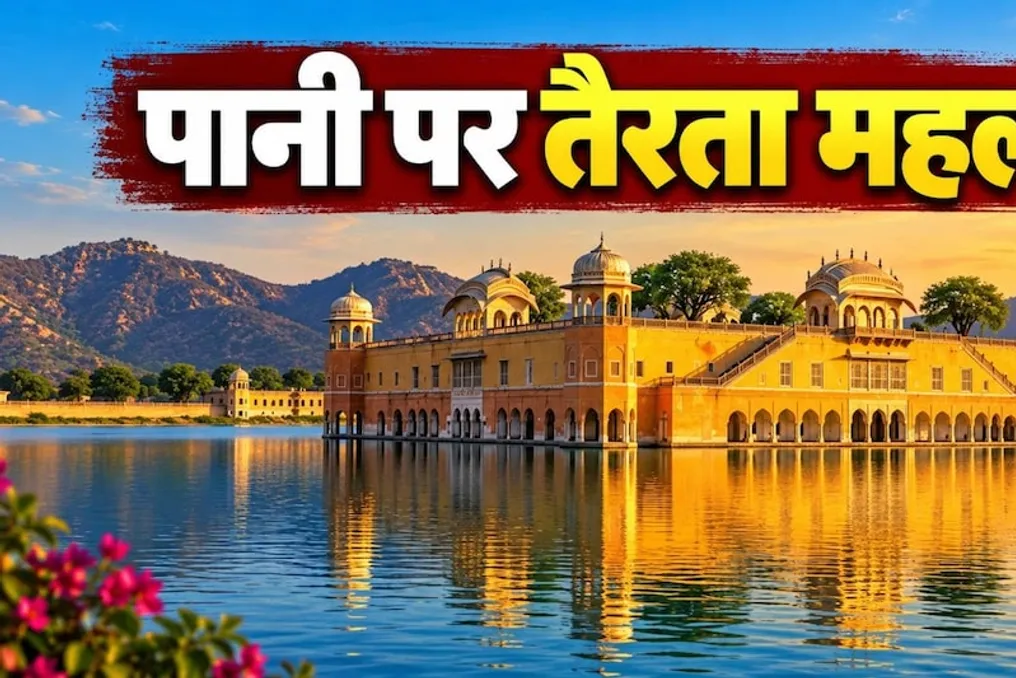
Jaipur city, Rajasthan state, is home to numerous historical structures whose beauty and uniqueness continue to amaze. In addition to well-known attractions such as Amber Fort, Nahargarh Fort, and the Citadel, Jal Mahal is also among the favorite spots for tourists. This palace, built in the middle of Man Sagar Lake, gives the impression that it is floating above the water, making it one of Jaipur's most remarkable and attractive locations.
Questions often arise around Jal Mahal: why is most of the palace submerged underwater, who built it, and was it ever a royal family residence? Tourists are also interested in the palace's contents and the possibility of visiting it. The architecture of Jal Mahal, its history, and its connection to Man Sagar Lake give it special significance, making it a must-study for those planning a trip to Jaipur or interested in the historical sites of Rajasthan.
Jal Mahal is located on the Jaipur-Amber road, right in the middle of Man Sagar Lake. It is situated about four kilometers from Jaipur itself and lies on the way to Amber Fort. The Aravalli hills are visible in the vicinity, offering picturesque views of Nahargarh Fort and Kanak Vrindavan Garden. The name 'Jal Mahal' translates to 'Water Palace,' and its location in the middle of the lake distinguishes it from other palaces, creating the illusion of floating on the water's surface.
Historical information regarding the construction of Jal Mahal is contradictory. According to one version, its construction dates back to the late 17th century and is associated with Maharaja Sawai Pratap Singh. Later, in the 18th century, Maharaja Jai Singh II carried out expansion and restoration work on this palace. It is important to note that the palace was not intended for permanent residence; it served as a place for recreation, entertainment, hunting, and enjoying nature for members of the royal family. Due to its location in the middle of the lake, it was particularly pleasant to spend time there during the hot season.
The most outstanding feature of Jal Mahal is its structure. Although the palace has five floors, when the water level in Man Sagar Lake rises, the four lower levels become submerged, leaving only the upper part visible. This is why it appears to float on the water from a distance. The palace was not a permanent dwelling for monarchs but rather a place for the leisure of the royal lineage, where they would come for picnics, birdwatching, and quiet relaxation.
On the uppermost part of the palace is a beautiful garden known as Chameli Bagh. Special events were previously held here for royal guests. The garden's design combines elements of Muslim and Rajput architecture, and small pavilions and decorative elements enhance its beauty. Despite the fact that most of the palace was underwater for a long time, its structure remained quite sturdy due to the use of traditional construction and preservation methods, including the application of lime mortar mixed with honey, gum, and fennel, which helped protect the walls from water damage.
Man Sagar Lake is a habitat for various species of birds, and migratory birds can be seen there during the winter. For nature and bird lovers, the area around the lake offers a very scenic experience. However, Man Sagar Lake suffered from pollution in the past due to the discharge of sewage. Efforts have subsequently been made to clean the lake and improve the environment, including implementing sewage treatment systems and improving water quality, which has allowed the population of birds and aquatic organisms to recover.
Currently, entry into Jal Mahal is prohibited for tourists. Nevertheless, visitors can admire it from the outside and take photographs from the lake shore.
Previously, boat rides around Jal Mahal were possible, but these trips are currently suspended. Therefore, tourists can enjoy the magnificent view of the palace while staying on the lake shore.
The best time to visit Jal Mahal is in the morning, when there are fewer people and the weather is more comfortable. The evening hours also offer incredible views, and the reflection of the palace in the lake at sunset adds a special charm to it. When visiting Jaipur, it is recommended to include Jal Mahal in the itinerary along with trips to Amber Fort and Nahargarh. Even if entry is closed, this beautiful palace in the middle of the lake is an excellent spot for viewing and photography.