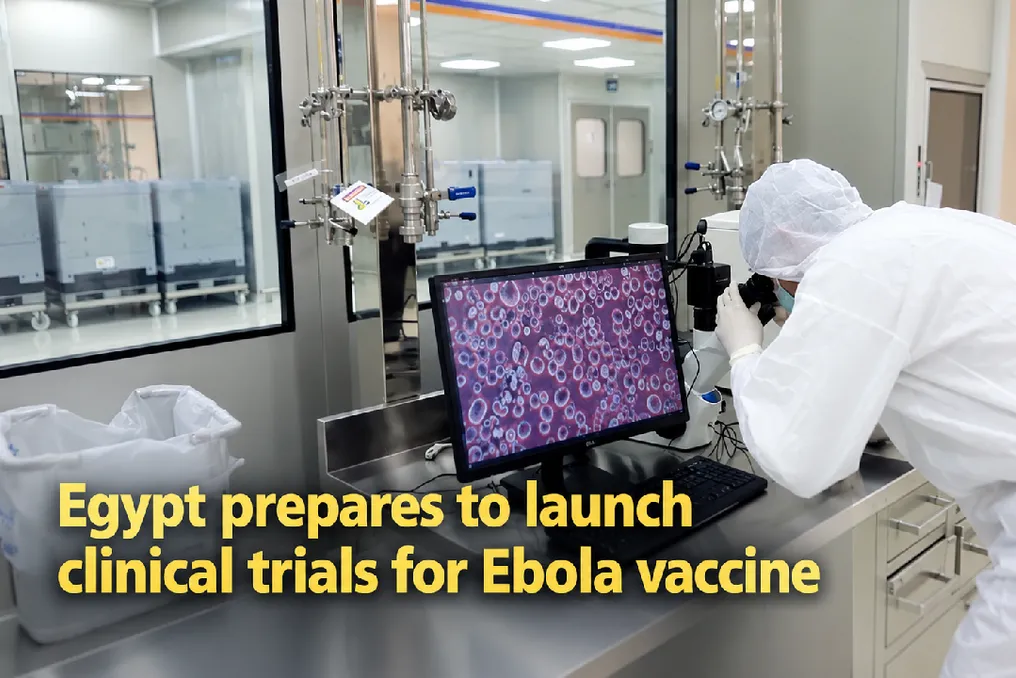
Egyptian scientists are working to enhance protection against the Ebola virus, and clinical trials for a new vaccine are expected to begin in the coming weeks.
This development was made possible after the Coalition for Epidemic Preparedness Innovations (CEPI) decided to support the Egyptian company Minapharm in promoting the vaccine. Minapharm operates what it calls the largest biological drug manufacturing facility in the Middle East and Africa.
The company is developing the vaccine in collaboration with its German subsidiary, ProBioGen. Dr. Ashraf Omar, a professor of hepatology and liver transplantation, noted that this project demonstrates Egypt's growing capabilities in vaccine development and conducting clinical trials.
Omar emphasized the significance of this project, stating: 'It is very important because it is a positive signal that Egypt is capable of having biotechnology for vaccine production.' He added that since Africa accounts for less than 2% of global clinical trials, this project provides an opportunity to position Egypt as a center for clinical research.
Minapharm and ProBioGen launched the vaccine development program following the outbreak of a new deadly strain of Ebola, against which no known vaccine or treatment currently exists. CEPI is allocating approximately $16.5 million to assist in transitioning the vaccine from preclinical development to Phase One clinical trials.
According to Mohamed Youssef, head of biological development at Minapharm, this funding covers production in Cairo and Berlin, as well as preclinical and regulatory work, Phase One testing, and technology transfer between the two sites. Youssef stated: 'We are moving extremely fast. We plan to produce the first batch in just a few weeks, and then move on to the first human trials in Rwanda.'
Minapharm claims that the first human trials involving volunteers in Rwanda are scheduled for December. If the vaccine receives the necessary regulatory approvals, its public rollout could begin in early 2027.