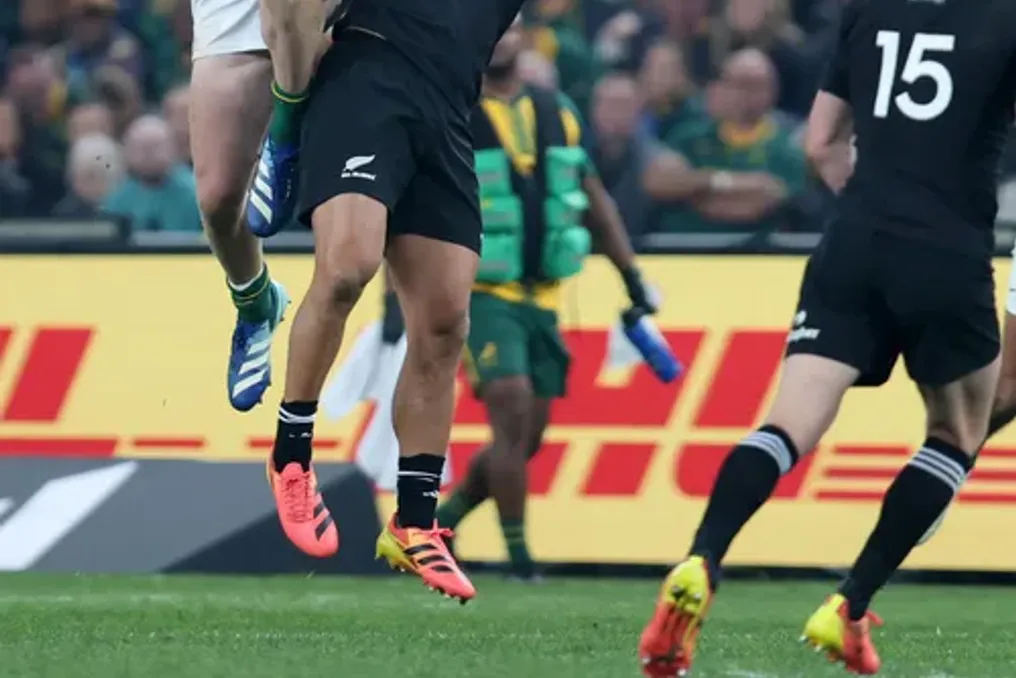
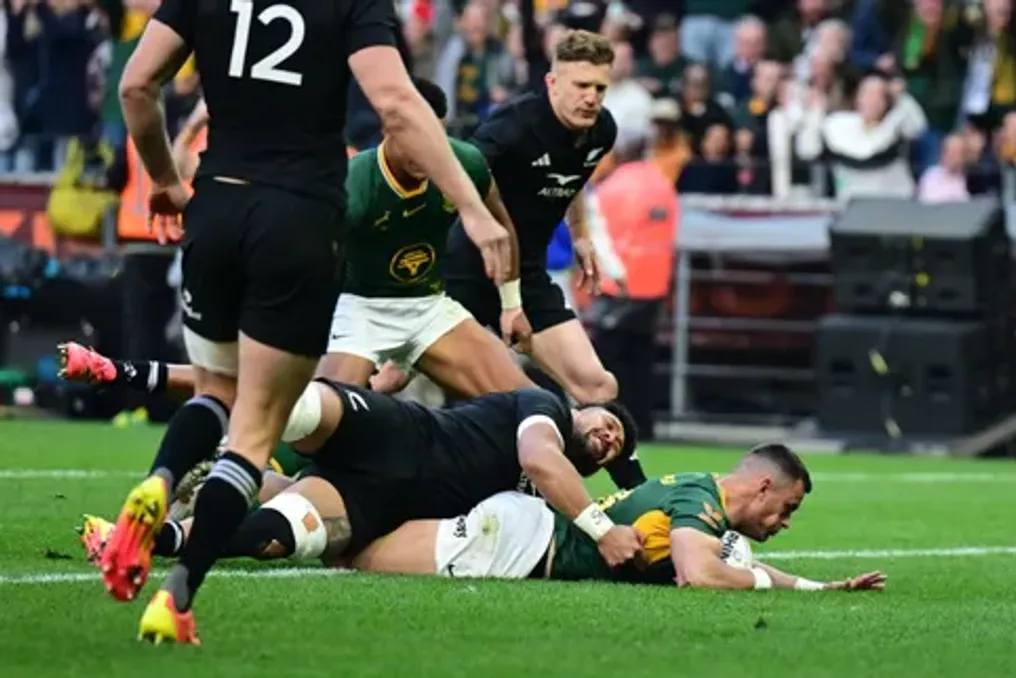
Springboks defeated All Blacks in Baltimore and won the series of the greatest rivalry in rugby
Read more
IOL
iol.co.za

Springboks defeated All Blacks in Baltimore and won the series of the greatest rivalry in rugby

The Springboks secured a convincing victory over the All Blacks with a score of 43–28 in the final match of the greatest rugby rivalry series, held in Baltimore. This win allowed South Africa to claim a historic 3–1 series victory.

The second half of the match proved decisive, as the Springboks managed to pull away from the New Zealand team in Maryland state. The victory was ensured by dominance in the forwards and precise execution of attacks in the backline.

The game took place at M&T Bank Stadium in front of an enthusiastic crowd. The South African team overcame the resistance of the competitive New Zealand squad by utilizing a destructive combination of forward power and backline skill. This triumph concluded an unforgettable multi-match tour in the United States.

The Greatest Rugby Rivalry

The Springboks demonstrated both power and style to defeat the All Blacks in the final match of the series. This secured them a historic 3–1 victory, allowing head coach Rassie Erasmus to mark his significant one hundred and first Test match in the series.

More to Come...

Similar stories

Springboks and All Blacks to meet in Baltimore for the final match of the series
Read more
iol.co.za

Springboks and All Blacks to meet in Baltimore for the final match of the series

A unique rugby match will take place in Baltimore on Saturday, where the Springboks and All Blacks will have their last confrontation in a significant four-match series. It is expected that the M&T Bank Stadium will be filled with numerous South African expats.

The respective rugby unions of South Africa and New Zealand may gain significant financial benefits from hosting the tournament in an untapped market, despite the local audience possibly being unfamiliar with the sport. Nevertheless, M&T Bank Stadium is guaranteed to attract passionate fans, especially South African expats eager to experience the 'taste of home.' Given that approximately 133,000 South Africans reside in the US, a large portion of them wishes to see the game live, as rugby is deeply ingrained in their culture.

Cultural differences between the matches will be quite noticeable. Unlike the traditional test matches of the Springboks in South Africa, which feature the aroma of smoke from numerous barbecues in the parking lots, the M&T Bank Stadium in Baltimore operates under much stricter health and safety regulations. Open fires and informal areas give way to organized crowd control, with spectators being directed directly from public transport to the venue.

Instead of the usual walk to the stadium, fans will encounter highly commercialized pre-game zones, such as the official 'TailGOAT' experience, which includes live DJs, brand activations, and high entry fees for all-inclusive food and beverage packages.

The financial contrast will be evident inside the stadium. In a South African stadium, beer typically costs around R60 ($3.50), whereas in Baltimore, fans will have to pay at least $15 (more than R260) for one mug. Local snacks, like biltong, will not be found there; they will be replaced by overpriced packs of beef jerky sold for $10 (R175) or more for a small piece.

The presentation of the game will also receive a full American sports modernization. Spectators can expect constant sensory engagement: high-quality fan cameras, stadium noise meters, and continuous sponsor activations on giant video screens. Instead of local youth matches or brass bands during breaks, World Rugby might feature a major musical act.

Although the probability of a military aircraft flying over is low, nothing can be ruled out in the world of glamorous American sports entertainment. With a stadium capacity of just over 70,000 people, a fully packed audience of loud South Africans and Kiwis is quite achievable.

However, the true test of this American experiment depends on the audience outside the stadium. The real potential lies in global television and streaming broadcasts, where the potential audience is growing exponentially. To reach these viewers, the match will be broadcast on Paramount+ in the US and free worldwide via World Rugby's RugbyPass TV. This sets the stage for curious NFL fans who might get acquainted with this sport. At first glance, both sports share a recognizable oval ball and crushing collisions, but will American sports fans stay to learn more?

Springboks defeat All Blacks 29–24 in the greatest rugby rivalry match
Read more
iol.co.za

Springboks defeat All Blacks 29–24 in the greatest rugby rivalry match

The Springboks team defeated the All Blacks with a score of 29–24 on Saturday at FNB Stadium in Soweto, securing a triumph in the greatest rugby rivalry. Despite a slow start, the world champions managed to increase the pace thanks to their physical strength and dominance during the scrum play. The team's attack was energized by the entry of Mani Leibobok after Cheslin Kolbe's early injury.

This match became a brilliant first victory over New Zealand at this arena and allowed South Africa to take the lead in the series with a score of 2–1. IOL Sport assessed the performance of the winning Springboks team.

The Greatest Rugby Rivalry

Kurt-Lee Arendse (7/10) stood out in the starting fifteen-meter line-up, looking dangerous every time he received the ball in attack, successfully overcoming the defense in several instances and scoring a good touchdown. Jesse Kriel (6) made a couple of noticeable missed tackles that harmed the Boks, and also made a passing error without a defender in front of him, but partially compensated for this with a good solo touchdown.

Damian de Allende (7) set up Arendse's touchdown, demonstrating a brilliant hip maneuver to bypass his opponent, and showed himself as a powerful player in defense. Winger Ethan Hooker (8.5) delivered another outstanding performance, covering almost every meter of the field; his youthful play was characterized by excellent bursts and strong defense.

Sasha Feinberg-Mngomezulu (6) converted several excellent kicks at the posts, including a difficult penalty in variable wind conditions, although he could not fully assert his influence in attack, but played well in defense. Kobus Reinah (5) did not have his best day at the scrum and in the ball contest for the Boks, making several errors that could have changed the course of the game, and his kicks did not yield the desired results.

Jasper Wiese (7) was a player the Boks relied on for forward momentum, even when stationary. He made several heavy breakthroughs and controlled the ball well, leading to a penalty touchdown at the scrum. Pieter-Steph du Toit (7), clearly upset after an early tackle, demonstrated incredible aggression in contact since then, ignoring his own condition or opponents.

Siyabonga Kolisi (7), despite an injury in the first half, continued to play, showing immense strength in breaks and defense. Ruan Nortje (5.5) was reliable in the lineouts, but less noticeable in breaks and defensive actions; he needs to add more physical strength in matches. Eben Etzebeth (5.5) did not show sufficient effectiveness in terms of physical struggle, especially tackling, being knocked down by an All Blacks defender, but remained strong when possessing the ball.

Wilko Louw (7.5) proved to be a force to be reckoned with at the scrums, winning the first penalty for the Boks, after which the team began to dominate the play. He also made several decisive tackles. Malcolm Marx (8) made a major turnover in the second half in the ball contest, allowing for an attacking lineout, and was reliable in lineout throws, which contributed to good rolling mauls from which he scored one.

Ox Nche (7.5) transformed from the left flanker position, preventing Louw from completely dominating the attack, and completely suppressed the All Blacks scrum.

Substitutions

Deon Fourie (6) immediately impacted the ball contest, slowing down the guests' game, and was also strong in defense. Gerhard Steenkamp (6) came onto the field and added more impetus to the front line. Thomas du Toit (6) won several good penalties in the second half and supported the scrum dominance along with other substitutes. Lud de Jager (5) brought necessary physical strength while the Boks were finishing the game.

Andre Esterhuizen (6) broke through two defenders as a hybrid player. Cameron Hanekom (7) brought real physical power with his bursts and tackles, helping the team maintain the tempo. Morne van den Berg (7.5) made a small error in the lineout, but his speed, tenacity in tackling, and attacking instinct played a significant role. Mani Leibbok (8) changed the course of the game by coming on as a playmaker; he gave the team pace and executed an extraordinary pass that allowed the team to remain constantly on the attack.
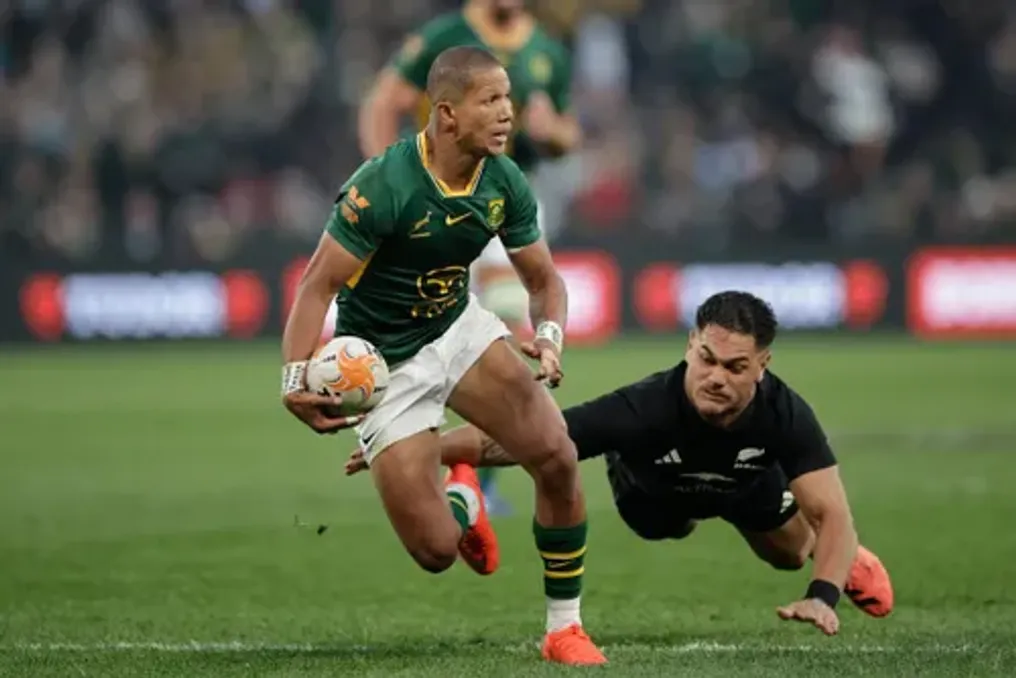

Rassie Erasmus's tactics and Cheslin Kolbe's mastery helped Springboks defeat All Blacks
Read more
iol.co.za

Rassie Erasmus's tactics and Cheslin Kolbe's mastery helped Springboks defeat All Blacks

The Springboks resumed their campaign in the rivalry dubbed 'The Greatest Rugby Rivalry' in an exciting match at the DHL Stadium. They secured a convincing 33–26 victory over the All Blacks, leveling the four-match series at 1–1.

Recovering from a disappointing loss in Ellis Park, South Africa combined early physical intensity with refined tactical ingenuity to take control of the game from the visitors. This set the stage for the third test in Soweto.

This review presents five key moments from the memorable evening in Cape Town, including bold coaching decisions and individual outstanding performances.

Siya Kolisi's return restored attacking dominance

Siya Kolisi's return to the defensive line provided the Springboks with the necessary physical power and authority in the tackle contest in attack that they lacked in Ellis Park. His presence allowed them to neutralize New Zealand's destabilizing tactics, giving the hosts cleaner ball and a much stronger foundation.

The flanker captain demonstrated his impact by scoring the decisive try shortly before halftime, confirming that his leadership qualities and work rate are absolutely indispensable in high-stakes matches.

Rassie Erasmus's genius front-line plan

Rassie Erasmus once again demonstrated a masterful coaching move by starting the game with Deon Fourie, Gerhard Steenkamp, and Thomas du Toit to absorb the initial onslaught from the opposition. Then, in the 35th minute, he made the bold decision to bring Malcolm Marx and Ox Nche on before halftime. This gamble paid immediate dividends as the fresh, world-renowned pair won a penalty scrum inside the All Blacks' 22-meter zone, directly leading to Kolisi's try and decisively changing the momentum before the break.

Cheslin Kolbe's flawless kicking proved decisive

In a classic test match decided by narrow margins, Cheslin Kolbe's metronomic accuracy in goal-kicking became the determining factor. Playing as the primary goal-kicker playmaker, the winger proved to be man of the match, scoring three conversions and four penalties, totaling 18 points. His perfect percentage allowed the Springboks to punish New Zealand's errors and maintain the scoreline, reducing the significance of Handre Pollard's late absence.

Springbok defense was exposed in the wide areas

The experienced combination of centers Jesse Kriel and Damian de Allende showed immense strength, each scoring a crucial try in the first half. However, their play was not flawless. These two Springboks players conceded two tackles from Will Jordan, leading to an All Blacks attempt. The visitors enjoyed themselves on the flanks, overcoming the Bok defense's pressure and scoring points.

Slow start doomed resilient All Blacks

For the second week in a row, the pace of the game was dictated by an early start, but this time New Zealand found themselves trailing. A conceded try in the first two minutes forced the visitors into a chasing mode in Cape Town. Although goals in the second half from Leroy Carter and Ardie Savea demonstrated their relentless fighting spirit, the All Blacks ultimately set too high a bar against the determined defense of the Springboks.

Popular