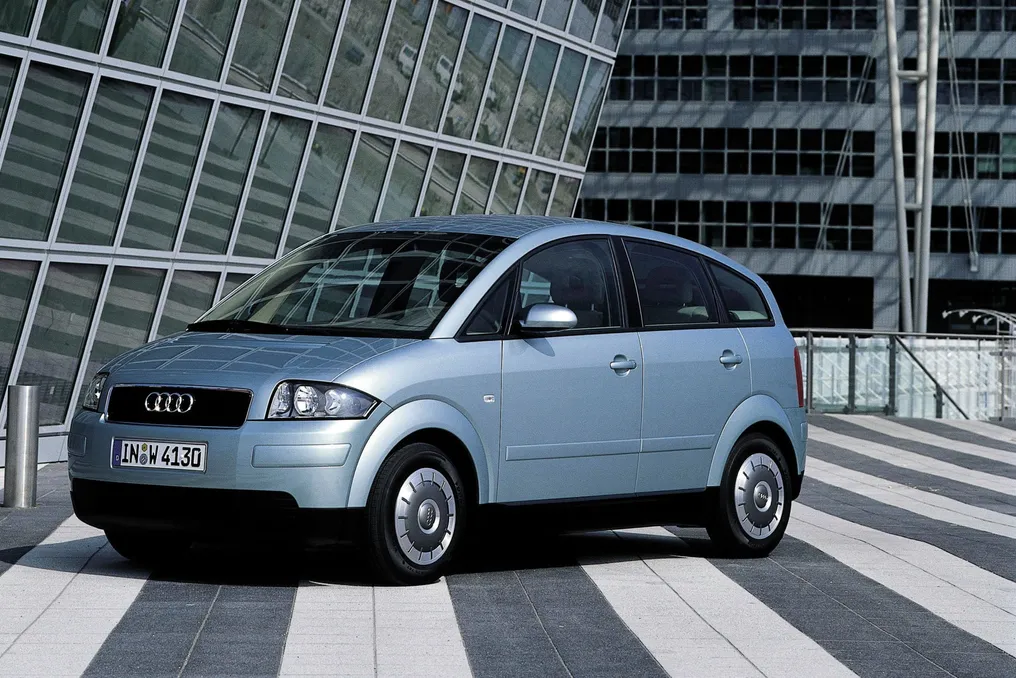
In 1999, Audi introduced the Audi A2 to the European market, an ambitious project characterized as a light, ultra-efficient compact minivan built entirely from aluminum. The market at the time struggled to assimilate this novelty. More than twenty years later, the Ingolstadt manufacturer relaunched the A2 name to designate its new entry-level electric model, intended to succeed both the A1 and the Q2—a complex task, especially considering the charismatic appeal of the A1.
The author argues that the original Audi A2 aligned well with its purpose, but the global context was not ready for it. Audi has a notable history, including victories with Auto Union, Audi Quattro titles in the WRC, triumphs in IMSA with the Audi 90, and 13 wins at the 24 Hours of Le Mans in the early century. Its road vehicles are appreciated by enthusiasts, such as the RS3 and R8, and its luxury cars, like the A6 and A8, maintain an impeccable reputation. However, the A2 is often remembered as an example of excellent product that the public did not ask for.
The original A2 was conceived as an indirect response to the Mercedes-Benz Class A (W168), the brand's first front-wheel-drive compact. Presented as a concept in 1997 at the Frankfurt Motor Show, its production version debuted in November 1999. The design was developed by Derek Jenkins under the direction of Peter Schreyer, then head of Audi's design department, incorporating visual inspirations from the Audi TT, featuring rounded lines and straight details.
The main revolution of the A2 lay not just in aesthetics, but in the construction method. The massive use of aluminum in the structure and body gave the A2 significantly less weight (between 895 kg and 1,030 kg) compared to the Class A, which started around 1,300 kg. Audi employed a space frame structure, inspired by the Audi A8, where the extruded aluminum structure absorbed stress, while the external panels were non-structural. Combined with a low center of gravity and MacPherson front suspension, the car exhibited precise dynamic behavior.
Although not focused on sportiness, the primary goal of the A2 was fuel economy. The project envisioned the vehicle being able to travel over 500 km from Stuttgart to Milan on a single tank. The engine lineup included options such as the 1.4 16V gasoline (75 hp), 1.4 TDI turbodiesel (75 hp), 1.6 FSI (110 hp), and the remarkable 1.2 TDI (61 hp). The A2 3L model, launched in 2001, achieved a consumption of only three liters per hundred kilometers (average of 33.3 km/l), aided by low-resistance tires, magnesium wheels, and an aerodynamic coefficient of only 0.25.
The vehicle featured unique packaging solutions, such as the Serviceklappe, a hinged front grille for basic maintenance, and a generous trunk capacity of 390 liters, surpassing the contemporary Audi A3, thanks to the 'sandwich' construction that optimized internal space. Additionally, the A2 offered a high degree of customization, something unprecedented in the category at the time.
Despite being technically superior to its purpose, the A2 failed commercially. Its price was considered high relative to its size and performance, exceeding the top-spec VW Golf. Furthermore, the design did not appeal to the public, who preferred the larger and more traditional A3. Audi invested heavily, but the cost of aluminum and the exclusive assembly line in Neckarsulm resulted in sales of only 177,000 units in seven years (1999–2005), generating an estimated loss of over €7,500 per unit produced.
The financial legacy of the original model led Audi to abandon an electric A2 concept in 2011, which would have used carbon fiber, opting instead for the more traditional A1. Nearly thirty years later, the new A2 was launched. However, many of the original's engineering innovations lost relevance in the current scenario. For instance, a modern electric car uses a skateboard platform (like Volkswagen's MEB), eliminating the need for 'sandwich' construction to accommodate fuel tanks.
The new A2, based on the MEB platform, features a rear-mounted motor with power ranging from 170 hp to 330 hp, and a range exceeding 600 km. While these figures are attractive, the new model is substantially larger and heavier (1,850 kg) than the original. Visually, it recalls the Audi TT, with LED headlights and taillights, and managed to refine the aerodynamic coefficient to 0.24. However, the new A2 does not appear to have been designed to revolutionize, but rather to occupy a specific niche in the transition to mobility.