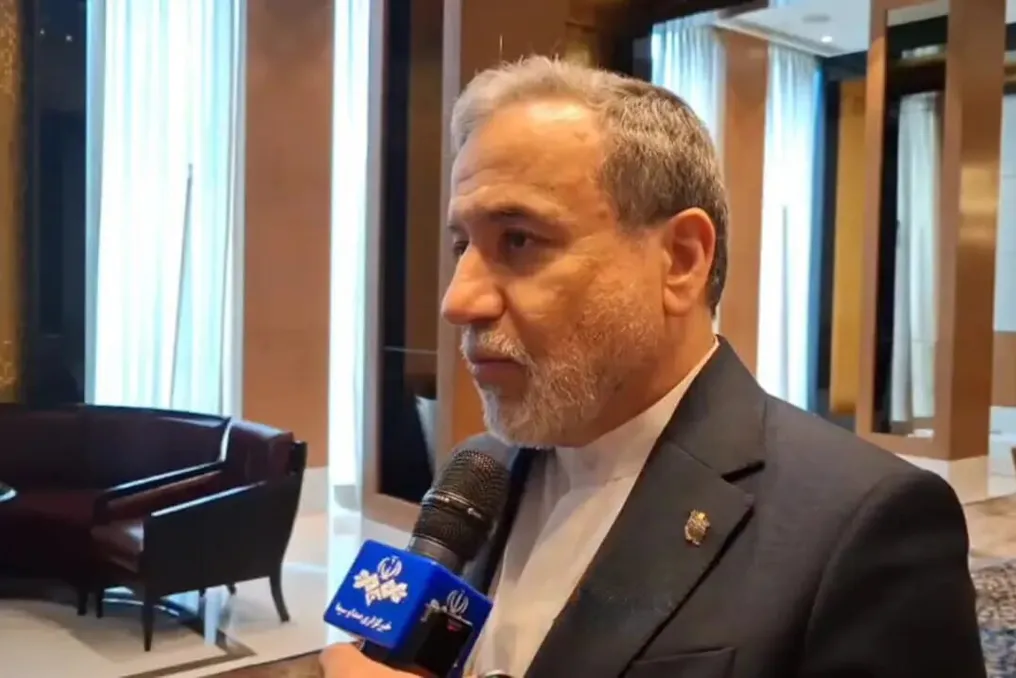
Iranian Foreign Minister Abbas Araghchi stated that Tehran is holding consultations with other BRICS countries to remove obstacles and facilitate its accession to the New Development Bank (NDB). This is part of Tehran's effort to gain broader access to multilateral financing and alternative financial channels through this bloc of developing economies.
During a meeting with his counterparts in New Delhi on Saturday, Araghchi said that Iran is negotiating with BRICS members to advance its application for membership in the development bank. According to reports from this meeting, Araghchi noted the existence of certain hurdles created by specific countries and stated that consultations are underway to resolve accumulated issues and support Iran's membership process.
Iran's attempt to join the NDB coincides with Tehran's increased focus on BRICS as a platform for expanding trade, investment, and financial cooperation outside traditional Western-dominated institutions. Araghchi also emphasized the significance of the BRICS Leaders' Summit and the parallel economic discussions taking place. He mentioned that the BRICS Business Council was established on Friday and highlighted the speeches by Russian President Vladimir Putin and Indian Prime Minister Narendra Modi.
Furthermore, Araghchi reported that Iranian President Masoud Pezeshkian's remarks on increasing the use of national and local currencies in trade among BRICS members garnered significant attention. Araghchi is currently in New Delhi with President Masoud Pezeshkian and Economy Minister Ali Madanizadeh to participate in the BRICS Leaders' Summit and related meetings.
The active promotion of national currency usage has become an increasingly important element of Iran's economic diplomacy as the country seeks to reduce its vulnerability to financial restrictions and payment channels susceptible to sanctions.
What is the New Development Bank?
The New Development Bank is a multilateral development bank founded by five original BRICS members—Brazil, Russia, India, China, and South Africa—in 2015. Its mission is to mobilize resources for infrastructure and sustainable development projects in emerging markets and developing countries, complementing existing regional and multilateral development institutions.
The NDB headquarters is located in Shanghai, and it has expanded beyond the five founding members. Among the current members, besides the five founding nations, are Bangladesh, the United Arab Emirates, Egypt, Algeria, and Uzbekistan. Uzbekistan became the tenth member of the bank in June 2026 and the first Central Asian country to join this organization.
The bank finances projects in areas such as transport, clean energy, water supply and sanitation, digital infrastructure, housing, and other forms of social and economic infrastructure. Its stated goal is to fill the financing gap in emerging economies while supporting sustainable economic development. According to the bank, the NDB holds international credit ratings of AA+ from S&P, AA from Fitch, and AAA from JCR.
For Iran, membership could potentially provide access to an additional source of development finance and create opportunities for closer participation in BRICS financial mechanisms. This also aligns with Tehran's broader ambition to expand economic ties with non-Western partners and develop alternatives to financial channels affected by US and European sanctions.
A Growing Economic Bloc
BRICS has transformed from an initial group comprising Brazil, Russia, India, and China into a broader forum for the Global South. South Africa joined in 2011, and in 2024, Egypt, Ethiopia, Iran, Saudi Arabia, and the United Arab Emirates joined the group. Indonesia officially became a full member in January 2025, bringing the total number of BRICS participants to 11.
The group functions as a political and diplomatic coordination platform rather than a traditional international organization with a charter, its own budget, or a permanent secretariat. Decisions among full members are made by consensus. The bloc's economic weight has significantly increased: according to BRICS sources, member countries account for about half of the world's population and approximately 39% of global GDP.
The expanding economic influence of BRICS, combined with the concentration of major energy producers, commodity exporters, manufacturers, and some of the world's fastest-growing economies, has made BRICS an increasingly important venue for discussing trade, investment, development finance, and the international monetary system. For Iran, gaining a seat in the NDB means more than just access to another development lender; it will deepen the country's institutional involvement in the financial architecture forming around BRICS, as Tehran seeks ways to diversify capital sources, expand trade in national currencies, and reduce the vulnerability of its foreign economic relations to Western financial constraints.