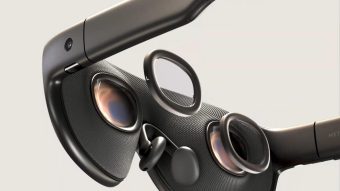
Images obtained from Meta's HorizonOS operating system revealed information about the company's upcoming smart device, named Phoenix. This device, which has a design similar to glasses, is scheduled to be unveiled during the Meta Connect 2026 event, set for the 23rd and 24th.
The visualized material differs significantly from the VR headsets in the Quest line, featuring a slimmer structure and frames resembling conventional models, including sensors located on the arms. The design is considered so distinct that it would not be suitable for casual street use, reserving that function for traditional smart glasses, such as those developed in collaboration with Ray-Ban.
The images detail that although virtual reality glasses have not achieved the expected industry success in recent years, which has created difficulties for Reality Labs, Meta's leadership believes the focus should be on adapting the successes of Quest for more accessible devices. Andrew Bosworth stated in 2025 that lightness is a crucial factor in a headset, being more important than many other features.
Despite its smart glasses appearance, the Phoenix is expected to function as a virtual reality headset equipped with opaque lenses. This means that the scenes viewed by the user will be captured by cameras and projected onto internal screens.
The reduction in the physical size of the device is achieved by transferring much of the main hardware to an external module called Stanley. This accessory resembles a portable charger, features cooling vents, and has a clip for attachment to the body, connecting to the headset via a cable.
Records in Horizon OS indicate that the Phoenix will use the Snapdragon Reality Elite, launched by Qualcomm in June. Additional supply chain leaks suggest the use of micro OLED screens with a resolution of 2560 x 2560 pixels.
Interaction with the system is expected to abandon the joysticks used in Quest; the new mode of operation will be based on eye tracking and hand gestures. This change reflects a possible prioritization of media consumption over virtual reality gaming.
Additionally, the device will feature Eye Unlock, a gaze-based biometric authentication method for unlocking and purchases, technology comparable to Apple's Optic ID. Another feature, reminiscent of the Vision Pro, is support for Avatar Codecs, which allows for the creation of photorealistic representations of users during calls.