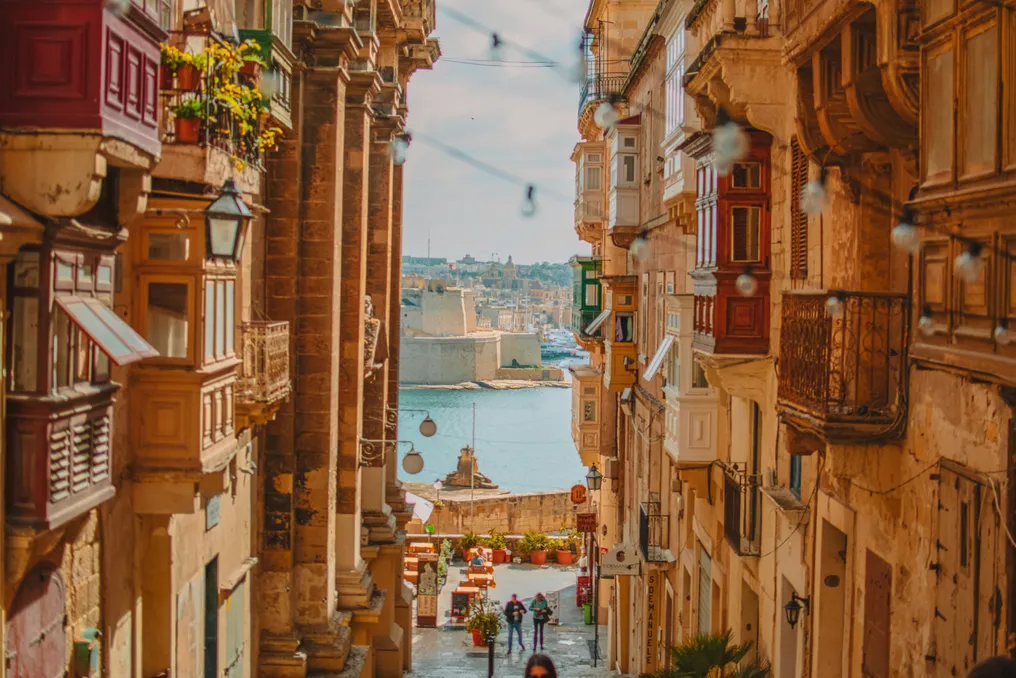
Located in Southern Europe, in the center of the Mediterranean Sea, Malta is a small archipelago situated between southern Italy and North Africa. Its capital, Valletta, with approximately 6 thousand inhabitants, serves as the southernmost governmental seat of the European Union and was recognized by UNESCO as a World Heritage site due to the notable concentration of historical monuments.
Since antiquity, the archipelago has been enveloped in legends and enigmas. On the island of Gozo, for example, there is the famous Cave of Calypso, which, according to Homer's Odyssey, is the place where Odysseus supposedly stayed for seven years alongside the nymph who gave her name to the grotto.
Beyond the most well-known tourist circuit, focused on beaches and Mediterranean landscapes, Malta offers visitors a distinct facet: attractions permeated by mysteries and sometimes frightening narratives.
The following are four tourist destinations in Malta that are involved in legends:
Mdina, the Silent City
About 15 kilometers from the capital of Malta, the municipality of Mdina earned the nickname Silent City. This small and serene city is enclosed by ancient walls and crossed by narrow alleys, retaining much of its medieval charm, along with various urban legends.
Among these, stands out the story of the Headless Bride, a figure that, similar to a character from a Tim Burton film, is supposedly roaming the dark streets of Mdina after nightfall to warn young men about romantic disappointments and pains.
The most accepted version of this legend narrates the story of a woman sentenced to death by beheading. Her last wish was said to be to marry her true love before execution. According to local tradition, her soul wanders through the city's alleys, still dressed in her bridal attire.
Verdala Palace
Located in a wooded area, in the Gardens of Buskett, near the town of Siġġiewi, Verdala Palace is the official summer residence of the President of Malta. Built in 1586 by architect Girolamo Cassar, this building serves as the backdrop for one of the archipelago's most famous ghost stories: the Lady in Blue.
In the most popular version of the legend, a young woman was promised to a suitor who vehemently rejected her. Dissatisfied with the refusal, the man chose to keep her captive in one of the upper rooms of the palace. Since then, it is believed that the young woman's specter wanders through the imposing Renaissance edifice, refusing to leave the room where she spent her final moments.
Additionally, for television series enthusiasts, the location has another point of interest: the Palace was used as a setting for the residence of the character Illyrio Mopatis in the series Game of Thrones.
Ricasoli Fort
For those wishing to explore a historical destination near the coast, Ricasoli Fort presents itself as a great option. Located next to the Grand Harbour, this site holds great historical significance, being the largest fort in Malta, built between 1670 and 1698 to protect the harbor entrance.
Besides its architectural value, the fort is linked to legends involving the famous Ħares, a type of guardian spirit in Maltese folklore. Interestingly, the word, of Arabic origin, means both 'guardian' and 'watchman'. According to tradition, this entity is linked to safeguarding certain places and could manifest in various ways.
Specifically at Ricasoli Fort, it is believed that the spirit takes the form of a Turkish man and is associated with tales of hidden treasures among the vast stone structures of the fortification. Decades later, the site also gained notoriety as a setting for large-scale cinematic and television productions, such as Gladiator, Troy, and again, Game of Thrones.
Ħal Saflieni Hypogeum
The Ħal Saflieni Hypogeum is a unique prehistoric underground structure, entirely carved into limestone rock. This can be considered Malta's main tourist attraction for those interested in places full of legends. Located in the town of Paola, it is about 5 kilometers south of the capital, Valletta.
It is estimated that this space, over 5,000 years old, functioned as a temple and necropolis. The archaeological site comprises deep tunnels, chambers, and extensive stone walls, creating an environment that, over time, fostered the emergence of mysterious stories. The narrow passages of the Hypogeum, for instance, have a particular acoustics, generating unusual echoes, sometimes described as mysterious whispers, which naturally contributed to fueling accounts and legends about supposed spectral presences at the site.