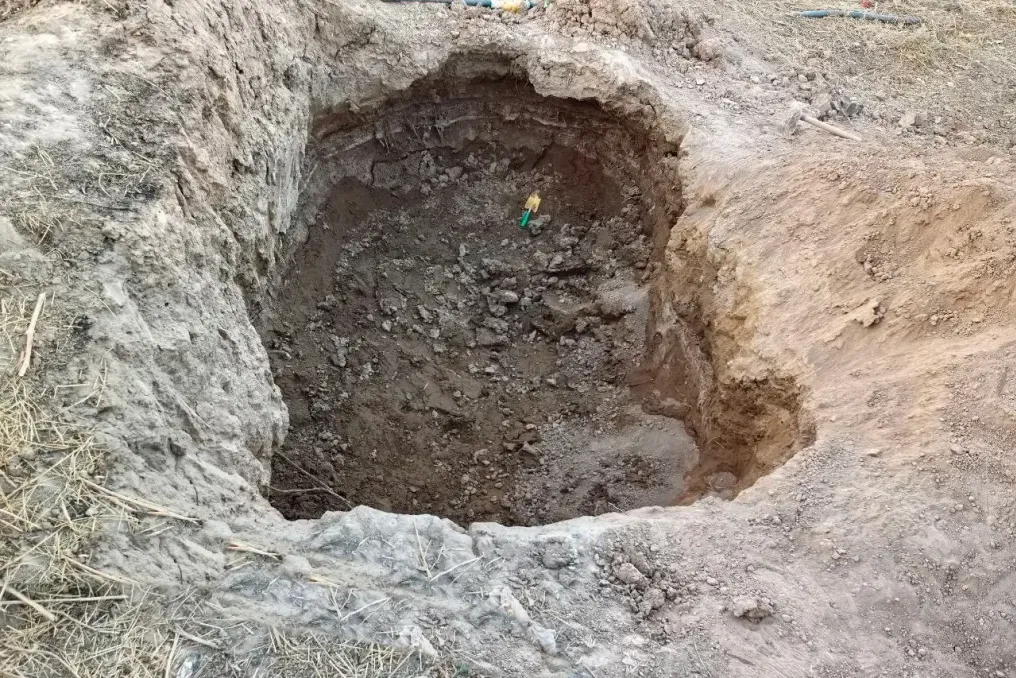
The Agency for Cultural Heritage of Uzbekistan reported the discovery of an ancient burial containing human remains, bronze bracelets, ornaments, and small beads. This find was made during earthworks in the Payarik area, Samarkand region, Uzbekistan.
A local resident notified the Y. Gulomov Institute of Archaeology in Samarkand about the discovery. Specialists from the institute inspected the site, after which the archaeological artifacts and human remains were documented according to established protocols and handed over for scientific study.
Preliminary data indicates that some bronze bracelets have conical ends, and the ornaments are executed in a spiral form. Their appearance and decorative features resemble jewelry associated with the pastoralist tribes of the late Bronze Age steppes.
Previously, numerous materials related to Bronze Age steppe communities have been found in the Zarafshan valley at various settlements and burial sites. These objects are typically dated to the 13th–10th centuries BCE and are associated with the Andronovo-Tazabaghyab cultural community.
However, the exact time period and cultural affiliation of the recently discovered object in the village of Darvozagaza have not yet been determined. It is expected that these questions will be clarified through specialized archaeological excavations, anthropological studies, and laboratory analysis of metal artifacts.
The Agency for Cultural Heritage strongly urges citizens who discover ancient artifacts, building remains, or human bones during construction or earthworks to immediately cease activity and report the find to the relevant state bodies and archaeology specialists.