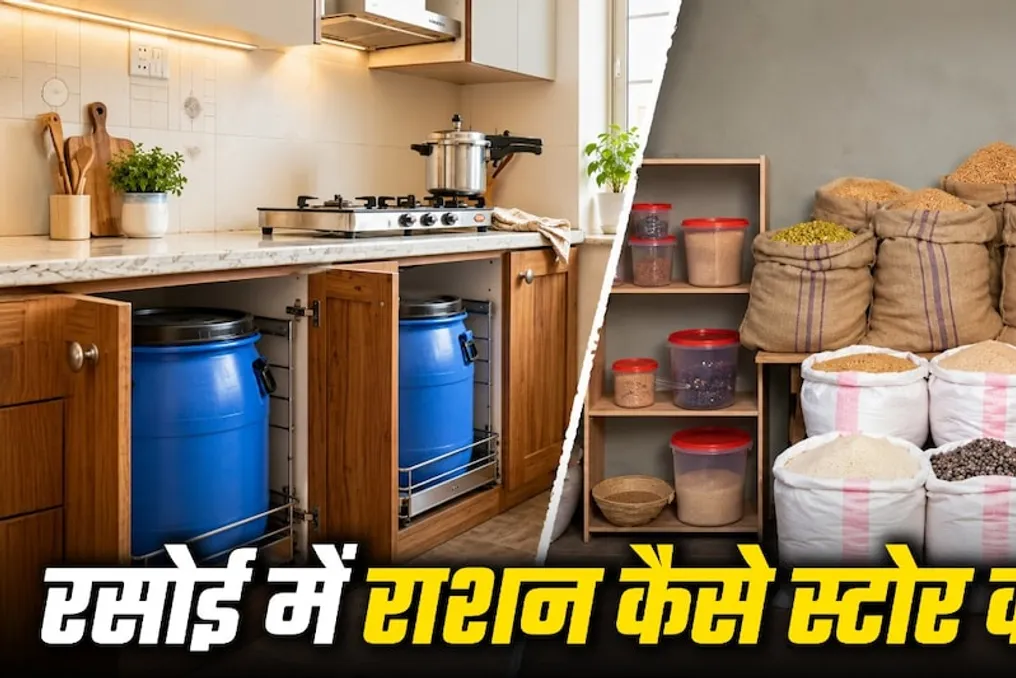
The kitchen is one of the most important rooms in the house because it stores a large number of items, including dishes, containers, and a gas stove. However, difficulties arise when a monthly supply of food arrives at home. Large bags of flour and rice, bottles of oil, and packages of beans, peas, semolina, and spices create a problem, especially in small living spaces where there is a risk of pests and rodents, and the kitchen looks overloaded.
People often try to store all supplies in cabinets, which results in necessary goods becoming inaccessible when needed. However, the main problem is not the quantity of food, but the methods of storage. With proper planning, even a small kitchen can be used effectively to store a large volume of food. When receiving the next supply, it is recommended to apply some simple storage ideas, which will help solve half of the problems.
Although the simplest way after buying a large bag is to leave it in a corner of the kitchen, this is not the best option. It is much more convenient to store products such as rice, flour, and beans in clean, dry containers with tightly closing lids. The advantage of this approach is that large bags take up a lot of space, whereas containers can be conveniently stacked or lined up.
A common mistake in small kitchens is buying one large container for all supplies. Daily retrieval of products from such a large vessel becomes difficult. Therefore, you should also have a small container into which you can pour rice, flour, or sugar for a period of one month or 15 days, which significantly simplifies daily use.
The habit of leaving large bags on the floor quickly leads to cluttering the space, and they have to be constantly moved during cleaning. If there is free space in the lower cabinets, it is best to place heavy products there. For deep cabinets, you can install a pull-out basket or tray that slides completely out, allowing access to the contents without needing to bend down.
Never put heavy items, such as rice, flour, or oil, on the top shelves. They should be placed low or at waist level so that they are easy to reach. Top shelves are intended for lighter items, such as dry spices. Storing spices on lower shelves ensures their easy availability while cooking.
Not every free space in the kitchen is suitable for storage. You should avoid placing containers with flour and beans near the stove, oven, or in areas with constant heat. High temperatures can cause moisture to appear in the products, leading to spoilage. Products should also not be stored near walls susceptible to dampness, especially during rainy weather.
Bottles of oil take up a lot of space on kitchen shelves and can leave greasy stains. Therefore, it is recommended to use smaller bottles instead of large ones and always place a saucer under them.
Pests quickly appear in grain containers, so it is crucial to pay attention to cleanliness. Additionally, some families use dry neoprene leaves in grain containers. However, before doing this, you must ensure that the container is thoroughly cleaned and completely dry, and the lid is tightly closed. Under no circumstances should new products be mixed with old stock.