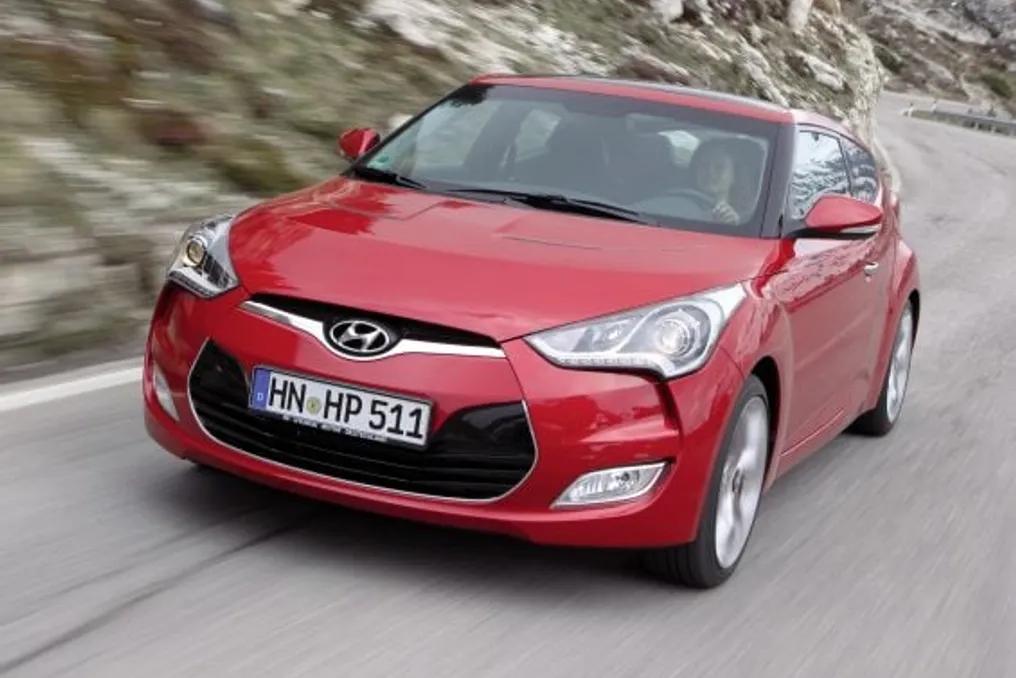
The launch of the Hyundai Veloster, which occurred in the second half of 2011, generated significant impact in the Brazilian market due to its futuristic and bold lines, attracting especially sports car enthusiasts. At that time, the Korean manufacturer's coupe quickly became a desired item and captured the attention of both consumers and specialized press.
However, the model's trajectory in Brazil was marked by a controversy related to power. Caoa, responsible for importing Hyundai vehicles at the time, announced that the Veloster had a 1.6 engine with 140 hp. This power was, in fact, referring to the direct fuel injection (GDI) version sold in certain international markets.
The cars imported to Brazil, on the other hand, used a 1.6 engine with indirect injection, which delivered 128 hp and approximately 16 mkgf of torque. This difference was not just numerical; the Brazilian engine reached its peak torque at higher RPMs, above 4,500 rpm, resulting in a feeling of less vigor during daily accelerations. For a car with such a sporty aesthetic, the performance ended up frustrating many buyers.
The situation worsened when consumers discovered that the engine specifications were different from those initially disclosed, leading to questions and complaints. Despite this, the initial commercialization was positive, driven by the striking design and high demand, with waiting lines at dealerships. Initially priced at around R$ 72 thousand, the price rose to approximately R$ 84 thousand in a few months.
Throughout 2012, market perception began to change drastically. Owners and specialists started pointing out the discrepancy between the advertised power and the actual vehicle delivery. This topic gained prominence in the automotive media, culminating in formal complaints and even legal actions by affected consumers, causing the Veloster's image to begin deteriorating rapidly.
Despite its bold look, the model had notable features, such as the unusual three-door configuration—one on the driver's side and two on the passenger side—which reinforced its identity. However, public credibility was already shaken. Over time, the Veloster became a subject of jokes, earning the nickname 'Lentoster,' alluding to the performance considered modest for a sporty-looking car. Measurements at the time indicated it reached 100 km/h in about 12.5 seconds, a time similar to several national compacts with smaller displacement engines.
The disappointment was palpable for many, as the expectation generated by the aggressive look was not met in driving. In early 2013, sales dropped sharply, while the power controversy remained prominent. Faced with this situation, the importer decided to stop selling the model in Brazil after exhausting the remaining stock.
It is estimated that between the second half of 2011 and the first half of 2013, about 13 thousand units were sold. Although this was a considerable volume for a niche car, it was still far below the potential demonstrated by the project when presented to the market. It is relevant to note that the Veloster possessed intrinsic qualities, such as a distinctive and unique design for its time, and in other markets, it even had turbo versions with about 180 hp, a configuration that could have better harmonized with its sporty image.
In summary, the Veloster exemplifies how poorly managed expectations can harm a promising product. The car captured attention with its appearance and generated great initial interest, but the controversy over the advertised power and the below-expected performance ended up eroding its reputation among Brazilian consumers and defining its passage through the national market.