Science Week highlighted El Niño, quantum computing, and Brazil's space projects
Read more
Olhar Digital
olhardigital.com.br

Science Week highlighted El Niño, quantum computing, and Brazil's space projects

Various scientific achievements were noted during Science Week, including the establishment of the El Niño phenomenon, a breakthrough in quantum computing, and Brazil's participation in space research.

The El Niño phenomenon for 2026-2027 has already been recorded and shows signs of intensification, increasing the risk of climate impacts in various regions of Brazil. This was warned by researchers Regina Célia dos Santos Alvalá, director of the National Center for Monitoring and Early Warning of Natural Disasters (Cemaden), José Antônio Marengo, general coordinator of the agency's research and development, and Marcelo Seluchi, Doctor of Sciences in Meteorological Sciences at the University of Buenos Aires, in an article published in The Conversation on Monday (7).

According to the authors, data from August indicates a more alarming scenario than initially expected at the beginning of the year. The World Meteorological Organization confirms that the phenomenon is officially established and in a phase of intensification, affecting temperature and precipitation regimes in South America and other parts of the world.

Researchers from the Institute of Physics of São Carlos at the University of São Paulo (IFSC-USP) were the first in Brazil to capture cold ions using solely an electric field (Paul trap). This experiment was conducted with strontium atoms converted into electrically charged particles, which were held in a tiny area of space. This achievement creates an experimental platform in the country that can be used for developing and testing qubits.

The work is led by physicist Amilson Rogelso Fritsch, a Junior Researcher supported by the State of São Paulo Research Foundation (FAPESP) through the Quantum Technology Initiative Program (QuTIa). The result was achieved approximately 18 months after the project began. The next step will be transitioning from holding the particles to controlling their quantum states, which is a necessary condition for performing information processing operations.

A short trip to an altitude of over 100 km above the Earth's surface can provide answers that are difficult to obtain in a regular laboratory. Therefore, in a mission conducted using a Brazilian test platform, experiments will be subjected to microgravity and returned after the flight for analysis by researchers on the ground for the first time.

This initiative is being implemented using the Suborbital Platform with Reduced Microgravity (PSM-R), designed to transport scientific experiments during a short flight. The equipment will be launched from the Barreira-du-Inferno Launch Center (CLBI) in Parnamirim (RN) as part of Operation Potiguar 2, conducted by the Brazilian Air Force (FAB). The operation, which began on August 31, is scheduled to conclude on September 19, with the forecast launch of experiments installed on the PSM using the VS-30 sounding rocket on some day during this period.

In the early hours of Thursday (10), the Santa Maria Astronomical Observatory (RS) managed to record something extremely rare while observing the sky. The recordings show a sequence of red sprites, which literally means 'red dwarfs'—an unusual type of electrical discharge rarely observed from Earth, previously recorded from the International Space Station (ISS).

In addition to 'red dwarfs,' the early morning concluded with another phenomenon. Around 1 a.m. (Brasília time), the observatory cameras registered a meteor north of Santa Maria. A recent study published in the Monthly Notices of the Royal Astronomical Society presents new information about the origin and formation of the interstellar comet 3I/ATLAS. The composition of this comet, only the third visitor from outside the Solar System discovered by science, revealed the secrets of its distant origin.

After approaching the Sun and beginning its journey from our planetary vicinity, the comet underwent an intense process of substance release. This allowed scientists to study the internal chemical composition of this celestial body in detail, revealing secrets preserved since its birth in a remote corner of the Universe.

Similar stories

Weekly Horoscope for September 7–13: Financial Debts Strongly Affect Aquarius
Read more
www.aajtak.in

Weekly Horoscope for September 7–13: Financial Debts Strongly Affect Aquarius

A new weekly cycle begins in September, running from September 7th to 13th. Astrologer Pravin Mishra has presented a forecast for all twelve zodiac signs based on planetary movements. At the start of the week, Mars and the Moon will be in Gemini, while a three-planet conjunction of the Sun, Mercury, and Ketu will form in Cancer. Additionally, Jupiter will be in Cancer, Saturn in Pisces, and Rahu in Aquarius.

Aries

During this week, support from luck is expected, providing opportunities to complete ongoing tasks. Family problems will decrease, and interest in religious practices will increase. For working individuals, the career situation will improve, and traders will manage to overcome difficulties. Students should dedicate more time to their studies.

Important decision: Tuesday. Precautions: avoid anger and arguments. Auspicious color: saffron. Advice: read the Aarti of Lord Hanuman daily.

Taurus

The week may prove favorable for Taurus in terms of finance and career. Sudden financial inflows are possible, and persistent effort will lead to professional success. Attempts to maintain peace and harmony in the family will succeed. It is important to control speech and avoid hasty actions.

Important decision: Friday. Precautions: pay attention to health, nutrition, and rising expenses. Auspicious color: white. Advice: recite the Durga Chalisa daily.

Gemini

Gemini's confidence will remain high. Unfinished tasks can be completed, and new opportunities for career advancement may arise. Increased efforts in both work and business will be beneficial, and family problems may lessen.

Important decision: Wednesday. Precautions: control speech and do not rush. Auspicious colors: white and cream. Advice: read the Aarti of Lord Krishna daily.

Cancer

For Cancers, this is a week for concluding old and prolonged matters; one should avoid postponing any tasks. If considering a job change, it is better to refrain for now. In trade, operations involving large loans should be minimized. Travel may bring benefits, and increased income is possible through diligent work.

Important decision: Thursday. Precautions: control expenses and stay away from conflicts. Auspicious color: saffron. Advice: worship Lord Krishna daily.

Leo

This week will be significant for Leo. Current worries will decrease, and stress levels will drop. With the help of friends, important matters can be concluded. Efforts should be intensified to improve career and professional activities. This time is also favorable for making decisions related to real estate.

Important decision: Thursday. Precautions: monitor diet and health, avoid long trips. Auspicious color: light red. Advice: offer water to Lord Shiva daily.

Virgo

Signs indicate an improvement in Virgo's financial situation. There may be a recovery of previously stuck funds. A new responsibility in the career may appear. Working individuals will need to act diligently and cautiously. Traders should avoid excessive inventory accumulation.

Important decision: Wednesday. Precautions: do not blindly trust strangers and monitor the budget. Auspicious color: green. Advice: read the Aarti of Lord Krishna daily.

Libra

Comfort and convenience may increase in Libra's life. Hard work will bear fruit, and there are prospects for professional success. Singles may meet new relationships, and there is a chance to choose a suitable partnership. Decisions regarding real estate can also be made.

Important decision: Friday. Precautions: do not allow expenses to rise and make financial decisions thoughtfully. Auspicious color: cream. Advice: worship Lord Krishna and offer sweets made of Mishri and nuts.

Scorpio

Scorpios will have to work constantly to get full returns from their efforts in the professional sphere. Sudden increased expenses may arise, so a budget must be prepared in advance. Students should not allow themselves to be distracted from studies. Those preparing for entrance exams await good results due to their diligence.

Important decision: Wednesday. Precautions: pay special attention to health and expenses. Auspicious color: saffron. Advice: worship Lord Krishna and offer nut sweets.

Sagittarius

Sagittarians may receive good news this week. Responsibility in the professional sphere will increase. Working individuals may receive new duties, and the time is right for traders to start something new or add a new element to the business. Interest in spiritual practices will increase, and inner anxieties will decrease.

Important decision: Thursday. Precautions: do not postpone tasks due to laziness and monitor health. Auspicious color: yellow. Advice: read the Aarti of Lord Vishnu daily.

Capricorn

Capricorns may have opportunities for profit. Additional effort is required for advancement in work or business. The time is favorable for those seeking employment. Sudden financial inflows are also possible.

Important decision: Thursday. Precautions: control speech and avoid long trips. Auspicious color: cream. Advice: read the Aarti of Lord Krishna daily.

Aquarius

Aquarians should avoid negative thoughts during this week. (The text continues below)

Expert warns of droughts in the Amazon, heatwaves, and tornado risk in Brazil due to Super El Niño 2026
Read more
olhardigital.com.br

Expert warns of droughts in the Amazon, heatwaves, and tornado risk in Brazil due to Super El Niño 2026

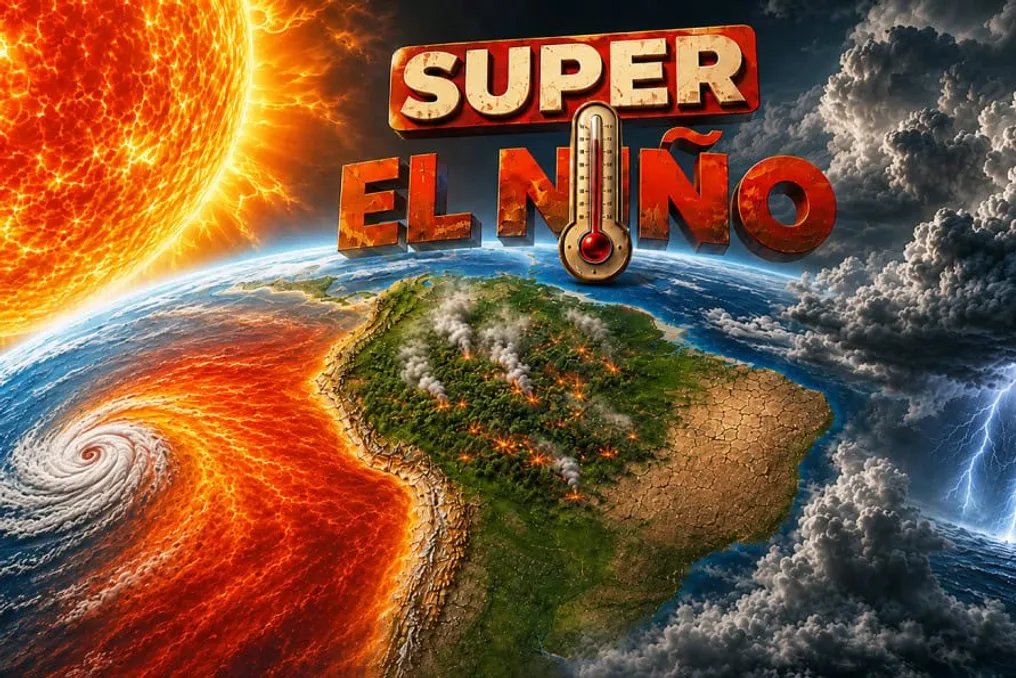
The El Niño phenomenon is progressing at an unprecedented speed this year. The accelerated and atypical warming of the Pacific Ocean waters raises a global alert about its potential to become a 'Super El Niño,' which could drastically alter the climate in Brazil, generating severe droughts in certain regions and intense storms and heatwaves in others.

To detail the impacts and the science behind this scenario, the Olhar Espacial program hosted meteorologist Ana Cristina Palmeira last Friday (21st). A Doctor of Sciences from the University of São Paulo (USP) and an adjunct professor at the Federal University of Rio de Janeiro (UFRJ), the researcher specializes in maritime meteorology and the interaction between oceans and atmosphere.

During the interview, she clarified that the Pacific Ocean functions as the main driver of global climate. Normally, trade winds direct warm water to the western side of the ocean. However, when these winds weaken, the accumulated heat moves toward the coast of South America, altering global temperature and rainfall patterns. The specialist emphasized that this change occurs in a deep layer, comparable to a pool, representing a vast energy reservoir, and that the migration eastward completely reverses the mechanism of air ascent and descent.

Ana Cristina highlighted that any alteration in the immense Pacific Ocean generates planetary repercussions. The data proving the intensity of the event are obtained through measurements made with buoys and submerged sensors. She warned that while subtle atmospheric variations may go unnoticed, a modification in the ocean is extremely energetic and worrying. Current observations indicate a 'fever wave' in the sea, showing that the rate of warming is considerably faster than in previous events.

This major transformation in atmospheric circulation divides Brazilian territory into two extreme climatic ends. In the North and Northeast areas, the downward movement of air prevents cloud formation and blocks the normal precipitation regime. The direct effect of this prolonged drought is the worsening of droughts, water scarcity, the rapid increase in burn hotspots, and the occurrence of more frequent and intense heatwaves.

The situation deeply concerns the Amazon basin, as river levels may drop critically. The meteorologist recalled past occasions when the phenomenon dried up entire rivers in the region. The decrease in water affects river transport, isolates riverside populations, and seriously harms local supply, highlighting the great socioeconomic impact on Brazil due to its continental dimensions.

Opposite climate in the South of the country

In the South of the country, the climatic behavior is diametrically opposite. The retention of cold fronts and the blocking of humidity result in voluminous, continuous, and intense storms in Rio Grande do Sul, Santa Catarina, and Paraná. In addition to terrestrial bad weather, the southern coast is exposed to extratropical cyclones and strong marine surges, which raise wave height and cause serious problems in coastal areas and navigation.

This atmospheric agitation extends to the icy continent through global air connections. Ana Cristina explained that the phenomenon modifies circulation even in Antarctica. She mentioned that, in previous events, this wind change caused the damming and increase of the ice layer in the Drake Passage, which prevented Brazilian ships without ice-breaking capacity from navigating, affecting the planning of scientific research and the routine of polar expeditions on the continent.

The thermal contrast between different air masses introduces an additional risk in the Brazilian interior: the formation of tornadoes. The meeting of cold air coming behind cold fronts with the hot and humid mass favors the emergence of supercell storms. This scenario creates ideal conditions for destructive gusts in the South and parts of the Southeast, affecting locations such as western São Paulo.

The specialist warned that the tornado is the most destructive atmospheric phenomenon, capable of presenting winds that reach twice the speed of a hurricane. According to her, El Niño potentiates this picture by placing an area of storms near an area of extreme heat; it is at this border between the two air masses that the violent clouds capable of generating tornadoes arise.

Given these serious forecasts, the researcher reinforced the importance of valuing scientific knowledge and heeding prevention warnings. Constant monitoring allows for the anticipation of disasters and the preservation of human lives in the face of extreme events. She concluded by asking the population to pay attention to alerts, instructing them to obey any warning issued by Civil Defense or signaled by sirens, as life is at risk.

Popular