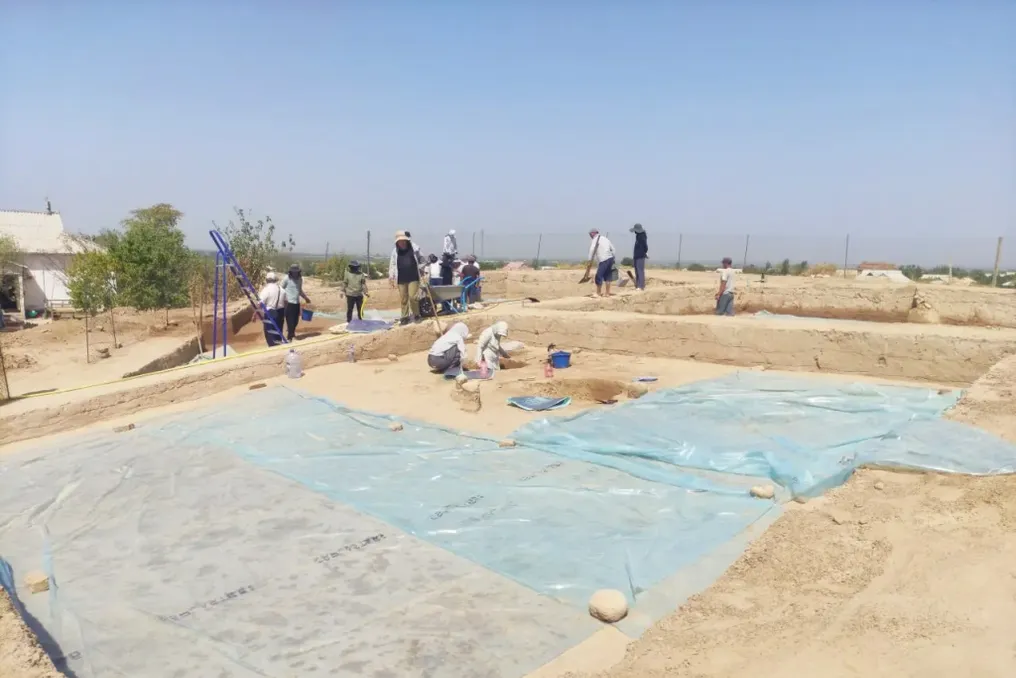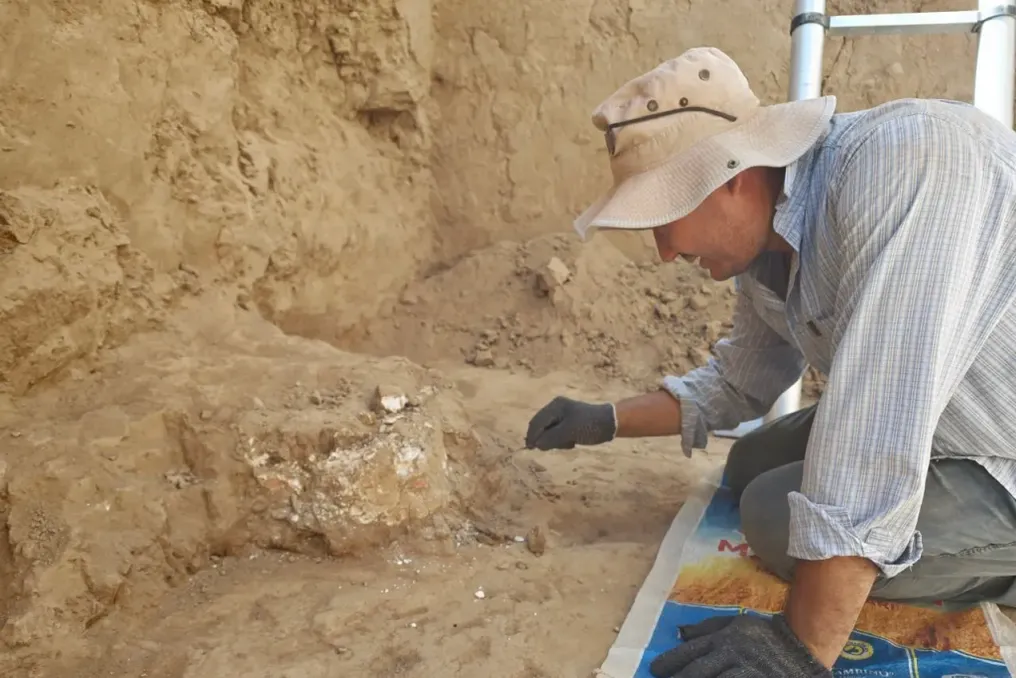
In the Urgut district of the Samarkand region, archaeologists discovered the head of a plaster sculpture dating back to the early Middle Ages. This artifact was found among the remains of an ancient temple on the territory of the Kurgantepa monument.
The excavation work is being carried out by specialists from the Samarkand Archaeological Institute. According to information from the Cultural Heritage Agency, details of the sculpture, including its hairstyle and facial features, will allow scientists to study Sogdian art and the specific design of this temple more deeply.
During these excavations, fragments of rooms and other objects were also found, which may provide new data about the purpose and structure of the temple, as well as the religious rituals practiced at this location.
The Kurgantepa monument has previously been the site of significant finds. In 2024, a wall painting depicting a four-armed deity and parts of clay sculptures representing hands and feet were discovered in the ruins of the same temple.
The First Deputy Director of the Cultural Heritage Agency, Elmurod Nazimov, additionally announced that starting in 2027, an annual grant of 25 billion soms will be allocated to support archaeological research. These funds will be primarily directed towards supporting projects implemented by young archaeologists.
Furthermore, previously in the Shurchinsky district of the Surkhandarya region, archaeologists discovered approximately one hundred burials at the Ozod monument. The presumed dating of this cemetery is 1700–1500 BCE, corresponding to an age of about three and a half thousand years.