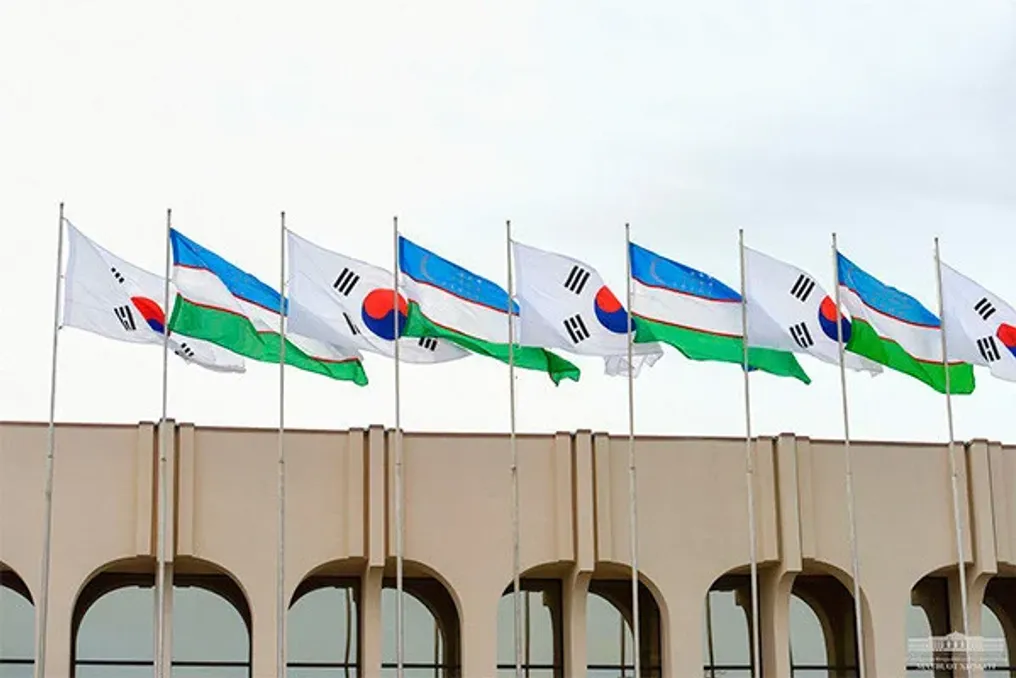
The first summit between Central Asian countries and the Republic of Korea, to be held in Seoul, is intended to give the C5+1 format a more substantial economic dimension. For Uzbekistan, this new regional structure opens up opportunities to expand industrial interaction with South Korea in areas such as technology, infrastructure, critical minerals, energy, human resource training, and attracting private capital.
One of the key elements of the new agenda will be the creation of a special advisory mechanism for ministers of industry. This mechanism should promote regular sectoral dialogue, identify joint initiatives, and form a list of priority projects. This approach allows for linking the industrial priorities of Central Asian countries with the technological and investment capabilities of South Korea through specific production chains, integrating technology, infrastructure, financing, and markets within joint industrial projects.
For Uzbekistan, bilateral partnership with South Korea remains the foundation of this cooperation. Since 2019, relations between Tashkent and Seoul have held the status of a special strategic partnership. The total volume of direct Korean investments in the Uzbek economy has exceeded 8 billion US dollars, and bilateral trade reached nearly 1 billion US dollars in the first half of this year, showing an increase of 11.5%.
Joint centers already operate in the country in the sectors of textiles, rare earth metals and alloys, agricultural machinery, and e-government. Cooperation is also developing in chemical technologies and construction. This accumulated foundation creates prerequisites for further development of processing, production localization, technology modernization, and the output of higher value-added products. The regional format also expands potential links between Central Asian enterprises and Korean companies.
Critical minerals represent another area of cooperation, covering geological exploration, processing, refining, and the creation of high-tech production facilities. Thus, the mineral and raw material base of Central Asia can become the basis for further technological ties and the development of new production capacities.
An Uzbek-Korean Scientific and Technical Center for Rare Earth Metals and Alloys is already operating in Uzbekistan. Its potential supports cooperation in materials science, processing technologies, research, and specialist training.
Infrastructure and Financial Aspects
More complex production processes require significant infrastructural resources. Within the C5+1 agenda, this area includes energy, industrial complexes, transport and logistics, urban infrastructure, as well as the planning, construction, modernization, and operation of large facilities.
Financial support for large-scale projects is provided, in particular, by the cooperation program between Uzbekistan and the Economic Development and Cooperation Fund of the Republic of Korea for the period 2024–2027, amounting to 2 billion US dollars. A new portfolio of initiatives is being developed in parallel, and mechanisms for financing without state guarantees and public-private partnership projects are being considered.
The expansion of financial instruments opens up additional opportunities for attracting private capital and establishing long-term partnerships between companies, which is particularly important for industrial and infrastructure projects with long investment cycles.
Training qualified personnel is another priority. Four vocational education centers, established with the participation of the Korea International Cooperation Agency (KOICA), operate in Tashkent, Fergana, Shahrisabz, and Samarkand. Another center is under construction in Urgench.
Further development of industrial cooperation will require more active participation from the corporate sector, financial institutions, and research organizations. It is at this level that technologies and accumulated knowledge can be transformed into new production capacities, investment decisions, and commercial products.
Creating a list of priority projects should ensure the practical advancement of initiatives between meetings of the industrial mechanism. Such a tool will allow promising directions to be linked with specific partners and sources of financing.
For Uzbekistan, the C5+1 format provides an opportunity to elevate existing cooperation with South Korea to a regional level. Investments, technology centers, financial programs, specialist training, and experience in implementing complex projects can form the basis for new production links between Central Asian countries and Korean business.
Thus, for Uzbekistan, the industrial agenda of the Seoul Summit is connected with deepening processing, technological localization, creating new production capacities, and expanding the export of finished products. The accumulated Uzbek-Korean experience becomes one element of the emerging C5+1 industrial architecture.