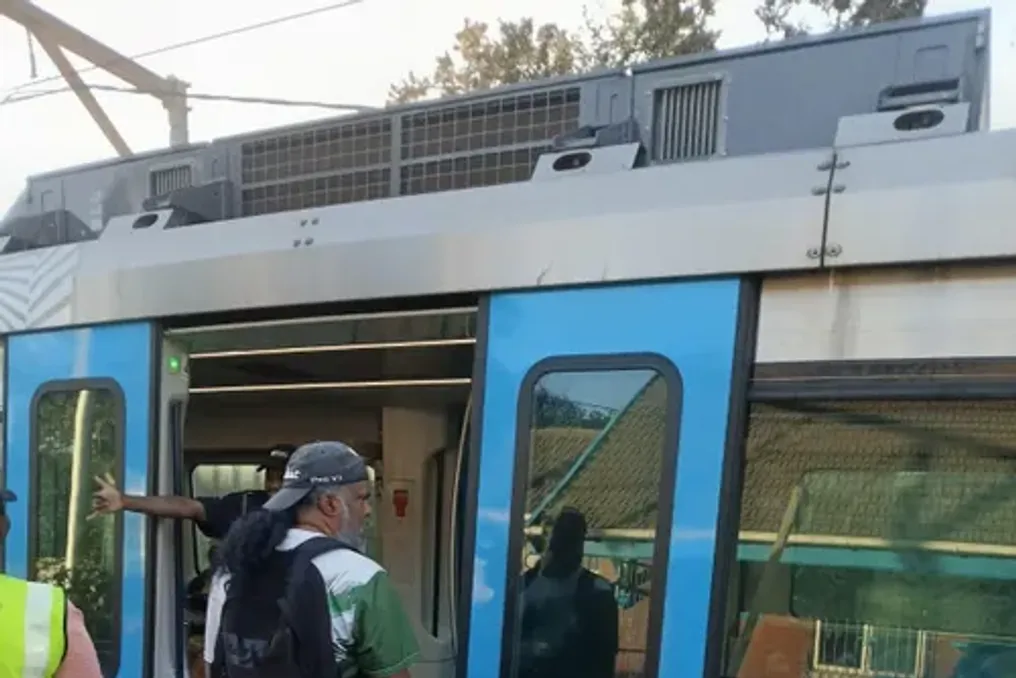
Des Chetty, a resident of Kingsburg, uses the Durban railway network and other forms of public transport to explore the city and document his experiences in public transportation for his growing social media audience. For Chetty, a train ride is more than just moving from one point to another.
His Facebook videos average around 800,000 views every 28 days, with an engagement rate ranging from 50,000 to 70,000, and he gained about 4,400 subscribers since mid-May. His most successful video was about a trip to China Mall, which garnered over 150,000 views. Notably, almost 99 percent of his viewers are South African citizens.
Through his videos, Chetty not only demonstrates the operation of the railway network, showing people how to use trains, buy tickets, and navigate the city, but also stimulates interest and contributes to the development of local tourism.
Infrastructure Context
His activities take place at a critical juncture for local infrastructure. The Metrorail service in Durban ceased operations between 2019 and 2022, depriving hundreds of thousands of people of access to affordable transport. Following this collapse, the Passenger Rail Agency of South Africa (PRASA) invested nearly 622 million rand in infrastructure modernization, restoring most routes in the city and causing a slow increase in passenger numbers.
Chetty's adventures in public transport have led him to popular Durban attractions, such as uShaka Marine World, which he highlights as part of his mission to show city dwellers what the city offers.
Nevertheless, the passenger rail service continues to face serious challenges: some routes remain closed, trains run slowly, and passenger demand remains below pre-collapse levels. Through detailed descriptions of his daily journeys, Chetty's content has unintentionally played a role in revitalizing and illuminating the local railway network, bridging the gap between restored PRASA services and the uninformed public.
However, Chetty's story extends beyond social media or trains. It is a story of a man who previously followed traditional markers of success—business, large houses, cars, and possessions—before deciding that the cost of maintaining such a lifestyle was too high.
Rethinking Success
Born in Estcourt in 1977 and educated in Umzinto, Chetty moved to Durban with the goal of building a successful life. He founded a manufacturing business and eventually acquired a 12-bedroom house, cars, and a corresponding lifestyle. However, it all became too burdensome. He stated that 'there was too much to see. There was no time to rest. One day flowed into the next, becoming blurred.'
The pressure associated with managing the business was compounded by emerging health issues. Ultimately, Chetty stopped everything, closed the enterprise, laid off employees, and rented out his house to cover the mortgage. The tenants eventually bought the property. He moved in with his mother and took a year to rethink his future.
This was followed by a move to Pretoria, where he worked for three years before realizing he had fallen into another version of the 'rat race.' He quit, experimented with buying and selling cars, and tried to turn his passion for classic car restoration into a business. But again, what he loved proved difficult.
By 2017, Chetty returned to his mother when health problems began to surface. Today, his concept of success is radically different.
He lives in an apartment in Kingsburg overlooking the ocean and the railway station. He does not own a car, earns some income from selling electronic tool spare parts online, and receives financial support from his family, whom he calls his 'main fans.' He noted: 'My elders taught me that success is measured by the size of your house and the cars you own. But they never mentioned what it takes to achieve all that and what needs to be done to maintain it.'
For Chetty, success now means good health, peace, learning new skills, and freedom to explore.
Practical Approach to Transport
The People Mover ticket is part of Chetty's practical approach to documenting public transport options in Durban. He asserts that this service provides access to various parts of the city at an affordable price, offering both single trips and daily passes.
Public transport has become a central element of this new life. He shared that he initially did not feel a strong pull towards trains. 'I only got on a train for the first time in 2024, mainly because it was conveniently located near my home,' he said. He quickly became fascinated by the experience: the sound of the train on the tracks, the sights missed by drivers focused on the road, and especially the people he meets. He added: 'I am not a very sociable person, but the train ride fills that void of solitude.'
Exploring Attractions
Durban Botanic Gardens is one of the attractions Chetty explored during his public transport adventures, sharing this experience with his growing social media audience. He also believes that public transport has taught him patience, time management, and humility.
Chetty resumed uploading videos in May of this year, initially without the intention of becoming a professional content creator. He simply wanted to keep records of his adventures that he could revisit later. Then, one simple, unedited video of a train ride exceeded 70,000 views.
Impact on the City
Audience reaction showed Chetty something unexpected: many people were unaware that modern passenger trains were running in Durban again. This became a catalyst for his current direction. His videos now try to answer practical questions that he once asked himself: how train schedules work, where to get off, where to catch connecting buses, and what sights and attractions can be found near the stations. His trip to China Mall became the biggest success, exceeding 150,000 views.
The audience response went beyond the screen. Chetty recalled an incident: 'I noticed three ladies at the station who looked a bit lost and were receiving confusing advice about where to go. I intervened to walk them to the bus, and at first, they hesitated—until they realized who I was. The most surprising thing was that they made that trip solely because of my travel posts on Facebook, and they even knew my name.'
This was not an isolated incident. 'It is still surreal when people approach me. One woman approached me while I was filming at Baggies Beach, and even a train driver, recognizing me from the station cameras, came up to tell me she watches my videos.' Even station management noticed his growing influence on public participation. Chetty reported: 'The station manager told me that my videos are really helpful, and my name was even mentioned at PRASA meetings. I am very pleased to hear that public feedback and comments on my page are actually helping to bring about positive changes on the ground.'
Chetty emphasizes that he does not work for PRASA. In fact, despite his audience size, he does not earn money from Facebook. Some of his trips take from morning till night, followed by hours of editing. While he combines earning a living with content creation, his family helps fund the project.
His goal is to expand his scope beyond trains. He explores buses, taxis, the Muvo and Durban Transport card system, and also considers boat trips and other adventures. Chetty's travels extend beyond Durban; through budget trips and public transport, he visits places like Crocworld Conservation Centre south of the city.
His unconventional approach to life extends to his creative pursuits. He calls himself the 'black sheep' in a family of teachers, lecturers, and professors with doctorates. He dropped out of school three months before graduation because he felt the traditional education system did not align with what he desired. Now he wants to teach in his own way—by sharing what he learns.
His planned YouTube project, 'The Poor Man’s Quest,' will showcase inventions and projects that can be created with limited funds and basic tools. For Chetty, the philosophy behind it is simple: live life, rather than just accumulating things. 'I want my audience to find my content authentic and genuine. Nothing fake. I want to earn my audience's trust.'
Perhaps this is what makes his journey worth watching. A man who once measured success by houses and cars now measures it by freedom, experiences, the people he meets, and the ability to wake up in peace. He is still searching, learning, and traveling. Only now, he is more interested in the journey itself, rather than the things waiting at the destination.