Memories of Dance Culture and Life of the Indian Community in Durban
Read more
IOL
iol.co.za

Memories of Dance Culture and Life of the Indian Community in Durban

The author's mother loved to dance everywhere, especially at events held in the 'wedding hall'. She closely watched the long tables where dinner was served and was annoyed by people slowly eating chicken feet and bone marrow.

She often hurried slow diners, saying, 'Come on, finish up, the DJ is waiting.' As soon as the sound test began, she would head to the makeshift dance floor. The author recalls that in the past, she could dance on the speakers at Palladium.

The author enjoyed going through his mother's wardrobe: lace dresses, fur shawls, long coats, silk stockings, and strapped leather shoes. His father might take her to evening dinners at the Sol Namara club in Chatsworth, but the author does not remember them visiting dance venues in the hot areas of Durban. This might have been due to their lack of a car or his father's constant engagement between office work and endless social activities.

One day, driving down Alice Street towards Old Fort Road, the author pointed out a magnificent building that once served as Saira Essa's Upstairs Theatre. This woman was a diva during the author's high school years. The author stole a poster advertising her speech and drama classes from the library and pasted it on his bedroom wall using rice.

When the author started telling his mother about his admiration for Essa, she interrupted him to talk about ballroom dancing. She stated, 'You know, Runga Naidu is my cousin.' Then, in quiet Telugu, she showed the author black-and-white photographs from the family album. One of them depicted her cousin in a tuxedo, tightly holding Violet L'Etang while they danced the waltz and won first prize at the Durban Ballroom and Latin Dance Championship in 1959.

Musician Melvin Peters told them a couple of weeks ago at Goodwill Manor that there was a vibrant social and cultural scene of ballroom and jazz dancing among the Indians of Durban from the 1940s to the 1970s. In those politically oppressive times, the dance floor offered a space for relaxation, romance, and a short break from apartheid restrictions, including the Group Areas Act, when 'mixed' gatherings risked police scrutiny.

The cosmopolitan urban culture of the 'City' was dominated by Grey Street, which became famous through the works of Phyllis Naidu, Aziz Hussain, and Ronnie Govender. This scene featured foxtrot, tango, samba, rumba, quickstep, jive, and rock to live music—often with influences from Indian film music, according to Professor Chats Devrop's research.

Hamish Kidd, shortly before his death, praised this era, saying, 'We were Mandjaros.' He displayed his two-toned Crockett & Jones shoes, which he wore in Kilimanjaro at the Himalaya hotel. He explained that elegant social dancing was a true fashion that swept through generations.

Popular dance academies included Runga Naidu Dance Academy, Shan Pillai Dance School, and Francis Shradack School. Groups such as Dukes Combo, Flames, Blue Ricks, Rockets, Crescendos, Sam's Latin Kings, Hot Shots, Raiders, Kreme, and Magnets gained real fame.

'Here, we could dance,' recalled Kidd, who later succeeded as a writer, actor, and theatrical personality. Archival newspaper articles mention Lionel Peters, Henry Paul, Morris Joseph, Seekolas, Brian Pillai, Ricky, and Danny Pillai, as well as Dee Sharma. Performances were regularly sold out, and crowds lined up outside, hoping to bribe a porter or guard to get inside.

By the mid-eighties, daytime shows became popular in places like Butterworth Hotel, where one could sweat on the dance floor and ascend to the balcony suites. Brothers Bugwandeen and Mr. Ramol hosted their parties at Moon Hotel in Clairwood, which ignored racial segregation of audience or performers.

The author's memory is hazy, but he could see graceful Abigail Kubheku or boisterous Tandi Klaasen performing there. Art connoisseur Rayson Naidu, in his book The Indian in Drum, collected many iconic images of the Goodwill Lounge and its legendary owners, Pampi and Nammi Naidu, who were rarely seen without tuxedos.

American clarinetist Tony Scott performed there. Sunny Pillai, who surpassed Frank Sinatra in the 1950s and 1960s, told the author that Pampi Naidu gave him his first big chance after seeing him collecting the cash at City Hall with African jazz and variety acts.

'Just come and play, man,' the impresario urged before Pillai left into exile with his wife Miriam Macbe. The ballroom at Chatsworth Hotel continued the tradition of live music until the 1970s, and journalist and walking encyclopedia Yogin Devan masterfully documented the charm of its heyday.

Although the legends of the past may have faded into the pages of history and the depths of memory, there is still hope. A quiet revival is gaining momentum. Melvin Peters actively promotes jazz, especially among the younger generation. Dance schools are opening in community halls, churches, and classrooms, where people like Rene and Budji Naidu, as well as Elvis Punia, are liven up the dance floor. Nava Naidu is very popular for his soulful view on the beauty and healing power of dance.

The Glenwood community holds a popular 'come and dance' every first Sunday of the month at 6:00 PM at Fancy Museum on Esther Roberts Road. It is nothing fancy—just good food and lots of freestyle. Meanwhile, the annual Hotspice Ball, organized by the Chatsworth Regional Charity, rivals the luxury and live music of the Met Gala in New York.

'When shall we go dancing?' might have been my mother's first phrase when I called her. I am almost certain that she is now playing music by Saint Peter and the Rockers.

Similar stories

Exhibition 'Cape Rhythm' in Cape Town explores goema, klopse, and memory
Read more
iol.co.za

Exhibition 'Cape Rhythm' in Cape Town explores goema, klopse, and memory

As part of Heritage Month, the open exhibition 'Cape Rhythm: Goema, Klopse & Memory' took place. It launched on September 5, 2026, at Company Gardens and is part of the Cape Town Photography Festival.

The Cape Town Photography Festival resumed its activities for the second time under the theme 'Truth'. It brings together 40 exhibitions and over 160 photographers who present their work in various locations across the city from September 2 to 26.

Among the main events of the festival is 'Cape Rhythm: Goema, Klopse & Memory'. This open exhibition at Company Gardens showcases photographs from the archive of filmmaker and photographer Melanie Ismail. The exhibition is dedicated to how goema, or Kaapse Klopse, and photography shape the cultural identity and memories of Cape Town.

Festival Director Heidi Erdman noted that although photography was long considered reliable evidence, images today are easily manipulated, reinterpreted, and used as weapons. She emphasized that the goal of the festival is not to find absolute truth, but to study how truths are created, contested, and resisted, and what role photography plays in this process.

The exhibition 'Cape Rhythm: Goema, Klopse & Memory', which opened at Company Gardens on the weekend of September 5, explores Goema and Kaapse Klopse as a living expression of identity and memory. The collection of images is taken from the archive of Cape Town filmmaker and photographer Melanie Ismail, offering a contemporary view of the syncretic soundscape.

The modernity of goema is manifested in its sonic component, which is accompanied by the music 'Boskasie' during this exhibition. Melanie Ismail calls on viewers to become more attentive observers, asking questions about who created the image, how it was made, what it shows, what might be missing, and what claims it makes, instead of simply questioning the trustworthiness of photographs.

Since its first showing, the festival has doubled its scale, presenting 40 exhibitions, over 160 photographers, and a month-long program including lectures, demonstrations, film screenings, talks, and tours. This year, new venues include Good Hope Castle and Company Gardens. Other highlights of the festival include the exhibition 'I Witnessed This' at the Desmond and Leah Tutu Foundation, curated by Pippa Hetherington, which gathers diverse photographic voices from across the African continent; as well as international perspectives from Réunion Island, presenting Cape Town audiences with photo narratives from the Indian Ocean.

Savanna Serves South Africa Comedy Festival took place in Pretoria, featuring local comedians and Trevor Noah
Read more
10and5.com

Savanna Serves South Africa Comedy Festival took place in Pretoria, featuring local comedians and Trevor Noah

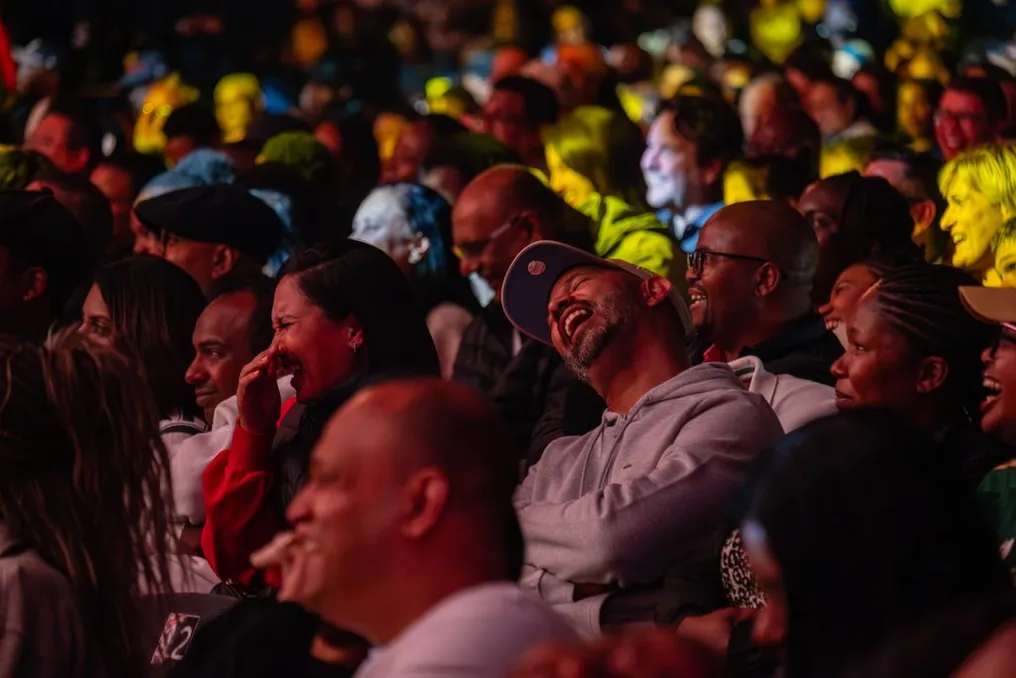
On Saturday, September 5th, the Savanna Serves South Africa comedy festival was held at the SunBet Arena in Pretoria. The atmosphere of the event was so energetic that the audience was ready for good laughter.

Following the opening on Friday, the festival continued its second evening performance in the capital, bringing together some of South Africa's brightest humorists. The program was built around observation, storytelling, and the unique ability of South Africans to find humor in almost everything.

Lineup of Star Performances

The evening, moderated by Eugene Khosa, smoothly transitioned between four different comedic styles. Tabiso Mkhlongo, Mbali Gudazi, and Lernmor Jonasi performed first, followed by the highly anticipated set from headliner Trevor Noah.

Tabiso Mkhlongo began the program in a style based on everyday life, transforming familiar experiences into something slightly different. His delivery quickly set the tone for the evening.

Next up was Mbali Gudazi, who presented her individuality and perspective. Her sketches focused on the absurdity of daily life, finding small, recognizable moments that become funnier when voiced.

She was followed by Lernmor Jonasi, whose performance expanded the thematic scope. His comedy blends cultural observations with personal experience, possessing an energy that makes even the most unexpected stories elicit laughter. By this point, the audience was fully warmed up and buzzing.

Then the lighting changed, and Trevor Noah took the stage. For a comedian who has performed for audiences worldwide for many years, it was particularly enjoyable to see Noah return to a South African audience. The connection with the hall was immediate.

Noah's ability to switch between the personal, political, cultural, and utterly absurd remains one of his greatest strengths, but seeing this mastery in Pretoria, among an audience that understands references before the punchline is delivered, gave the moment a special resonance. Noah doesn't just tell jokes; he observes, stretching minor contradictions of daily life to such an extent that laughing becomes unavoidable. And for an audience full of South Africans, there was more than enough material.

By the end of the evening, it was clear that Savanna had achieved its goal. The festival does not attempt to package South African humor into one specific sound or style. Instead, it provides various voices the opportunity to speak, allowing each comedian to bring their own perspective, rhythm, and way of understanding the world. Perhaps this is what ensured the success of the show in Pretoria.

After the events in Pretoria concluded, the Savanna Serves South Africa’s Festival of Comedy moves the laughter to Durban on September 19th at SunCoast, and will then conclude its tour in Cape Town on September 25th and 26th at GrandWest. Judging by Pretoria, the rest of South Africa awaits very entertaining evenings. The next stop is Durban, followed by Cape Town.

Popular