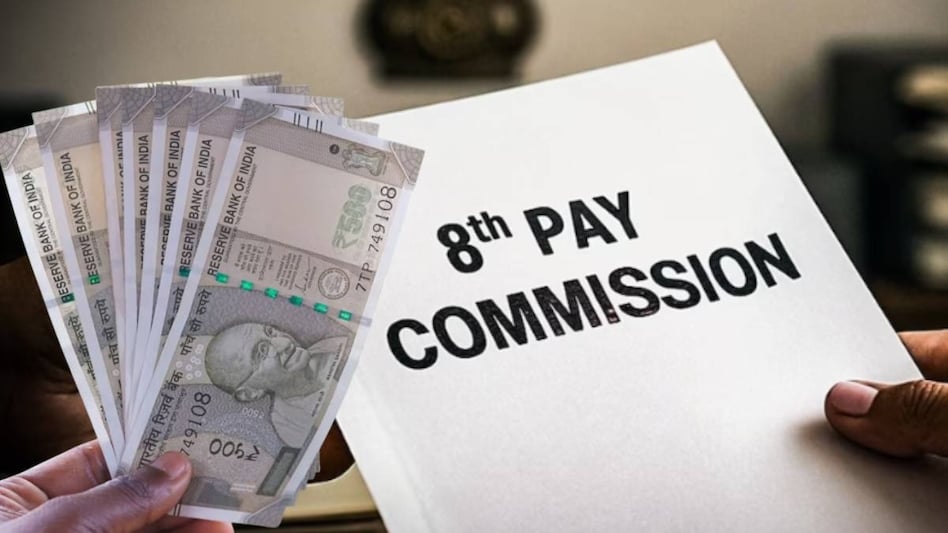
The meetings of the Eighth Pay Commission (8th Pay Commission) are ongoing. Following sessions held in Chennai-Puducherry, meetings will take place in Chandigarh from September 16 to 18. Among the most significant demands voiced in Chennai is raising the Fitment Factor to the level of 3.83.
The demand for increasing the Fitment Factor is central to discussions with unions of central government employees and other stakeholders. If the government under N. Modi accepts this demand, over 50 million central employees will receive a substantial salary increase. Upon acceptance of this requirement, the minimum salary for Level-1 employees will increase by approximately ₹51,000, positively impacting employees across various pay scales. Furthermore, this will benefit around 69 million pensioners.
This demand was put forward in Chennai by the All India Union of Pensioners. However, it is not the only union insisting on a high fitment factor; the National Council of Joint Consultative Mechanisms (NC-JCM), the All India Defence Employees Federation (AIDEF), and the All India Union of New Pension System Employees have also proposed a fitment factor of 3.833. If this demand is met, there will be a significant rise in salaries for all central employees from Level-1 to Level-10.
The minimum basic salary for Level-1 will reach approximately ₹69,000. In addition to the fitment factor, demands are being made regarding pay matrices, Dearness Allowance (DA), House Rent Allowance (HRA), and other benefits and allowances. Nevertheless, the final official decision is yet to be made.
Since the final report of the Eighth Pay Commission Committee, chaired by Justice Ranjana Prakash Desai, is planned to be submitted in May-June 2027, no decision has been reached yet.
The fitment factor that is being demanded to be increased is an indicator used by the Pay Commission to convert the previously adjusted basic salary of an employee or retired pensioner into a new adjusted basic salary. The calculation is done using the formula: (current basic salary x fitment factor = new basic salary). Under the Seventh Pay Commission, the fitment factor was 2.57, which led to an increase in the minimum basic salary from ₹7,000 to ₹18,000. Now, the Eighth Pay Commission demands it be set at 3.833, which is 1.26 higher.
Regarding the fitment factor formula, it is 'new basic salary: current basic salary x FF'. Currently, the fitment factor for central employees is 2.57, according to the Seventh Pay Commission, which caused the minimum basic salary to rise from ₹7,000 to ₹18,000. If it is raised to 3.83, the minimum basic rate will be ₹68,940 (₹18,000 x 3.83). This means a direct increase in the minimum salary for employees of ₹50,940.
If we consider the salary hike for Levels 2 to 10, the basic salary of a Level-2 employee of ₹19,900 will rise to ₹76,217, and for Level-3—from ₹21,700 to ₹83,111. Further, the minimum salary for a Level-4 employee will increase from ₹25,500 to ₹97,665, for Level-5—from ₹29,200 to ₹1,11,836, for Level-6—from ₹35,400 to ₹1,35,582, and for a Level-10 employee—from ₹56,100 to ₹1,14,863.
Thanks to this increase in the fitment factor, in addition to 50.14 million government employees receiving a salary hike, about 69 million pensioners will also see an increase in their pension. At a factor of 3.833, if the government approves it, a monthly pension of ₹25,000 will rise to ₹95,750.