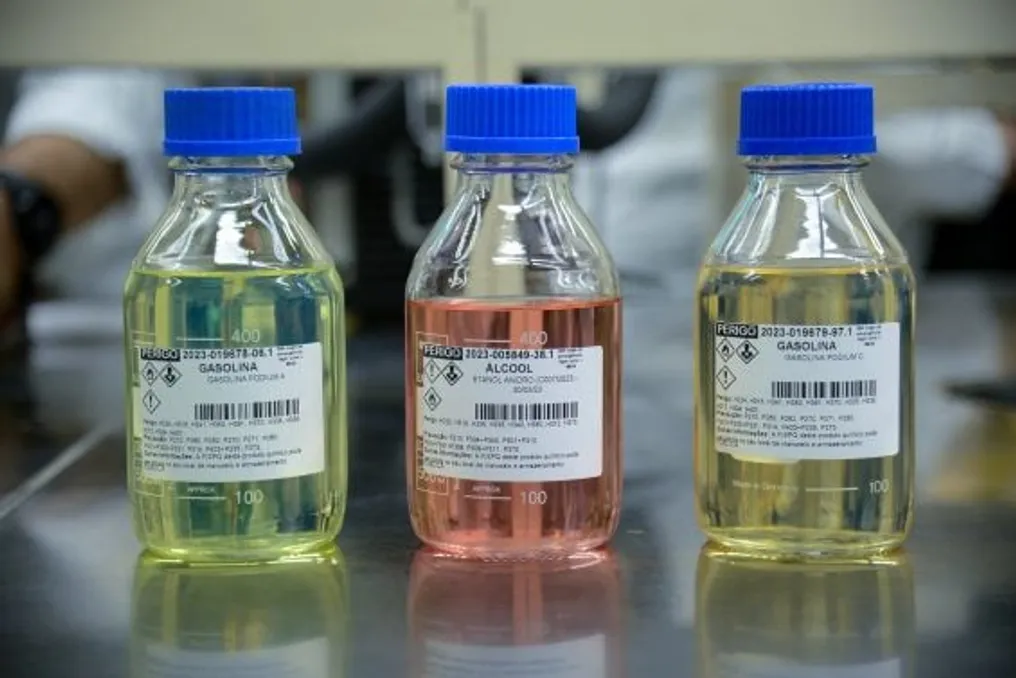
The National Agency of Petroleum, Natural Gas and Biofuels (ANP) sanctioned a study suggesting two measures to combat beverage fraud: dyeing the hydrated ethanol sold in Brazilian gas stations green starting in 2027 and subsequently making it bitter.
The purpose of these changes is to hinder the diversion of fuel for the illegal production of alcoholic beverages. The report was formally approved by the agency's board on September 2 and subsequently forwarded to the Ministry of Mines and Energy, which leads the National Council of Energy Policy (CNPE), as well as the Federal Court of Accounts (TCU).
This work complies with CNPE guidelines and recommendations made by the TCU itself, which arose after a methanol poisoning outbreak caused by adulterated distilled beverages at the end of 2025. The inclusion of green dye is seen by ANP as a temporary solution and will initially be implemented in producing plants, aiming to facilitate the visual identification of the fuel during fraud investigations.
The realization of this requirement is linked to the revision of ANP Resolution No. 907, from 2022. This process will involve a regulatory impact analysis, public consultations, hearings, and voting by the collegiate board. The projected implementation for 2027 accounts for the necessary adaptation time for plants, distributors, and other industry participants.
The permanent change considered is the mandatory incorporation of denatonium benzoate, a very bitter-tasting substance already used in cleaning and hygiene products to prevent accidental ingestion. According to the agency's assessment, this taste would alert the consumer to the fraud as soon as they touched the adulterated beverage.
However, there is no established deadline yet for this definitive phase. Since there is no history of using this compound in fuel intended for engines, ANP conditioned its mandatory use on conducting mechanical and emission tests to ensure that the additive does not harm vehicle performance, product quality, or pollutant control.
When contacted by g1, the National Association of Automotive Manufacturers (Anfavea) stated in a note that it does not have sufficient technical data to evaluate the effect of the substance on the fuel and exhaust systems of combustion engines, as there is no significant record of its application in fuel ethanol. The entity requested a validation program with durability and emission tests and asked that both the denaturant and the dye be free of metals to avoid catalyst contamination.
Before finalizing the study, ANP conducted consultations with ethanol producers, distributors, dye suppliers, quality inspection companies, representatives of the automotive industry, and the cachaça sector, in addition to conducting physicochemical tests at its Center for Research and Technological Analysis.